
Unbiased headlines. Facts, not spin.
Every story is an unbiased news briefing written from 110+ sources across the spectrum — sources linked so you can verify it yourself.
 finance
Major Story (7/10)
July 31, 2026 at 08:20 AM
finance
Major Story (7/10)
July 31, 2026 at 08:20 AM
Microsoft's 15.5% Surge Powers Nasdaq's Best Day in Months as Bond Yields Spike on Fed Chair Warsh's Inflation Comments
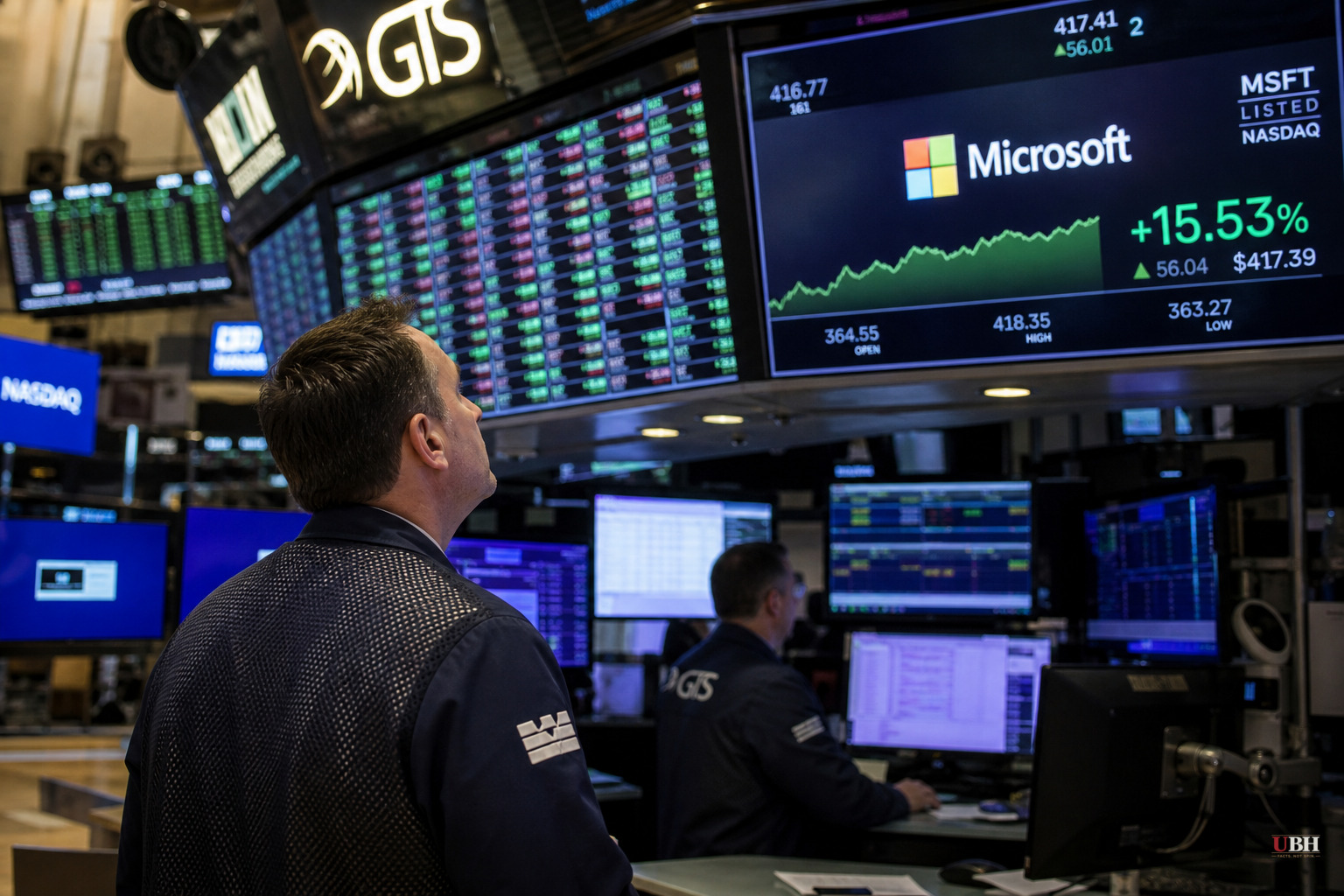
Stocks Rally, Bonds Don't Buy It
Wall Street had one of its best days of the year on Thursday, July 30, with the Nasdaq jumping 2.8% and the S&P 500 gaining 1.7%, according to Reuters. The rally was powered almost entirely by a fresh wave of AI enthusiasm, and Microsoft was the star of the show.
Microsoft shares surged 15.5% on the day. Sandisk jumped 26%. Micron Technology climbed 18%. The Philadelphia Semiconductor Index, known as the "SOX," rose 8%. Amazon added another 8% after the closing bell on its second-quarter results, according to Reuters.
Not everyone got the memo. Meta shares dropped 8%, and Apple fell 3%. Six of the S&P 500's eleven sectors rose, five fell. Tech gained 5% while communication services lost 2.5%, per Reuters' market data.
The Bond Market Wasn't Impressed
While stocks partied, the bond market sold off hard. The 30-year Treasury yield climbed 7 basis points to 5.24%, its highest level since the mid-2000s, according to Reuters. The yield curve "bear steepened," meaning long-term rates rose while short-term rates dipped.
The trigger was Federal Reserve Chairman Kevin Warsh. Warsh, who has pushed to overhaul how the Fed communicates with markets, gave a press conference on Wednesday, July 29, that Reuters columnist Jamie McGeever described as offering little clarity on how the Fed intends to bring inflation down, or even whether it remains fully committed to the Fed's 2% inflation target.
Bondholder sentiment matters. Markets hate uncertainty about a central bank's actual goals more than they hate bad news delivered clearly. McGeever's column argues that by leaving markets guessing, Warsh is effectively letting the bond market do the Fed's tightening work for it, a risky bet given how unpredictable long-term yield moves can be.
There is a fair counterargument. Central bankers sometimes deliberately avoid over-committing to specific policy paths precisely because economic conditions change fast, and locking into rigid forward guidance can backfire if inflation or growth data shifts. Warsh may be trying to preserve flexibility rather than signal weakness on inflation. But the market reaction, a near two-decade high on the long bond, suggests investors aren't giving him the benefit of the doubt right now.
Yen Surges on Suspected Intervention
In currency markets, the yen had one of its strongest days in years, according to Reuters. The dollar plunged 2.5% against the yen, the biggest one-day drop since Japan's suspected intervention on April 30. The dollar index overall fell 1%.
Japanese authorities have not officially confirmed they intervened, but FX analysts cited by Reuters said they're confident the move had an official hand behind it. The yen had been trading near a 40-year low against the dollar before Thursday's spike, and Tokyo has spent weeks facing speculation about whether it would step in.
Growth Data and Global Context
The rally came alongside a batch of economic data. U.S. economic growth slowed in the second quarter but domestic demand held up, according to Reuters reporting cited in McGeever's roundup. U.S. inflation slowed in June, though a reversal looks likely given the ongoing Middle East conflict's effect on energy prices. The euro zone economy grew faster than expected, driven by AI-related spending and confident consumers. The Bank of England kept rates on hold, waiting for a clearer read on how the Iran war is feeding through to inflation.
Commodities moved in mixed fashion. Oil fell in choppy trading, with Brent down 2% and WTI down 1%. Gold rose 1%, and palladium jumped 5%, according to Reuters data.
What to Watch
The unresolved question is whether Thursday's AI-driven rally can keep running with the 30-year yield sitting at its highest level since the mid-2000s. Higher long-term borrowing costs eventually bite into corporate valuations, including the same tech names that just ripped higher. Whether Warsh clarifies the Fed's inflation strategy in the coming weeks, as McGeever's column suggests is now urgently needed, will likely determine whether Thursday's bond selloff was a one-day event or the start of a longer squeeze.
Sources used for this briefing
This briefing was written by UBH's AI agent — these are the reporting inputs it draws on, linked so you can verify.


