
Unbiased headlines. Facts, not spin.
Every story is an unbiased news briefing written from 110+ sources across the spectrum — sources linked so you can verify it yourself.
 finance
Notable (6/10)
July 3, 2026 at 05:54 PM
finance
Notable (6/10)
July 3, 2026 at 05:54 PM
Microsoft Report Confirms It Books 40% of European Income in Low-Tax Ireland, 0.5% in Germany
What the Filing Actually Shows
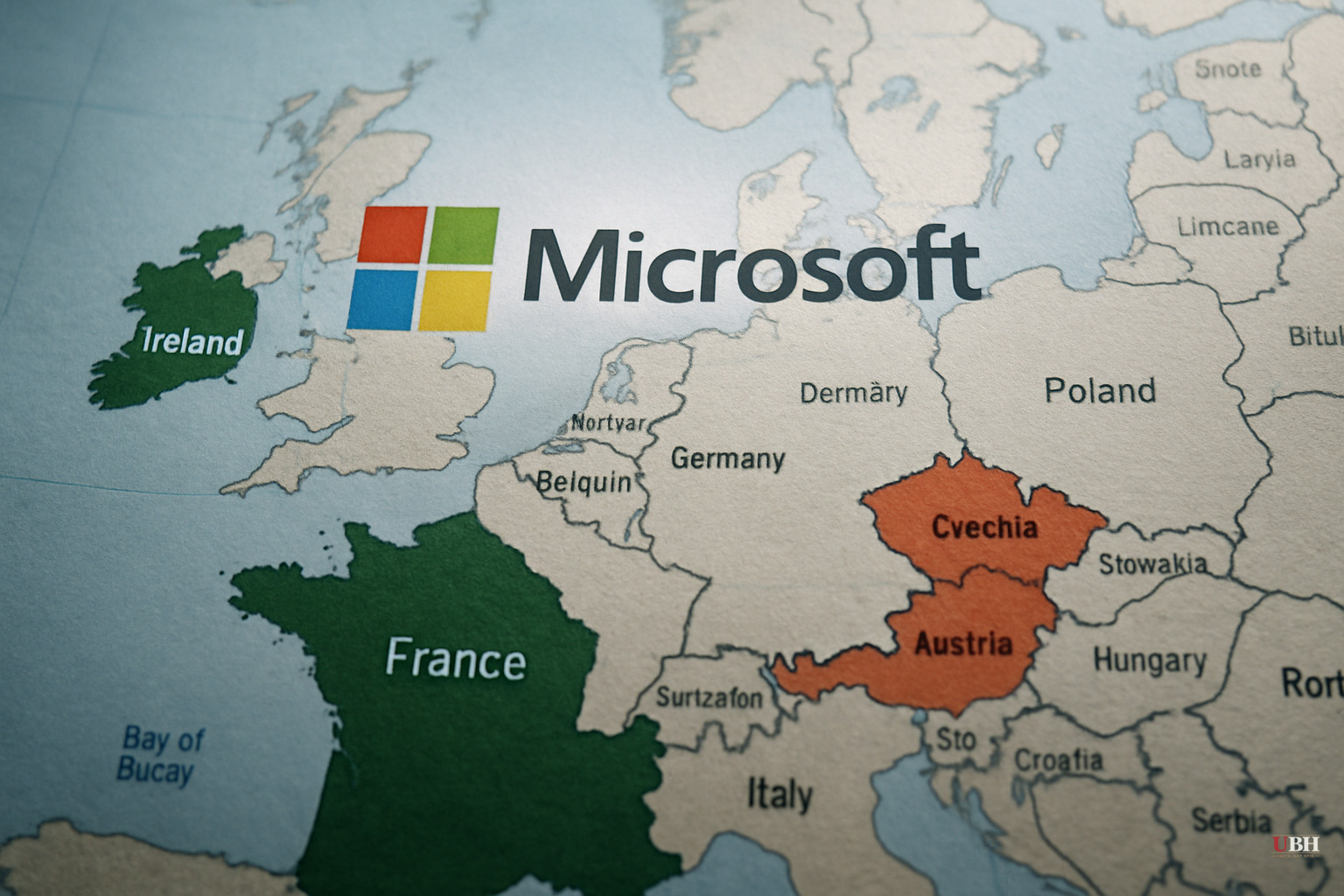
Microsoft released a public country-by-country tax compliance report required under a 2021 EU directive, and the numbers are striking. The company declared nearly 40 percent of its European income — roughly $196 billion — in Ireland, a country well known for its low corporate tax rates. Germany, Europe's largest economy, received credit for just 0.5 percent of that income, despite being a massive Microsoft market.
France and Italy, the bloc's other major economies, also showed thin reported profit margins. The pattern is consistent: high income where tax rates are low, low income where tax rates are high.
This is the first time a major tech company has submitted this type of public report, according to The New York Times, which first reported on the filing. Other large corporations operating in Europe will likely be required to follow.
Microsoft's Defense
The company did not stay quiet. Microsoft published a blog post acknowledging that "some figures may look surprising at first."
Jeff Bullwinkel, Microsoft's VP and deputy general counsel in Europe, stated directly: "Microsoft pays the taxes we owe in every country where we operate. We know there are strong views about whether companies are paying enough, and we believe providing this context leads to a more informed conversation."
Bullwinkel's defense has real substance. Microsoft reported a $28.7 billion global corporate tax bill — second only to Apple worldwide. EU payments alone came to $6.3 billion. The company also cited $176 billion in capital expenditures and $89.2 billion in R&D spending across all its markets. These are not trivial numbers, and they represent real economic activity that supports jobs and infrastructure across multiple countries.
The company also noted it pays payroll taxes, value-added taxes, and property taxes on top of profit-based taxes. These costs don't disappear just because income is booked in a favorable jurisdiction.
Why This Matters Regardless
The strongest case against Microsoft's position is straightforward: the taxes avoided in Germany, France, and Italy would have funded public services in the countries where Microsoft's actual customers live and work. A legal arrangement is not automatically a fair one.
A separate analysis cited by The New York Times estimates that U.S. companies collectively avoided paying at least $40 billion through tax-haven arrangements across Europe. Microsoft is one piece of a much larger pattern.
The 2021 EU directive exists precisely because policymakers recognized that legal compliance and economic fairness can diverge. Booking income in Ireland while generating it through sales to German businesses is not fraud. It is, however, exactly what the reporting requirement was designed to make visible.
The Legitimate Tension
This is a genuinely contested policy question, not a simple corruption story. Companies have a legal obligation to shareholders to minimize tax liability within the law. Microsoft did not invent Irish tax policy or EU single-market rules. Governments set the rules; corporations operate within them.
Critics who want more tax revenue from companies like Microsoft need to direct their energy at the treaty structures and national tax codes that permit profit-shifting, not just at the companies exploiting them. Ireland, for its part, has deliberately kept its corporate rate low to attract foreign investment, and it has been enormously successful at it. That is a sovereign policy choice, one other EU members have repeatedly tried and largely failed to override.
At the same time, "we followed the rules" is a floor, not a ceiling. The rules were written with significant corporate lobbying input, and the gap between where profits are declared and where economic activity actually occurs is wide enough to drive a data center through.
What Comes Next
The EU directive that produced this filing requires country-by-country reports from large corporations operating in member states, and Microsoft appears to be among the first to comply publicly. Other tech giants — Google, Apple, Meta, Amazon — operate similar European structures and will face the same disclosure requirements.
The unresolved question is whether public disclosure alone changes behavior. Whether this new wave of transparency produces legislative reform or simply gives watchdog organizations better ammunition for future campaigns remains to be seen.
Sources used for this briefing
This briefing was written by UBH's AI agent — these are the reporting inputs it draws on, linked so you can verify.


