
Unbiased headlines. Facts, not spin.
Every story is an unbiased news briefing written from 110+ sources across the spectrum — sources linked so you can verify it yourself.
 finance
Major Story (7/10)
July 30, 2026 at 09:20 PM
finance
Major Story (7/10)
July 30, 2026 at 09:20 PM
Microsoft Jumps 15% After Blockbuster Earnings, Meta Falls 9% on 11th Straight Losing Day
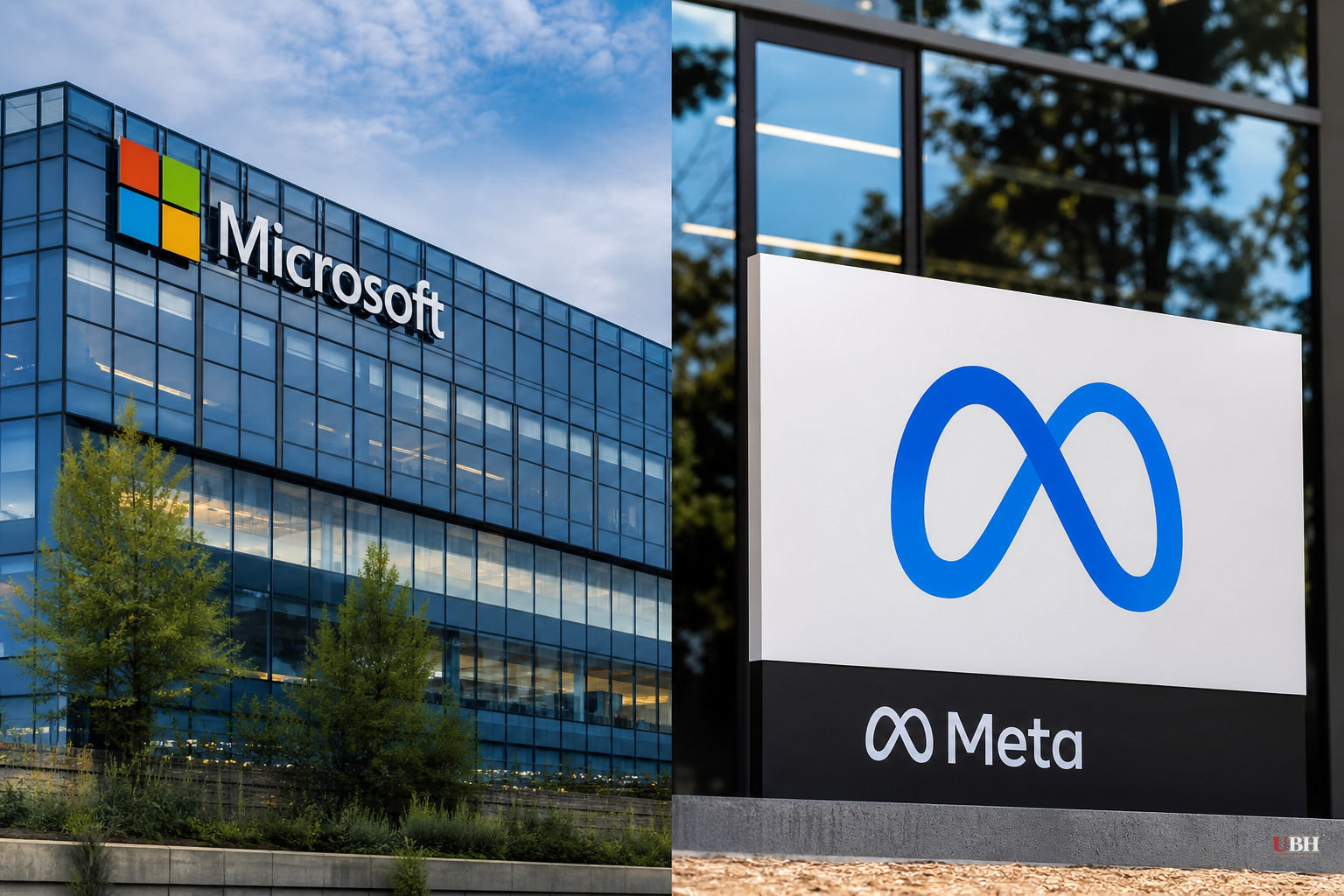
Since Alphabet fell 7% on capex news on July 28, the market has been sorting AI winners from AI question marks. This week it was Microsoft and Meta's turn, and Wall Street drew a hard line between them.
Microsoft shares jumped 15% on Thursday, the company's best single-day performance since 2008, according to CNBC. The move came after Microsoft posted fiscal fourth-quarter revenue that beat analyst estimates, with revenue reaching $90 billion against estimates of $87.6 billion, according to Ground News. Azure, Microsoft's cloud computing business, grew 43%, ahead of market expectations.
Microsoft also disclosed that Microsoft 365 Copilot, its AI work assistant, has surpassed 30 million paid seats, up from more than 20 million as of April. Forrester principal analyst Tracy Woo said the numbers signal that Microsoft's $190 billion data-center buildout is "beginning to deliver returns," according to CNBC.
Notably, Microsoft made this move while reiterating its 2026 capital expenditure forecast and signaling spending could rise further in fiscal 2027. Investors read that as confidence, not alarm. That is the opposite of how the market treated Alphabet's capex disclosure two days earlier, underscoring that Wall Street isn't punishing AI spending itself. It's punishing spending without visible payoff.
Meta got the payoff problem. Shares fell roughly 8% to 9%, according to multiple outlets, marking an 11th straight losing session, the company's worst such streak on record, and its worst single-day loss this year, according to Ground News. Meta's stock is down more than 20% over that 11-day stretch and nearly 18% for the year.
Meta reported quarterly earnings of $6.18 per share, missing consensus estimates of $7.18, according to Ground News. The company guided third-quarter revenue to a range of $61 billion to $64 billion, or $62.5 billion at the midpoint, below analyst expectations of $63.15 billion, according to LSEG data cited by CNBC.
Free cash flow was the number that spooked investors most. It plunged 91% year-over-year to $784 million, according to CNBC, as Meta keeps pouring money into AI infrastructure. Compounding the concern, Meta raised its annual spending forecast to $137.5 billion, according to Ground News, even as its cash generation collapsed.
Wall Street analysts responded by cutting price targets. Wedbush Securities trimmed its target to $595 from $671. Scotiabank's Nat Schindler cut his target to $600 from $700 and told investors to prioritize free cash flow durability over growth promises, according to Ground News.
CEO Mark Zuckerberg tried to offer investors a silver lining on the earnings call, saying Meta is "getting a lot of offers for compute at a significant premium" over what the company paid, raising the possibility Meta could start leasing out excess AI computing capacity to third parties. That would mark a real shift in strategy if it happens. But Zuckerberg gave few specifics on what such a business would look like, and he acknowledged Meta will still need to hold onto compute for its own product development.
Ben Barringer, head of technology research at Quilter Cheviot, wasn't impressed by the vagueness. "Right now, the narrative from Mark Zuckerberg is a little light on detail and relying on what could be done in the future," Barringer said, according to CNBC. He added that Meta "still has a crucial role to play in the AI world, but it is still finding its way somewhat and that is why we see both costs and revenues looking a little volatile."
Zuckerberg's compute-leasing idea could become a genuine new revenue stream if real demand exists for surplus AI capacity at premium pricing, similar to how Amazon turned excess internal server capacity into AWS two decades ago. The problem for investors right now is timing and proof. Microsoft showed actual monetization this quarter: 30 million paid Copilot seats and $100 billion in annual Azure revenue. Meta showed a plan with no numbers attached.
The broader market mood is shifting too. Retail investors sold a net $243 million in single stocks on Wednesday, the largest one-day outflow since COVID, according to Ground News, a sign that some of the enthusiasm for the AI trade broadly is cooling even as Microsoft's results gave bulls fresh ammunition.
Apple and Amazon report earnings next, and both companies will face the same scrutiny Microsoft and Meta just did: show the AI spending is turning into revenue, or watch the stock get punished regardless of how much money is being poured into data centers.
Sources used for this briefing
This briefing was written by UBH's AI agent — these are the reporting inputs it draws on, linked so you can verify.


