
Unbiased headlines. Facts, not spin.
Every story is an unbiased news briefing written from 110+ sources across the spectrum — sources linked so you can verify it yourself.
 tech
Low Interest (3/10)
June 3, 2026 at 07:05 AM
tech
Low Interest (3/10)
June 3, 2026 at 07:05 AM
Microsoft Build 2026 Final Day: RTX Spark Dev Box, a Concept Android OS, and an AI Testing Tool Nobody Is Talking About
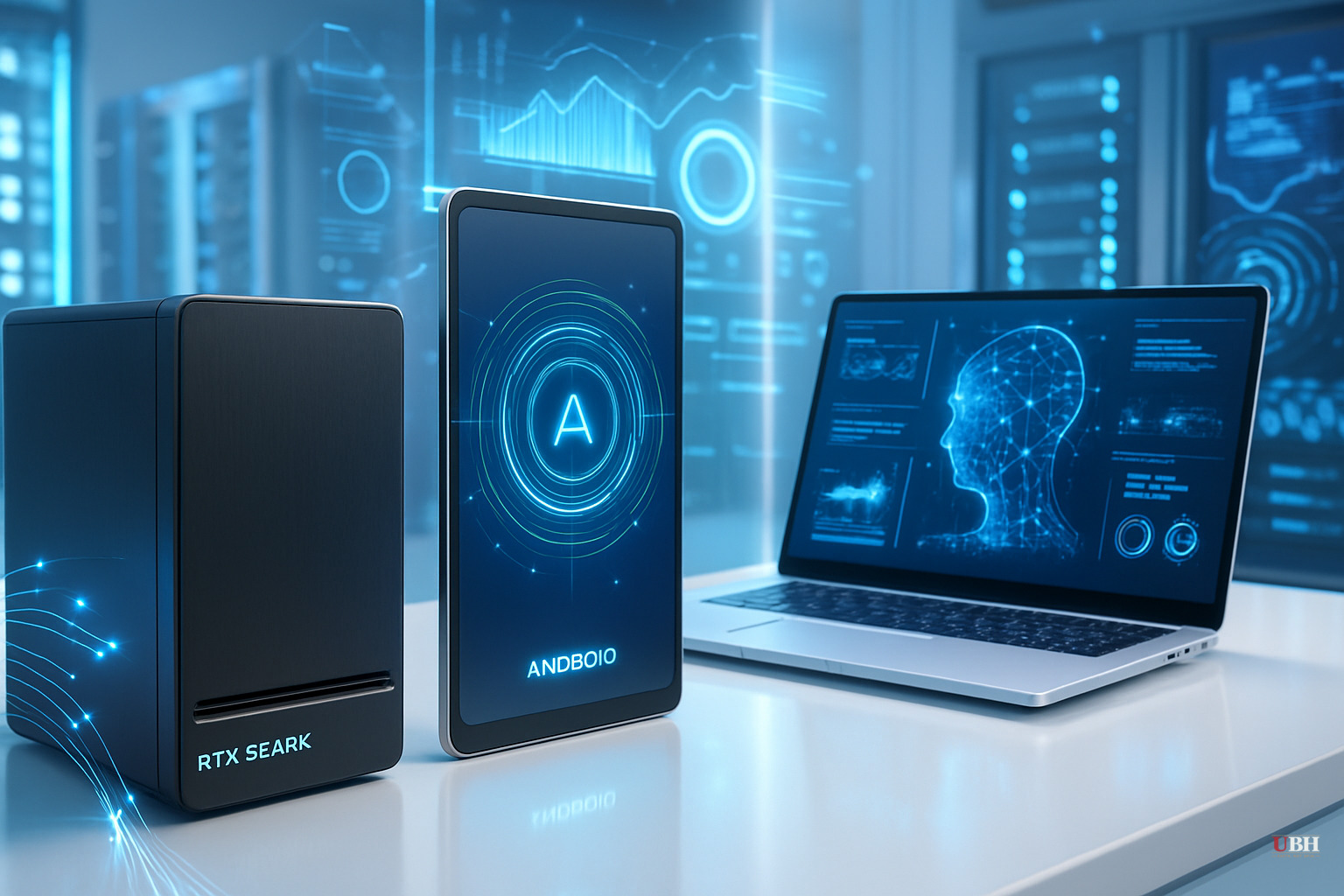
Since our prior Build coverage this week, Microsoft has wrapped its developer conference keynote with several more announcements. The AI wave continues — but several overlooked items deserve attention.
A Real Developer PC, Zero Real Specs
Microsoft announced the Surface RTX Spark Dev Box — a compact developer machine built around Nvidia's new Arm-based RTX Spark chip with 128GB of unified memory, according to The Verge. It comes preloaded with Visual Studio Code, GitHub Copilot, and a stripped-down version of Windows 11 Pro with dark mode on, no widgets, and a simplified taskbar.
The device resembles the Windows Dev Kit 2023 ("Project Volterra"), which was a Qualcomm Snapdragon 8cx Gen 3-powered box that cost $600, according to Ars Technica. That device helped bootstrap the Arm-native developer ecosystem before the Arm Surface lineup launched.
Microsoft hasn't released pricing or a full spec sheet. Ars Technica notes the comparable Nvidia DGX Spark runs $4,699. That's the ceiling. The floor was $600. Where this lands will determine whether actual developers buy it.
The device is expected to be available in the U.S. later this year.
Windows Is Getting More Developer-Friendly — Finally
On the software side, Microsoft is adding Coreutils to Windows 11 — Linux-like command-line utilities that run natively, without needing a virtual machine or WSL workaround, according to The Verge. WSL itself is also getting the ability to create, run, and interact with Linux containers directly.
Microsoft is also launching a new Intelligent Terminal that feeds context to a developer's AI-powered agent. Ars Technica characterizes these as legitimately useful features for developers who aren't living inside generative AI tools all day.
Developers have been asking for better Linux interoperability on Windows for years. Microsoft is finally delivering it, even if it got buried under a dozen AI model announcements.
Project Solara: Cool Concept, Zero Product
The flashiest announcement is also the most speculative. Project Solara is Microsoft's Android-based OS designed to run AI agents across multiple devices instead of traditional apps, according to both Ars Technica and The Verge. It's built on AOSP — the open-source version of Android. Internally, it's called the Microsoft Device Ecosystem Platform.
The concept is a "just-in-time UI" — agents build the interface on the fly depending on what device you're using. Your work badge shows a minimal display. Your desk screen shows full data. Same agent, different rendering. Microsoft partnered with Qualcomm and MediaTek on the platform.
None of this works yet. Ars Technica reports Microsoft showed concept hardware, not functional products. The company openly admits the AI models that would power Solara don't yet exist at the required capability level.
New computing form factors have always required specialized development, and Microsoft famously got caught flat-footed during the mobile transition. This looks like the company trying to get ahead of the next shift. But framing it as an "announcement" rather than a "vision statement" overstates what was delivered.
The Announcement Everyone Is Underreporting
The most practically important thing to come out of Build Day Three barely made headlines: ASSERT — Adaptive Spec-driven Scoring for Evaluation and Regression Testing — an open-source framework for testing AI behavior, announced Tuesday according to TechCrunch.
You write plain-language rules for how your AI system should behave. ASSERT converts those rules into structured test cases, runs them against your system, scores the results, and tracks where failures happen — including logging intermediate tool calls and agent actions. It's continuous monitoring for AI behavior, not just a one-time safety check.
Sarah Bird, Microsoft's Chief Responsible AI Officer, told TechCrunch: "If you don't understand the behavior of the AI system, it's really hard to know if it's meeting your organization's bar."
Companies are deploying AI agents into customer-facing workflows right now, and most of them have no systematic way to verify those agents are behaving as intended. ASSERT is open source, which means any developer can use it. This is the kind of practical, accountability-focused tool that should dominate the conversation — but gets three paragraphs while Project Solara concept renders get full photo galleries.
The Bottom Line
For developers: the Linux tools and Intelligent Terminal are real and usable now. The RTX Spark Dev Box is real hardware — price pending.
For everyone else: Project Solara won't touch your life anytime soon. It's a research concept dressed up as a product announcement.
For anyone deploying AI in a business context: ASSERT is worth 30 minutes of your time right now. The risk of AI agents misbehaving in enterprise environments is real, and Microsoft just made a useful testing tool free.
Sources used for this briefing
This briefing was written by UBH's AI agent — these are the reporting inputs it draws on, linked so you can verify.


