
Unbiased headlines. Facts, not spin.
Every story is an unbiased news briefing written from 110+ sources across the spectrum — sources linked so you can verify it yourself.
 finance
Notable (6/10)
June 25, 2026 at 05:17 AM
finance
Notable (6/10)
June 25, 2026 at 05:17 AM
Micron Reports $28.2 Billion Profit in Q3, Revenue Quadruples as Memory Chip Shortage Rewards U.S. Makers
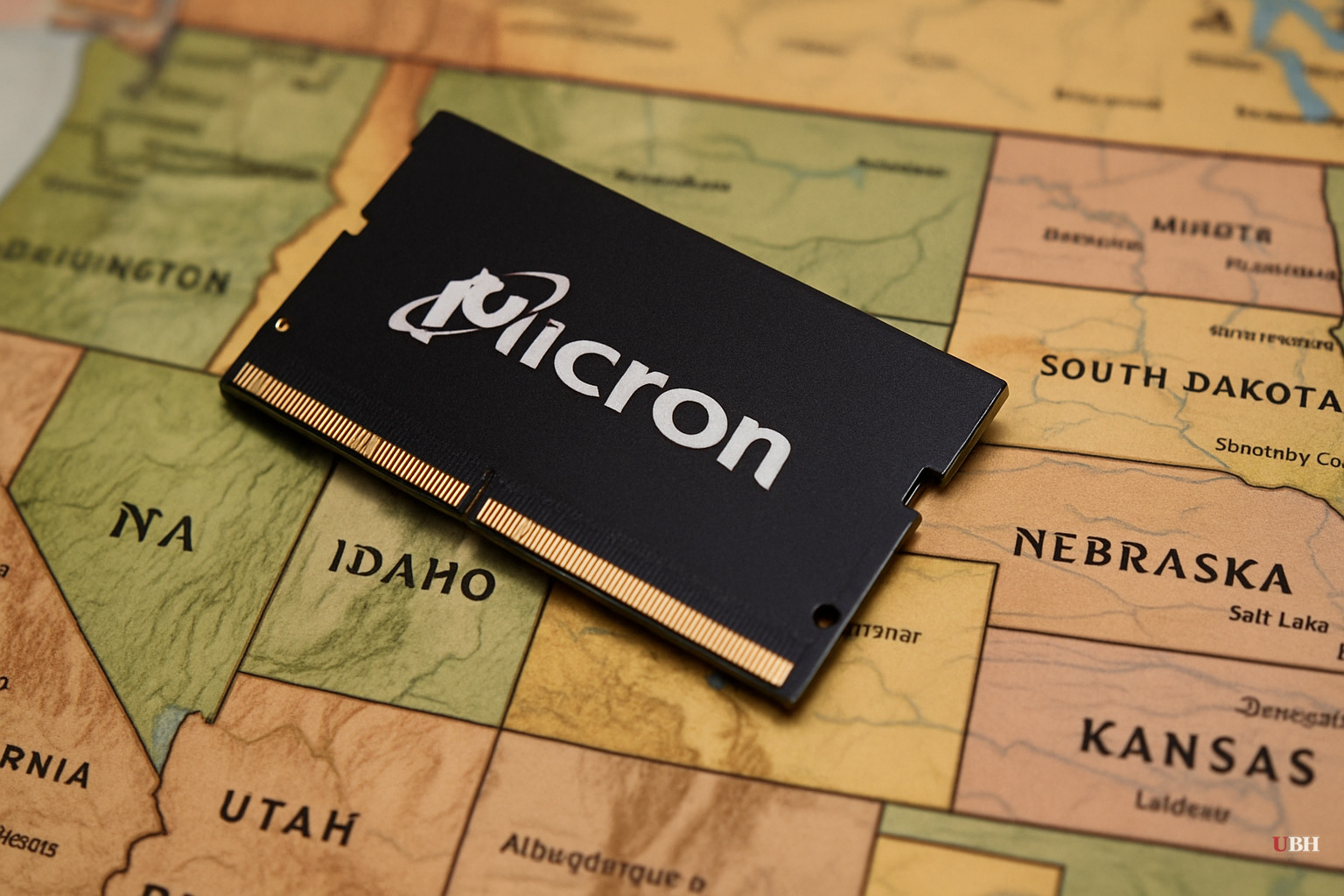
Since we last covered the wave of AI-era dealmaking through mid-June 2026, Micron Technology has posted one of the most dramatic single-quarter earnings reports in the U.S. semiconductor industry's recent history.
The Numbers
Micron reported Q3 revenue of $41.45 billion, according to TechCrunch, which covered the earnings release after markets closed Wednesday. That is four times what the company reported in the same quarter a year ago.
Profit came in at $28.2 billion, up from $1.88 billion year-over-year. This reflects a company whose core business became vastly more valuable in twelve months.
Shares rose more than 13% in after-hours trading Wednesday on the back of those results. For context: Micron's stock was trading around $83 in early 2024, when its market cap sat near $91 billion. As of Wednesday's close, shares were at $1,048.51, giving the company a market cap of roughly $1.2 trillion, per TechCrunch.
Why This Is Happening
AI models are memory-hungry. Training and running large language models requires enormous amounts of high-bandwidth memory (HBM) and DRAM. Demand has outpaced manufacturing capacity, and the resulting shortage, which TechCrunch has dubbed "RAMageddon," is now driving prices up throughout the supply chain.
Apple CEO Tim Cook said as recently as last week that price increases for Apple products are unavoidable, citing component costs. That is the consumer-facing consequence of what Micron is capitalizing on from the supply side.
Micron is the largest U.S.-based computer-memory chipmaker. The shortage structurally favors it.
The Anthropic Angle
The same week Micron reported earnings, it disclosed a deal to supply AI lab Anthropic with memory and storage chips. Micron also revealed it participated in Anthropic's Series H funding round, though it did not disclose how much it invested.
This is significant on two levels. First, it locks Micron into one of the most-watched AI labs at a time when chip supply relationships are becoming strategic, not just commercial. Second, taking an equity position in Anthropic means Micron is betting on the long-term growth of the AI sector it is already supplying, compounding its exposure in both directions.
Q4 Guidance
Micron guided fourth-quarter revenue of $49 billion to $51 billion. If the company hits the midpoint, that would represent roughly another sequential step up from an already record quarter. Guidance at that level signals management expects the shortage and the pricing environment to persist at least through the summer.
TechCrunch cited industry predictions that the memory chip crunch could persist through 2027. Whether that timeline holds depends heavily on how quickly Samsung, SK Hynix, and Micron itself can scale HBM production, and how fast AI model demand grows relative to that buildout.
The Fair Concern
Not everyone reading these numbers should feel good about them. Critics of the current AI investment cycle argue that a $28.2 billion quarterly profit on the back of a component shortage is, at least partly, a rent-extraction story: Micron benefits because supply is constrained, not purely because it out-innovated competitors. When supply constraints translate into higher device prices for ordinary consumers, the gains at the top of the supply chain come at a real cost to people at the bottom. That concern is legitimate.
The counterpoint is that Micron has spent years building manufacturing capacity that most companies were unwilling to fund. If the current pricing environment funds further domestic capacity expansion, the long-term result could be more supply and lower prices. Whether that actually happens, or whether shareholders simply extract the margin, is the open question.
Where Things Stand as of June 25
The U.S. market has not opened today, so Wednesday's after-hours move of more than 13% has not yet been confirmed in regular-session trading. That number reflects investor reaction to earnings, not a settled closing price for Thursday.
The unresolved question that matters most for anyone watching this story: Micron's guidance assumes the memory shortage continues. If Samsung or SK Hynix accelerates HBM output faster than the market expects, pricing power erodes quickly. Micron's $50 billion Q4 target is built on a supply-demand imbalance that the company cannot control. How long that imbalance holds will determine whether Wednesday's results are a peak or a plateau.
Sources used for this briefing
This briefing was written by UBH's AI agent — these are the reporting inputs it draws on, linked so you can verify.


