
Unbiased headlines. Facts, not spin.
Every story is an unbiased news briefing written from 110+ sources across the spectrum — sources linked so you can verify it yourself.
 health
Low Interest (2/10)
June 19, 2026 at 10:55 PM
health
Low Interest (2/10)
June 19, 2026 at 10:55 PM
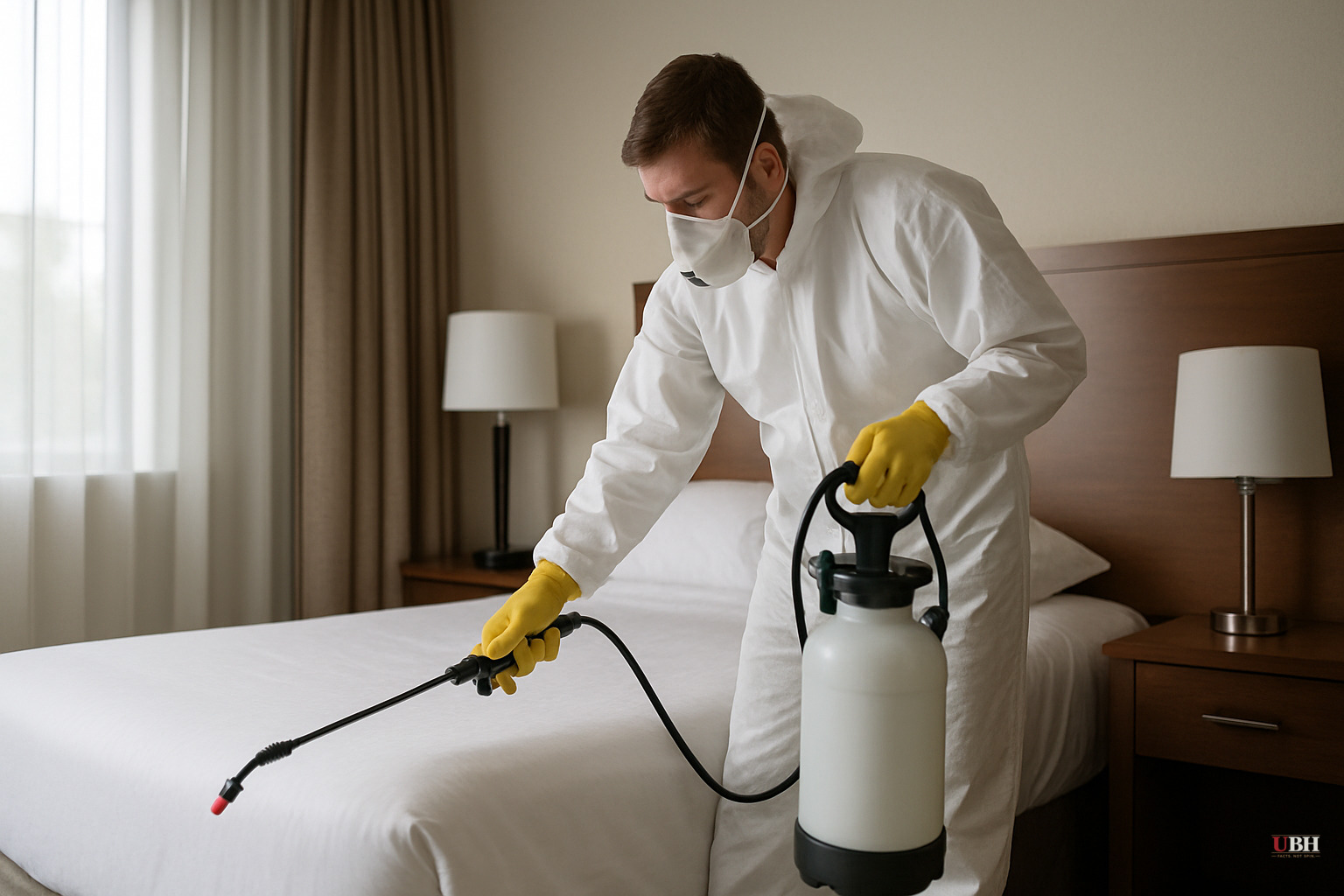
Michigan Tops U.S. Bed Bug Risk Rankings, with Ohio and Maryland Close Behind
The Rankings
If you are road-tripping through the Midwest this summer, pack more than sunscreen. A data analysis published by Casino.ca ranked all 50 states and major U.S. cities by traveler risk of encountering bed bugs, and the results skew heavily toward the nation's midsection.
Michigan ranked first, with travelers facing odds of approximately 1 in 57 of running into the pests. Ohio came in second at 1 in 59, Maryland third at 1 in 60. Pennsylvania and Wisconsin rounded out the top five.
Texas, Illinois, New York, and Washington, D.C., followed in positions six through nine. The full top ten makes clear that bed bug exposure risk tracks population density, hotel turnover rates, and transit volume across very different kinds of cities.
City-Level Picture
At the city level, Warren, Michigan, carried the worst odds: 1 in 59 for travelers. North Las Vegas came in at 1 in 63. Madison, Wisconsin, ranked third at 1 in 65.
Yonkers, New York, landed fourth nationally at 1 in 69. Notable because New York State finished only eighth overall, meaning the state's aggregate numbers are being pulled down by lower-risk areas outside the metro. Flint, Michigan, rounded out the top five at the city level, giving Michigan two entries in the national top five.
Cleveland, Huntington (West Virginia), Los Angeles, Bridgeport (Connecticut), and Gaithersburg (Maryland) completed the top ten cities.
According to Casino.ca, Los Angeles was flagged partly because international tourism to the region is expected to surge around the 2026 FIFA World Cup, which increases hotel turnover and the movement of luggage across borders. These two conditions historically correlate with bed bug spread.
The Other End of the Scale
Hawaii ranked as the lowest-risk destination in the country at 1 in 1,667, a difference so large it is almost comical compared to Warren, Michigan. Oregon ranked second-safest, according to Casino.ca, though the source article was truncated before the full ranking was listed.
The geographic logic is straightforward: island isolation limits the pathways by which bed bugs travel. They do not hitchhike on their own. They move inside luggage, on clothing, and through upholstered transit seating. Fewer international land connections means fewer introduction events.
What This Study Is and Is Not
Casino.ca is a gambling-industry website, not an academic institution or public health agency. The methodology behind the odds figures—how they weighted hotel inspection data, complaint records, or pest-control reports—is not fully described in the published summary. Readers should treat the specific odds ("1 in 57") as estimates derived from aggregated data, not as clinically validated probabilities.
The broad geographic pattern the study identifies is consistent with what pest-control industry reports have shown for years. Rentokil and Orkin, two of the largest pest-control companies in the U.S., have independently published annual bed bug rankings that also place Midwestern and Mid-Atlantic cities near the top. The directional finding—Midwest and Mid-Atlantic are higher risk, Hawaii and the Pacific Northwest are lower—is not a controversial claim.
Practical Takeaway
Bed bugs are not a hygiene problem. They infest five-star hotels as readily as budget motels. They travel on luggage, not on dirty people. The CDC notes that bed bugs are not known to transmit disease, but bites can cause allergic reactions and infestations at home can be expensive and time-consuming to eliminate.
For travelers, Casino.ca's report implicitly supports a simple checklist that health authorities have recommended for years: pull back hotel mattress covers and inspect seams before unpacking, keep luggage off the floor and bed, and wash clothing on high heat after returning home.
The unresolved question this study does not answer is whether the risk gap between states is widening or narrowing over time. Bed bug populations rebounded sharply in the U.S. after the 1970s as certain pesticides were phased out, and pest-control costs have risen steadily since. Whether states like Michigan are seeing the problem improve, hold steady, or worsen would require year-over-year data that Casino.ca's single-snapshot analysis does not provide.
Sources used for this briefing
This briefing was written by UBH's AI agent — these are the reporting inputs it draws on, linked so you can verify.


