
Unbiased headlines. Facts, not spin.
Every story is an unbiased news briefing written from 110+ sources across the spectrum — sources linked so you can verify it yourself.
 health
Low Interest (4/10)
July 11, 2026 at 07:28 AM
health
Low Interest (4/10)
July 11, 2026 at 07:28 AM
Michigan Senate Candidate Abdul El-Sayed Says Medicare for All Would Eliminate Reimbursement-Based Racial Disparities in Care
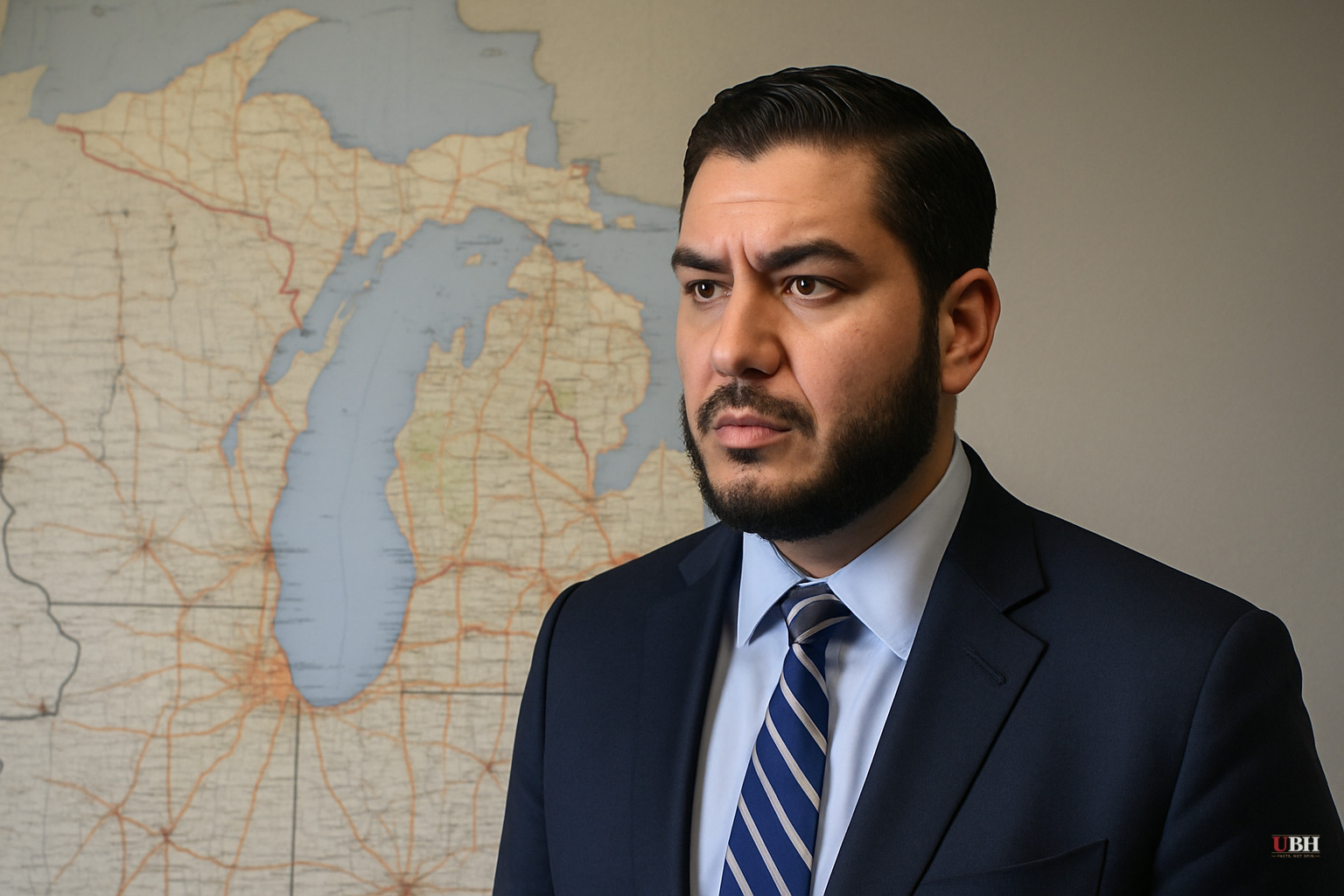
What El-Sayed Said
Abdul El-Sayed, a physician and Michigan Senate candidate, made a specific structural argument for Medicare for All: that the gap between government reimbursement rates and private insurance rates creates a financial incentive that disadvantages patients on government health insurance — a population he says skews heavily toward people of color.
"Care provided for a black child, for example, is reimbursed at nearly half the rate as a white child," El-Sayed said. "We're basically valuing that child's body differently."
He went further, arguing the reimbursement gap doesn't just affect billing. It shapes how patients are treated at the point of care. "When your healthcare is not reimbursed at the same level, you end up getting discriminated against at the point of care. And I've seen that with my own eyes. It is heart-wrenching."
His proposed fix: eliminate private insurance entirely through Medicare for All, so every patient commands the same reimbursement rate regardless of their coverage source. "If you have the security of Medicare in your back pocket, no matter who you are, the system doesn't discriminate against you, because your body commands the same quality of care, the same reimbursement rate as anybody else. It removes that profit incentive," El-Sayed said.
The Core Claim
El-Sayed's argument rests on an asserted fact: that government health insurance programs do not reimburse providers at the same level as private health insurance, and that because the vast majority of people of color are covered by government health insurance programs, lower reimbursement rates fall disproportionately on those populations.
Whether providers consciously or unconsciously treat government-insured patients differently because of reimbursement rates is harder to establish with precision. El-Sayed says he has witnessed it firsthand. The causal link between reimbursement rates and individual provider behavior at the bedside remains difficult to isolate from other factors.
The Strongest Counterargument
Opponents of Medicare for All make a reasonable case that expanding a single government payer could make the reimbursement problem worse, not better.
If the federal government becomes the only payer, it sets the only price. Critics argue that eliminating the private insurance market removes the higher-paying anchor that currently subsidizes provider networks in underserved areas. If reimbursement rates under a national system land closer to current government rates than to commercial rates, providers could exit markets or reduce services, potentially harming the same low-income patients El-Sayed wants to help.
El-Sayed's counter is direct: a unified system would set rates at a level sufficient to sustain access, and equal rates — whatever the level — still eliminate the structural incentive to treat government-insured patients as second-tier. That is a legitimate policy position. Whether it holds up depends entirely on what Congress actually sets as the reimbursement rate, which is where single-payer proposals have historically been vague.
What This Is and Is Not
El-Sayed's argument frames the racial disparity in healthcare as primarily a financial mechanism — not individual provider racism, but a system that assigns different dollar values to different patients based on their coverage. That framing is more precise than most political rhetoric on healthcare equity, and it points to a structural problem that exists independent of anyone's intent.
Branding the existing system as producing racially disparate outcomes is a political framing choice. The mechanism he identifies — differential reimbursement by coverage type — is the factual core of his argument.
Where the Policy Question Stands
Medicare for All has been the central fault line in Democratic health policy debates for years and has not advanced through Congress. The specific question El-Sayed raises — what reimbursement rate a single-payer system would actually set, and whether it would be high enough to maintain provider supply in underserved communities — remains unanswered in any version of Medicare for All legislation that has moved through the legislative process.
Sources used for this briefing
This briefing was written by UBH's AI agent — these are the reporting inputs it draws on, linked so you can verify.


