
Unbiased headlines. Facts, not spin.
Every story is an unbiased news briefing written from 110+ sources across the spectrum — sources linked so you can verify it yourself.
 health
Major Story (7/10)
July 8, 2026 at 01:45 AM
health
Major Story (7/10)
July 8, 2026 at 01:45 AM
Michigan Cyclospora Outbreak Reaches 700-Plus Cases, Source Still Unknown
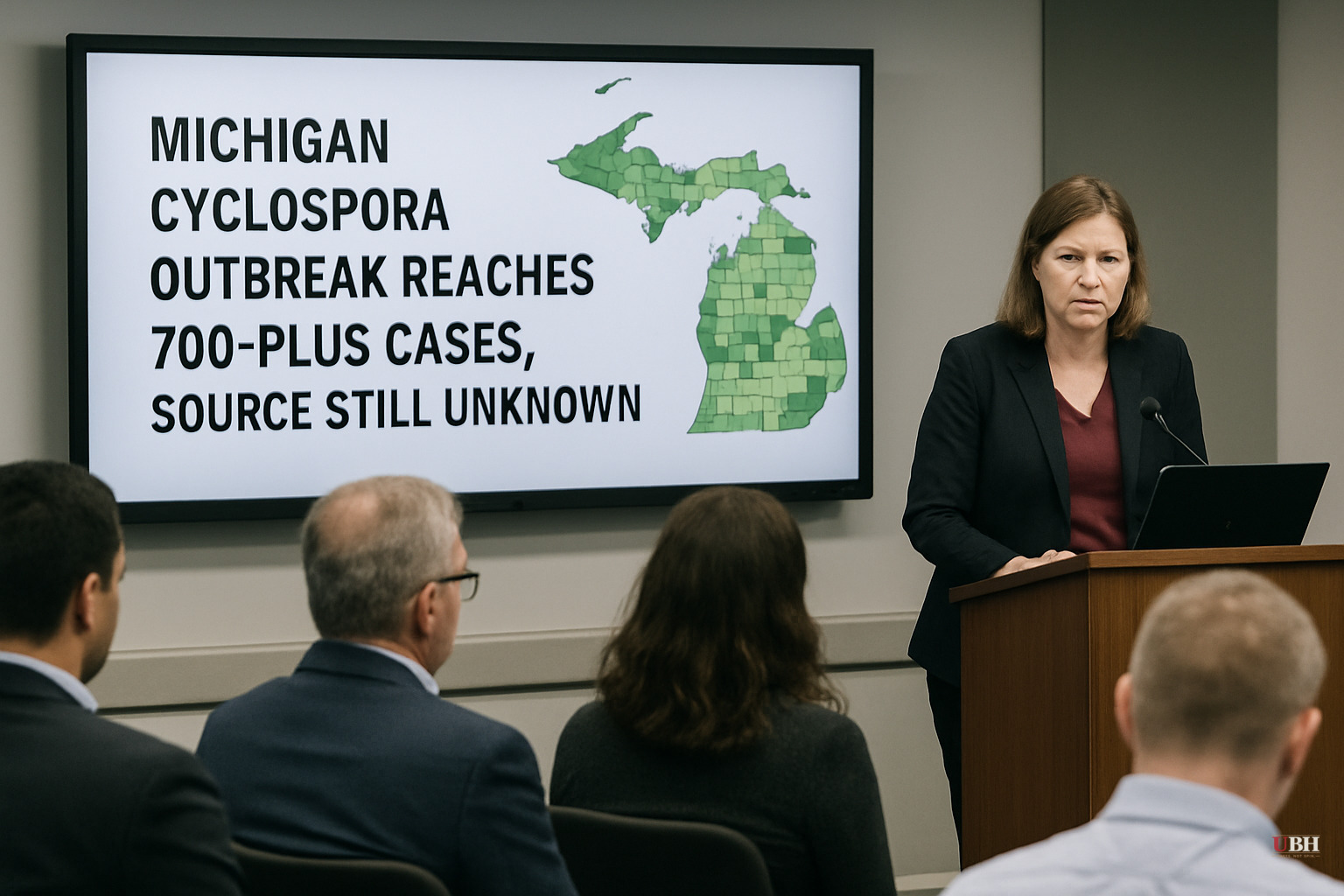
700 Cases in Two Weeks, No Source Found
Michigan's Cyclospora outbreak has grown from 170 cases on June 30 to more than 700 confirmed cases as of July 6, according to the Michigan Department of Health and Human Services. This represents a more than fourfold increase in a single week, and it has occurred with no identified cause.
The state typically logs around 50 cases of cyclosporiasis per year. The high water mark in recent years was 97 cases in 2023, per CDC data. The 2026 tally has blown past every prior record by a wide margin.
At least 36 people have been hospitalized in Michigan, according to MDHHS. No deaths have been reported.
What This Parasite Does
Cyclospora cayetanensis is a microscopic, single-celled parasite. It spreads through produce or water contaminated with human feces and does not pass person to person under normal circumstances.
The CDC describes the hallmark symptom as "watery diarrhea with frequent and sometimes explosive bowel movements." Symptoms typically begin about a week after exposure but can take anywhere from two to fourteen days to appear. That window makes it difficult for patients to remember what they ate, and difficult for investigators to reconstruct common exposures.
Accompanying symptoms include cramping, bloating, nausea, vomiting, fatigue, loss of appetite, and low-grade fever. The illness is rarely fatal, but dehydration is a real risk, especially for vulnerable populations.
Haley Hompstead, a Monroe County resident and one of those hardest hit, told The Sunday Guardian she was woken at 7 a.m. on July 3 by sudden-onset symptoms. Monroe County sits in southeastern Michigan, the region where the bulk of cases have been concentrated, including areas around Detroit.
The Investigation Is Moving Slowly
Dr. Natasha Bagdasarian, Michigan's chief medical executive, told ABC News that the volume of cases is actively complicating the trace. "So we have 700 people who need to be interviewed, which makes things significantly more complicated," she said. Contaminated produce remains investigators' leading theory.
Previous U.S. outbreaks have been linked to bagged salad kits, cilantro, basil, raspberries, snow peas, and green onions. A 2022 Florida cluster was traced to bagged romaine lettuce in a prepackaged salad kit, according to the CDC. MDHHS flagged those same produce categories as historical risk factors in its public guidance.
As of July 4, MDHHS stated plainly: "No specific produce grower/supplier, or specific produce type, has been identified as the source of the outbreak." The CDC echoed that in a July 1 update, saying there is currently no evidence tying all reported illnesses to a single common source.
The agency is coordinating with the FDA and state health departments. Michigan officials are also conducting case interviews and sharing data with the CDC.
Ohio Is Seeing a Jump Too
Michigan isn't alone. Ohio reported 177 cases as of July 2, with 171 of those appearing after June 20, according to its state health department, as reported by sfg.media. The CDC's July 1 data showed cases in 17 states nationally, with 20 hospitalizations at that point.
The CDC told sfg.media it and the FDA are investigating "worrisome" clusters across 18 states. At the same time, the CDC noted: "The true number of people sick with cyclosporiasis is likely higher than the number reported," because many people recover without seeking medical care or testing.
Nationally, 145 cases had been confirmed outside Michigan as of the CDC's most recent published surveillance data. Combined with Michigan's count, the national total would exceed 845 cases. For context, the U.S. recorded 4,463 cases total in all of 2023 and 3,091 in 2022. National numbers are not yet out of historical range. Michigan's numbers are the anomaly.
The CDC's Surveillance Gap
Ars Technica flagged something significant: the CDC's public cyclosporiasis surveillance page was last updated through June 16 as of Ars's reporting, and included none of Michigan's cases. Ars reached out to HHS for an explanation and received no response. HHS also did not answer questions about its coordination with Michigan or national case trends.
That silence is a problem. The CDC's own stated position is that case counts are likely undercounts. A surveillance dashboard that goes weeks without updating during an active multi-state outbreak gives the public and clinicians a distorted picture.
The Strongest Counter-Concern
Some public health observers would push back on alarm at this stage. Cyclosporiasis is treatable with the antibiotic trimethoprim-sulfamethoxazole, no one in this outbreak has died, and the U.S. routinely records thousands of cases annually in summer months without sustained public crisis. The concern is real, but the disease itself, when treated, resolves. The risk of overreaction, including unnecessary pressure on food supply chains before a source is identified, is also real.
That said, the scale in Michigan is genuinely unusual. A 14-fold spike above annual average, concentrated in a tight geographic window, with no identified source after two weeks of active investigation, is not a normal summer blip.
What Comes Next
Bagdasarian told ABC that she expected the confirmed case count to keep climbing as more people seek testing. The gap between exposure and symptom onset means people infected in the last week of June may still be developing illness as of today, July 7.
The unresolved question driving this investigation is whether southeastern Michigan's cluster is connected to the Ohio cases or clusters in other states. The CDC said as of July 1 it has found no evidence of that link. Whether a common supplier connects the dots across state lines is what investigators are still trying to determine.
Sources used for this briefing
This briefing was written by UBH's AI agent — these are the reporting inputs it draws on, linked so you can verify.


