
Unbiased headlines. Facts, not spin.
Every story is an unbiased news briefing written from 110+ sources across the spectrum — sources linked so you can verify it yourself.
 finance
Notable (5/10)
August 12, 2026 at 03:50 PM
finance
Notable (5/10)
August 12, 2026 at 03:50 PM
Michael Burry Tells Followers to Read the Enron Book Again, While One of His AI Shorts Jumps 20% in a Day
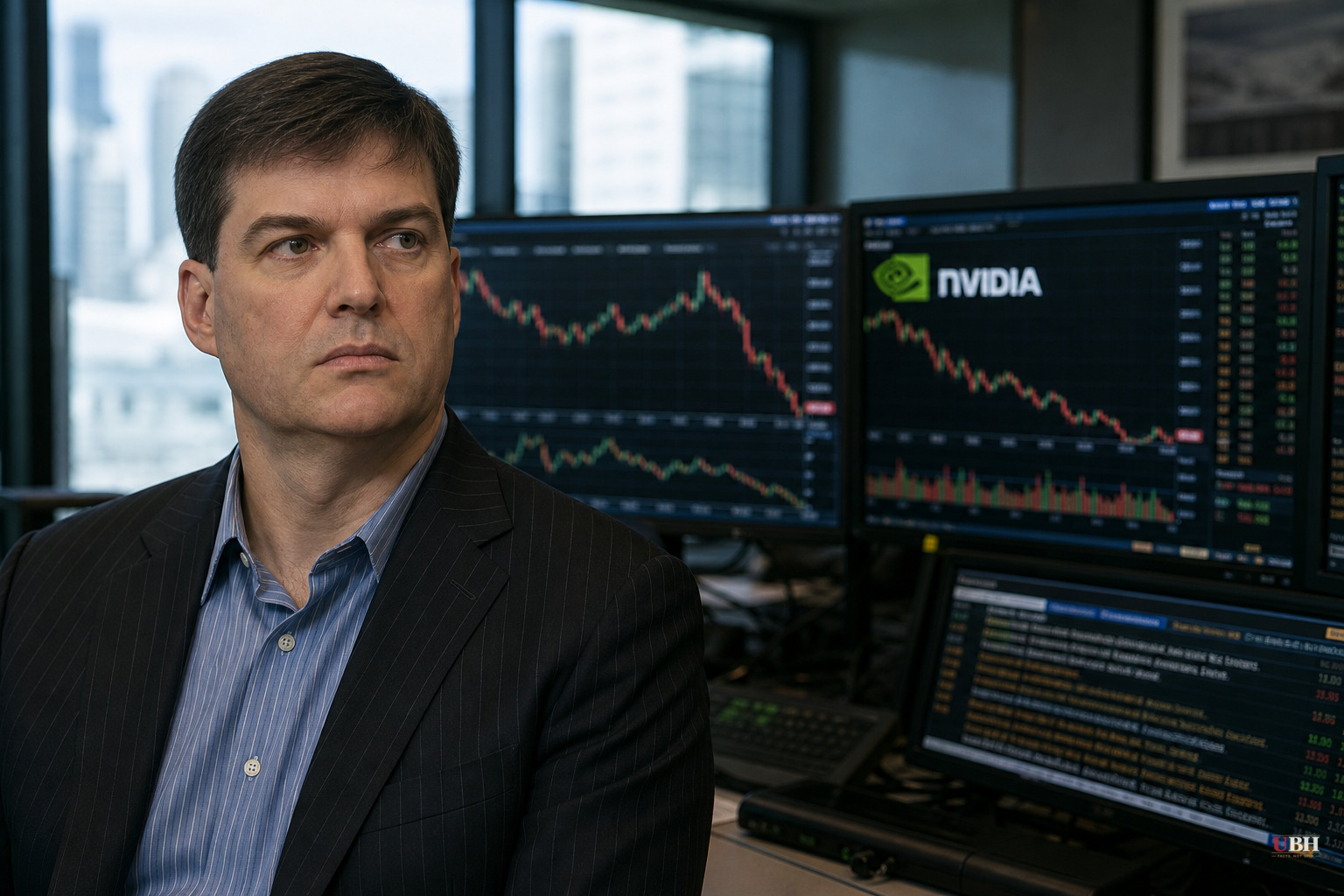
Michael Burry, the investor who made his name shorting subprime mortgages before the 2008 crash, posted a link late Tuesday to "The Smartest Guys in the Room," the 2003 book about Enron's collapse. His caption on X: "History is repeating. Time to read this one again, or for the first time."
He didn't spell out what he meant. He didn't have to. Burry has spent months arguing that major AI companies are using accounting tricks to flatter their numbers, including stretched-out depreciation schedules, circular financing deals between chipmakers and cloud companies, and off-balance-sheet structures that hide leverage, according to Business Insider. Enron used mark-to-market accounting to book future contract value as instant profit and buried debt in special-purpose entities to keep its stock inflated. It collapsed into what was then the largest bankruptcy in US history in December 2001.
Former Goldman Sachs CEO Lloyd Blankfein wrote in his recent memoir that Enron was the "bane of my existence" because Goldman couldn't figure out how the company was supposedly generating so much profit trading energy and bandwidth. "As we learnt later, Enron was an enormous fraud," Blankfein wrote, describing it as "accumulating unhedged, long-dated risk that it marked at levels it could trade out at."
Burry disclosed short positions against Nebius Group at $211.77 and against Oracle, telling subscribers the trades felt "a bit like shooting fish in a barrel," according to Yahoo Finance. Days later, on Wednesday, August 12, Nebius shares jumped more than 20% after the company reported that the expected payback period on its latest AI infrastructure deals had fallen below two years, down from a prior range of two to three years.
Nebius CEO Arkady Volozh called the quarter a "step-change" in the economics of the business, saying the company could sell all of its 2027 compute capacity on current terms today but is deliberately holding some back. Revenue rose 454% to $582.3 million. Adjusted EBITDA swung to a positive $236.2 million from a $21 million loss a year earlier. Second-quarter deals generated more than $20 million in annual contract value per megawatt, compared with a roughly $12 million base for 2026, and about 70% of those deals included prepayments covering 50% to 60% of the associated capital costs.
That result cuts directly against the core of Burry's public argument, which is that AI companies are locking in enormous infrastructure spending without proof the returns will show up fast enough to justify it. Nebius's numbers are a direct counterpoint on at least this one name, even as the company keeps spending aggressively, raising its year-end contracted-power target to 5 gigawatts.
According to 247wallst, Burry told Substack subscribers on Tuesday, August 4, that he still sees a "possible 1987-type fall" and is refusing to cover his short book, even as the S&P 500 hit a fresh record that same day, closing up 1.79% at 7,737 with the Nasdaq up 2.6% and the Dow crossing 54,000. His argument is about market mechanics, not fraud, he says. Low volatility (the VIX closed at 15.86 on August 3) invites leveraged momentum funds to pile in, pushing prices higher and volatility lower in a loop that can snap violently, the way it did on Black Monday in 1987 when the Dow fell 22.6% in a single session.
His disclosed short book as of that post included Nvidia, Tesla, Palantir, Micron, Caterpillar, Applied Materials, and the iShares Semiconductor ETF. All of those positions were profitable as of August 4 except Nvidia, which was underwater, per 247wallst, and Burry said he's holding it rather than covering. His Nvidia position consists of put options tied to 1,000,000 shares at a $110 strike expiring in 2027.
No regulator has alleged fraud at Nebius, Oracle, Nvidia, or any other AI infrastructure company. Burry isn't accusing anyone of Enron-style crime; he's arguing the accounting choices and financing structures around AI spending obscure real risk, a concern shared by short-seller Jim Chanos, who first flagged Enron's problems and has separately questioned whether AI infrastructure spending will generate adequate returns. That's a legitimate analytical position, not an established fact.
Burry deregistered his firm, Scion Asset Management, with the SEC effective November 10, 2025, ending the 13F filing requirements that once let outsiders track his position sizes. His current bets are known only through what he chooses to post on his paid Substack, Cassandra Unchained, which means the public can no longer verify how large his positions actually are or when he adjusts them.
Prediction markets aren't buying the crash call. Polymarket puts the odds of an AI-industry downturn by the end of 2026 at roughly 15%, with the contract requiring at least three major stress signals within 90 days, including Nvidia falling 50%, to pay out. Nebius's next quarterly report will be the clearest test of whether Wednesday's payback-period numbers hold up, or whether Burry's Enron comparison gains more traction.
Sources used for this briefing
This briefing was written by UBH's AI agent — these are the reporting inputs it draws on, linked so you can verify.


