
Unbiased headlines. Facts, not spin.
Every story is an unbiased news briefing written from 110+ sources across the spectrum — sources linked so you can verify it yourself.
 finance
Notable (5/10)
July 24, 2026 at 06:27 PM
finance
Notable (5/10)
July 24, 2026 at 06:27 PM
Miami Passes New York and San Francisco in $30 Million Home Sales
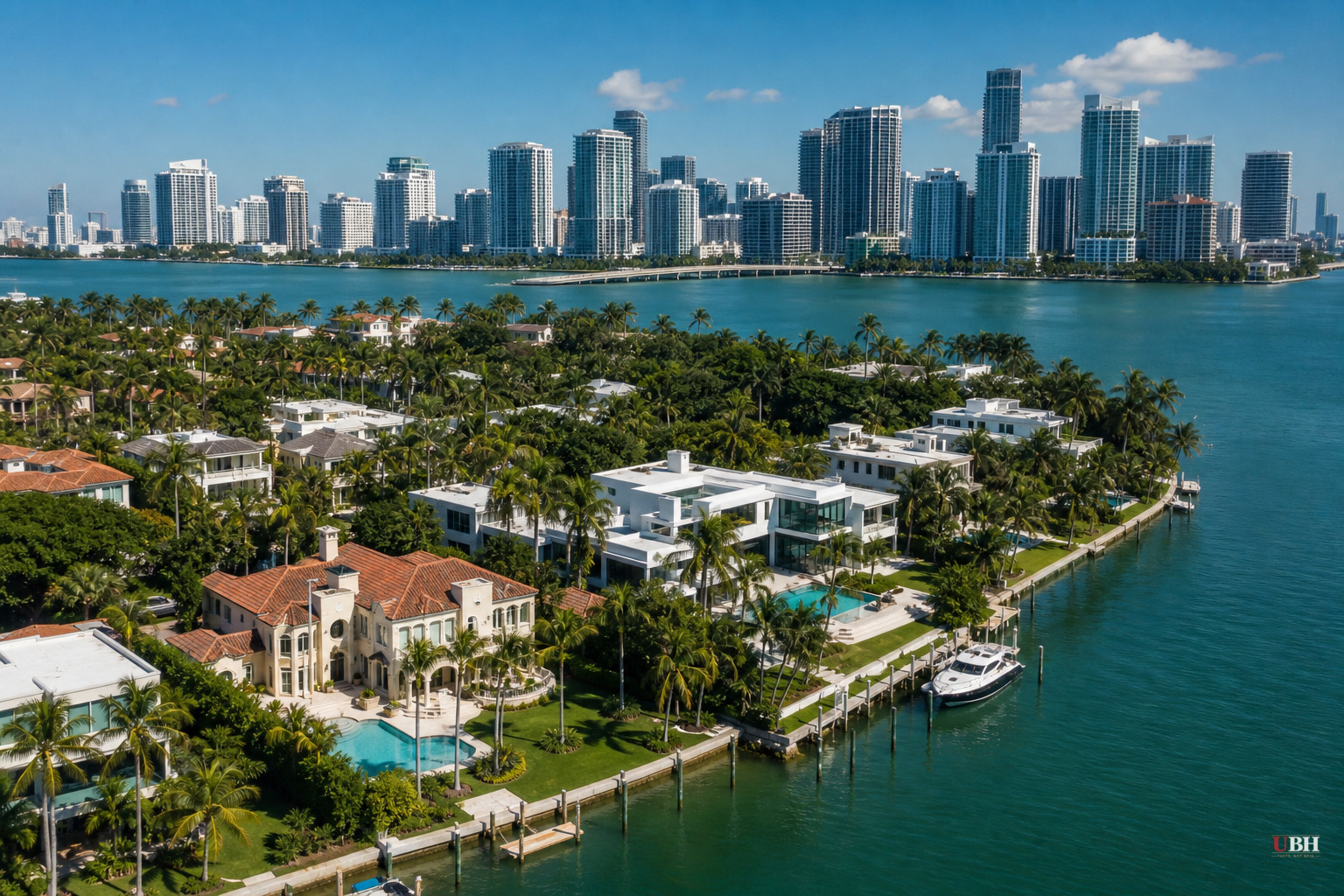
Miami-Dade County recorded 24 single-family home and condo sales above $30 million in the first six months of 2026, according to real estate analytics firm Analytics Miami, as cited by Bloomberg News. That's nearly double the same period a year earlier and puts South Florida on pace to top its own 2025 record of 33 such deals.
New York City posted 17 residential sales above $30 million in the same window, according to Olshan Realty's luxury market report, also cited by Bloomberg. The San Francisco Bay Area recorded 9. For the first time in this data set, Miami-Dade has outpaced both traditional luxury strongholds.
The scale of the shift stands out. In 2019, Miami-Dade saw just two sales above $30 million all year, according to Analytics Miami. Going from two deals a year to 24 in six months represents a significant acceleration in the market.
Why brokers say buyers are moving
Ana Bozovic, founder of Analytics Miami, told Bloomberg that wealthy buyers are responding to policy, not just weather. "People are recognizing that their previous places of domicile are seeing an increase in policies that are detrimental to their wealth and businesses," she said.
Josh Flagl, the luxury broker and Million Dollar Listing Los Angeles star, told the New York Post that demand isn't letting up even in Miami's slow season. Flagl said he has a $10 million listing on North Bay Road that's getting daily showings in the middle of summer, when he says most buyers are typically out of town.
The Bureau of Economic Analysis's latest Regional Price Parities report found the Miami-Fort Lauderdale-West Palm Beach metro area has overtaken greater New York City on its measure of regional price levels, a federal gauge comparing the cost of a broad basket of goods and services. Miami is no longer the discount alternative it once was. It's now pricing closer to, or above, New York on everyday costs, even as it keeps its zero state income tax.
The Kushner and Griffin cases
The New York Post reported this week that Charles Kushner, the real estate developer and father of Jared Kushner, is leaving New York City for Florida. Kushner told the Post his decision was driven by what he called Mayor Zohran Mamdani's antisemitism and by Mamdani's targeting of hedge fund billionaire Ken Griffin.
Mamdani, according to the Post, promoted a pied-à-terre tax proposal in a video filmed outside Griffin's Central Park South penthouse. Kushner defended Griffin directly: "Ken Griffin worked hard to earn all that money. He took a lot of risk to earn all that money. That's what America's about."
Griffin has already acted on the friction. After Mamdani's post, Griffin said his firm, Citadel, would shift more jobs to South Florida instead of New York over the next decade. Citadel had already relocated its headquarters to Miami in 2022, so this marks an acceleration of a move already underway rather than a new decision.
What's proven and what isn't
The sales numbers are hard data, tied to named sources: Analytics Miami and Olshan Realty, both cited by Bloomberg. The Regional Price Parities comparison is a federal government statistic, not an estimate. Those are facts.
The causal story, that high earners are fleeing specifically because of Mamdani or New York and California tax policy, is a mix of documented moves and individual testimony. Kushner's stated reasoning is his own, on the record. Bozovic's framing is her professional read of the market, not a controlled study isolating tax policy from other factors like climate, remote work, or simple market momentum. A fair skeptic could note that Florida's luxury boom started well before Mamdani took office and reflects years of accumulated migration, not a single policy or politician.
The trend line is not new and not disputed. Wealthy buyers have been moving toward Florida for years, and the first-half 2026 numbers show that migration accelerating rather than leveling off. Whether Miami can sustain a pace that would beat last year's full-year record of 33 sales depends on the back half of 2026, numbers that haven't been reported yet.
The question now is whether New York and California adjust policy in response, or whether the wealth exodus becomes an accepted cost of doing business in high-tax states. Mamdani's office has not issued a detailed response to the Kushner and Griffin remarks referenced in the Post's reporting.
Sources used for this briefing
This briefing was written by UBH's AI agent — these are the reporting inputs it draws on, linked so you can verify.


