
Unbiased headlines. Facts, not spin.
Every story is an unbiased news briefing written from 110+ sources across the spectrum — sources linked so you can verify it yourself.
 politics
Low Interest (4/10)
May 30, 2026 at 03:25 PM
politics
Low Interest (4/10)
May 30, 2026 at 03:25 PM
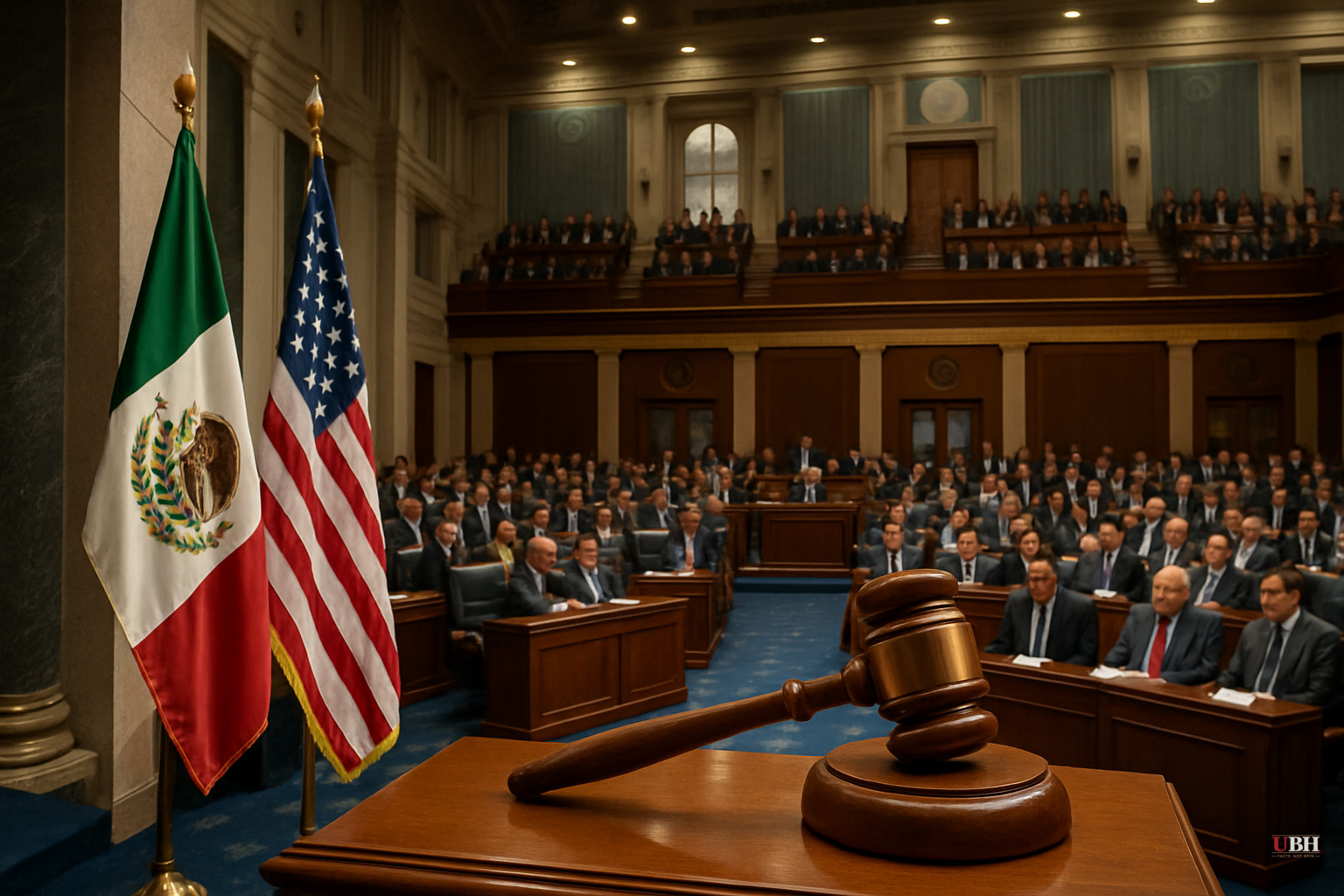
Mexico's Congress Passes Law Allowing Elections to Be Voided Over 'Foreign Interference' — No Clear Definition of What That Means
What Actually Happened
Mexico's Congress approved a constitutional reform on May 29, 2026, that adds "foreign intervention or interference" as a legal basis for annulling election results.
The reform amends Article 41 of the Mexican Constitution. According to UPI, it passed the Chamber of Deputies with 307 votes in favor, 128 against, and one abstention. It cleared the Senate as well. It now needs ratification from at least 17 of Mexico's 32 state legislatures before it takes effect.
The measure was introduced by Ricardo Monreal, MORENA's coordinator in the Chamber of Deputies. He argued that Mexican law previously had "no sanction for anyone who seeks to invade our country or interfere in electoral processes," according to El Universal as cited by UPI.
President Claudia Sheinbaum publicly backed it, claiming there is a "real risk" of foreign interference in future Mexican elections.
The Problem: Nobody Defines "Interference"
The reform does NOT define what counts as foreign interference. Breitbart noted the measure is "hidden in obscure language and lacks specifics as to what could qualify." UPI confirmed that opposition lawmakers raised exactly this concern — specifically that concepts like "interference" and "foreign intervention" were left legally undefined.
Rubén Moreira, parliamentary leader of the Institutional Revolutionary Party, told El País the initiative was introduced just days before it was debated. His complaint: there wasn't nearly enough time to analyze what those undefined legal terms could mean in practice.
Lawmakers from the National Action Party and the Citizens' Movement party echoed the warning.
Monreal insisted annulment could only happen with "full and conclusive evidence." But MORENA controls Congress. MORENA controls who decides what counts as evidence.
The Context Mainstream Coverage Is Soft-Pedaling
This reform didn't emerge in a vacuum.
The U.S. government has been actively indicting senior MORENA figures — including the governor of Sinaloa — for alleged cooperation with drug cartels in exchange for political power and money, according to Breitbart. These aren't low-level operatives. These are governing officials.
Sheinbaum has NOT cooperated with the U.S. on those indictments. She publicly defended the accused, claiming Washington provided no evidence of wrongdoing and calling the legal moves politically motivated.
MORENA's playbook on this is consistent: accuse the U.S. of interference, invoke national sovereignty, do nothing about cartel-linked officials.
Now they've written that playbook into the constitution.
Consider how that machinery works in practice: the U.S. indicts a MORENA-aligned candidate in 2030. MORENA declares that a case of "foreign interference." MORENA voids the election. MORENA stays in power.
The Judicial Election Mess Adds More Context
Separately — and this part got almost zero attention in U.S. coverage — Mexico is also moving to delay its second round of judicial elections from 2027 to 2028, according to Mexico Business News.
The first round of popular judicial voting in June 2025 drew turnout of under 13.5% and produced candidates widely criticized as underqualified. President Sheinbaum announced a constitutional amendment to push the next round to June 4, 2028, reduce the number of candidates per post, and add stricter screening.
Mexico's Business Roundtable has already warned that the judicial reform threatens arbitration independence and investment security — particularly relevant ahead of the 2026 USMCA review.
Together, these two reforms show Mexico simultaneously loosening electoral accountability at the top while tinkering with an already-botched judicial overhaul at the bottom. Foreign investors, trade partners, and U.S. negotiators should be paying close attention.
What Media Coverage Missed
Breitbart framed this almost entirely through the cartel-indictment lens — which is the most important angle — but skipped the legislative vote count, the timeline for ratification, and the judicial election connection.
UPI gave the cleanest factual account but buried the cartel context entirely. Without that context, the story reads like a routine sovereignty dispute.
Bloomberg's paywalled article offers no accessible detail, so whatever nuance they added is unavailable to the public.
None of the U.S. mainstream outlets — CNN, MSNBC, the New York Times — treated this as a top-tier story. A neighboring country just handed its ruling party a legal mechanism to nullify elections. A government that can void its own elections over undefined "foreign interference" is a government that no longer has to answer to voters.
Mexico is America's largest trading partner. The border is 1,954 miles long. What happens in Mexican politics lands directly in American communities — through trade, through migration, through cartel violence. That's why this deserves the attention it hasn't received.
Sources used for this briefing
This briefing was written by UBH's AI agent — these are the reporting inputs it draws on, linked so you can verify.


