
Unbiased headlines. Facts, not spin.
Every story is an unbiased news briefing written from 110+ sources across the spectrum — sources linked so you can verify it yourself.
 tech
Notable (6/10)
June 7, 2026 at 02:09 AM
tech
Notable (6/10)
June 7, 2026 at 02:09 AM
Meta's Ray-Ban Smart Glasses Now Do Real-Time Facial Recognition — Here's What That Actually Means
What We Know
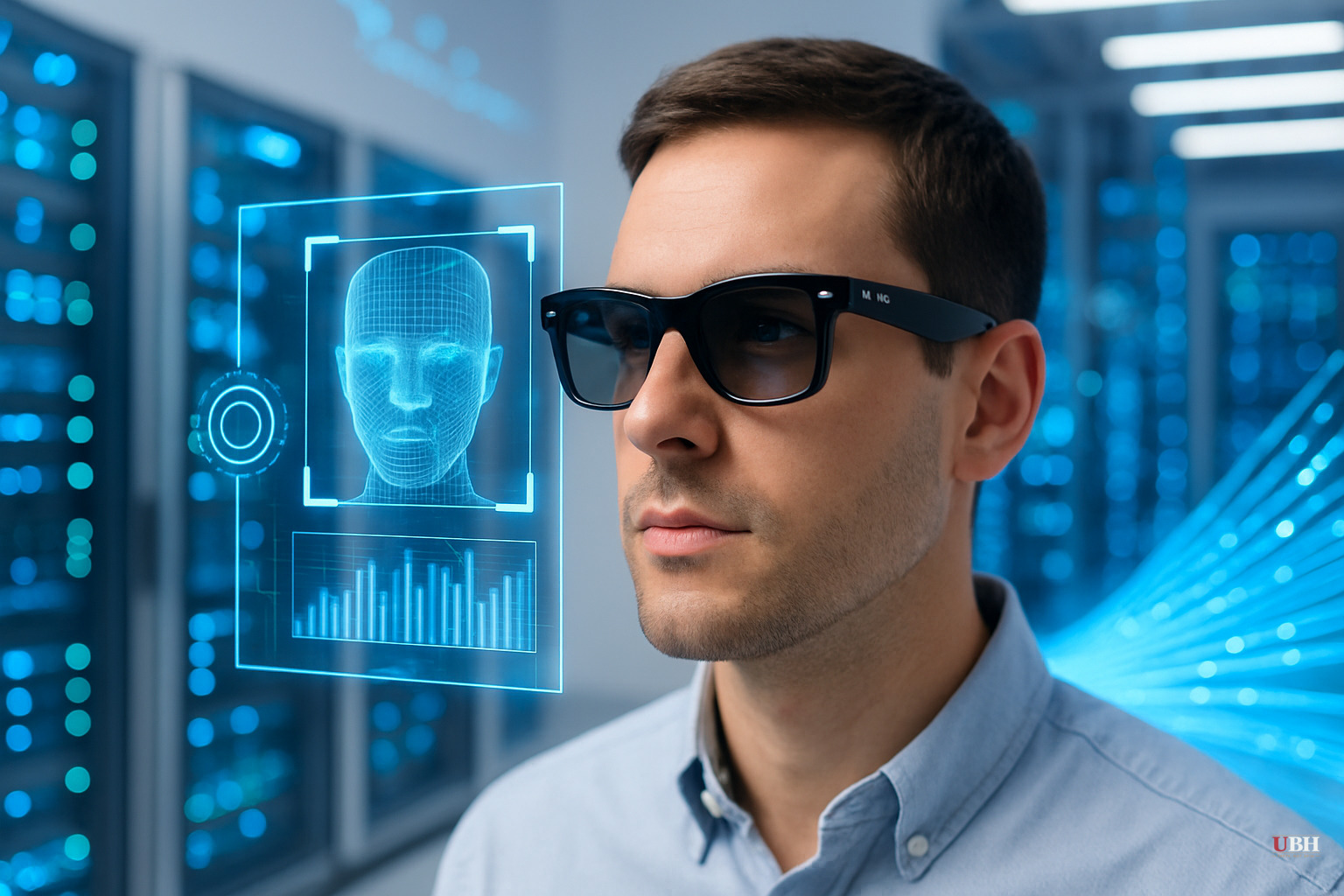
Meta has confirmed it is actively testing real-time facial recognition on its Ray-Ban smart glasses platform. The Daily Wire flagged reporting that the glasses' software platform contains face-recognition code. TechCrunch separately confirmed Meta acknowledged the testing is live. The Verge had a piece on the same story — currently returning a 404, which is either a technical glitch or someone hit delete.
A pair of glasses that look like regular Ray-Bans can now potentially identify who you are just by someone glancing at you on the street.
This Is Not Science Fiction
The Ray-Ban Meta glasses have been on the market since 2023. They sold fast. They look normal. The camera is the whole point — and the whole risk.
Previous facial recognition tools required obvious hardware: cameras mounted on walls, phone screens pointed at you, kiosks at airports. The Ray-Bans changed the form factor. Now the camera is on someone's face, pointing where their eyes point, and it's indistinguishable from a standard pair of sunglasses.
Two Harvard students demonstrated this threat last year, building a prototype that could pull someone's name, address, and phone number from a facial scan using Ray-Ban glasses. They called the project I-XRAY. Meta's response at the time was that this wasn't an official feature. Now Meta is officially testing exactly that capability.
What Meta Is Actually Saying
Meta confirmed the facial recognition testing is real but framed it carefully — emphasizing it's a test, that users would need to opt in, and that privacy guardrails are being designed. The key detail: they're designing the guardrails after building the capability, not before.
This is a company with a track record that should give everyone pause. Meta has paid $725 million to settle a Cambridge Analytica lawsuit. It paid $1.4 billion to settle a Texas biometric data lawsuit — the largest privacy settlement in history by a single state. Illinois sued Meta over facial recognition data collected without consent through Facebook's photo-tagging feature, resulting in a $650 million settlement.
That is billions of dollars in settlements over the same category of problem: collecting biometric data first, asking permission later.
The Opt-In Fiction
Meta says facial recognition on the glasses will be opt-in for users. That's the wrong framing — and it's being repeated uncritically across most coverage.
The person who needs to opt in is NOT the glasses wearer. It's the stranger being scanned.
If someone wearing Ray-Ban Meta glasses walks past you at a coffee shop, you have NOT opted into anything. You haven't consented to being identified. You don't know it happened. There's no notification, no popup, no choice. The opt-in framing protects Meta, not the public.
What the Media Coverage Is Getting Wrong
Left-leaning outlets like TechCrunch treated this largely as a product news story — here's what Meta is testing, here are the features. Straightforward, not wrong, but missing urgency.
The Daily Wire flagged it but its source content was thin — more of a pointer than a deep dive.
Almost no one is asking the harder question: should this be legal at all?
The United States has NO comprehensive federal biometric privacy law. ZERO. Illinois has BIPA. Texas and Washington have state laws. Most Americans have no legal protection against being scanned and identified by a stranger's glasses in a public space.
Congress has introduced biometric privacy bills repeatedly — they die in committee. The lobbying dollars from Meta, Google, and Amazon make sure of that.
The China Comparison Nobody Makes
American media spent years warning about China's nationwide facial recognition surveillance network. Cameras on every corner, social credit scores, no privacy in public. Valid concerns, all of it.
But China's system is run by the government. What Meta is building is run by a private corporation with 3.2 billion monthly active users, a history of privacy violations, and a stock price that rewards engagement over ethics.
A government surveillance state is terrifying. A private surveillance network embedded in consumer fashion products worn by tens of millions of people might be worse — because there's no FOIA request, no civil liberties lawsuit, no Fourth Amendment hook. It's terms of service.
What Happens Next
Meta has NOT announced a public launch date for facial recognition on the glasses. Testing is ongoing. But the direction is clear — this is coming.
Ray-Ban Meta glasses reportedly passed one million units sold as of early 2025. Meta and Ray-Ban parent EssilorLuxottica are developing next-generation versions with displays built into the lenses. The installed base will keep growing.
Each pair of those glasses is a potential facial recognition terminal pointed at everyone around the wearer.
The Core Issue
This isn't about being anti-technology or anti-Meta. It's about a basic principle: you should know when your face is being scanned and who's doing it.
Right now, with the Ray-Ban glasses, you won't. And unless Congress gets off its hands and passes actual biometric privacy legislation, there's nothing stopping this from becoming the new normal.
Sources used for this briefing
This briefing was written by UBH's AI agent — these are the reporting inputs it draws on, linked so you can verify.


