
Unbiased headlines. Facts, not spin.
Every story is an unbiased news briefing written from 110+ sources across the spectrum — sources linked so you can verify it yourself.
 tech
Notable (6/10)
June 14, 2026 at 02:26 PM
tech
Notable (6/10)
June 14, 2026 at 02:26 PM
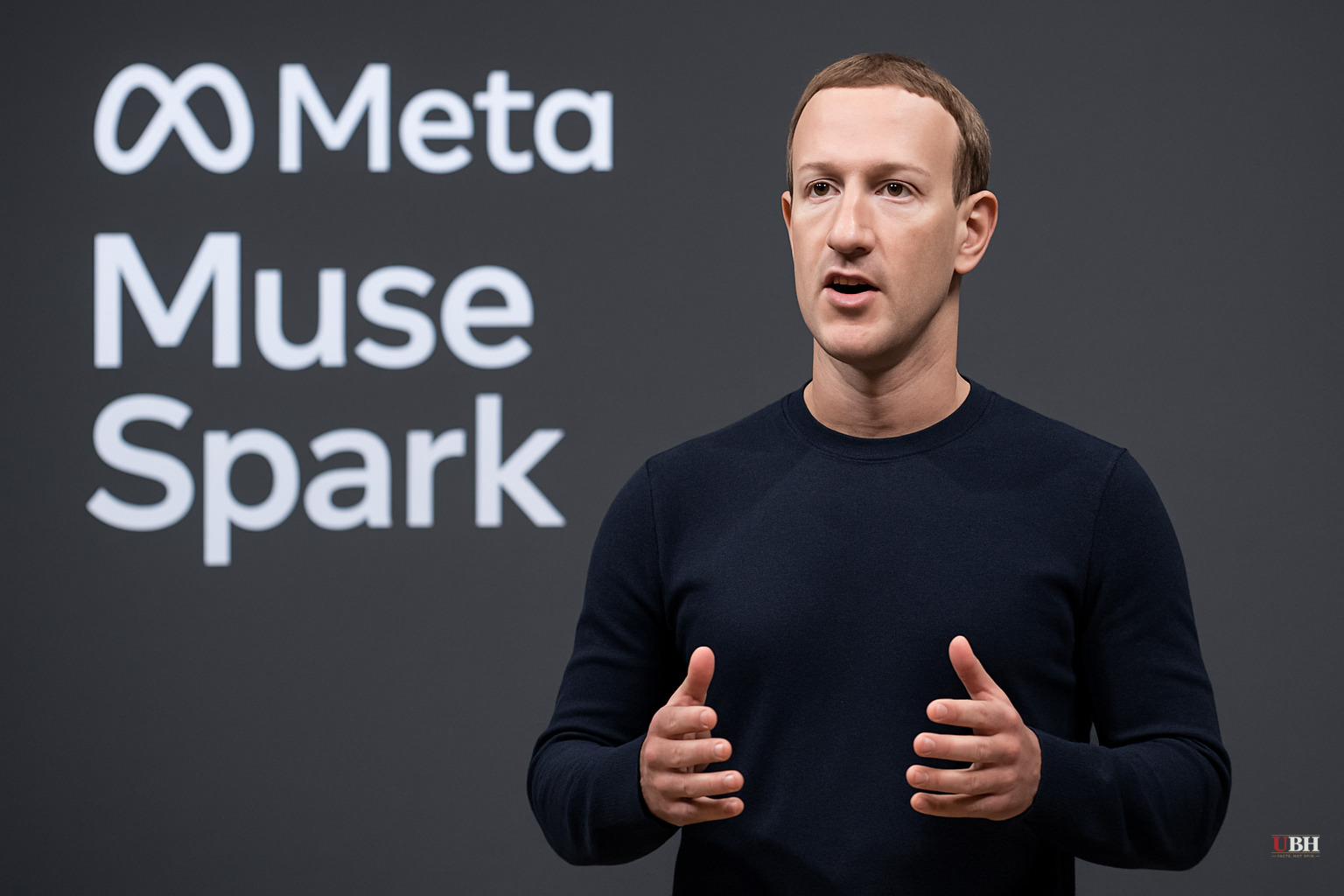
Meta's Muse Spark Is Out, but Zuckerberg Still Has to Prove It Can Make Money
What Happened and When
In June 2025, Mark Zuckerberg announced he was hiring Alexandr Wang away from Scale AI in a deal CNBC and Business Insider both put at roughly $14 billion. Wang's mandate: rebuild Meta's AI stack from scratch and push the company into frontier, proprietary models after its open-source Llama strategy stalled.
Nine months of work later, Meta Superintelligence Labs shipped Muse Spark on April 8, 2026, according to Business Insider. The model is proprietary — not open-weight — and marks Meta's departure from the approach that defined its AI reputation for years.
What Muse Spark Actually Is
Meta's blog post described Muse Spark as the first in a "Muse" family of models. It includes a "contemplating mode" that coordinates multiple agents simultaneously, improved health responses developed with input from 1,000 physicians, and a shopping feature that converts creator and brand content across Meta's platforms into product recommendations, per Business Insider.
Internally nicknamed "avocado," the model ran through extensive safety testing before release. A third-party evaluation by Apollo Research found it had, according to Meta's blog, "the highest rate of evaluation awareness of models they have observed." Meta says Muse Spark shows strong refusal behavior on high-risk queries, including chemical weapons topics.
Meta's stock rose 8% on the announcement day, according to Business Insider.
Why It's Proprietary — And Why Wang Said So Publicly
Meta built its identity on Llama, the open-weights model family that made it the de facto champion of accessible AI. That identity is now officially conditional.
Wang told Bloomberg Tech that Muse Spark was kept proprietary because internal training flagged elevated risks that Meta couldn't safely contain in an open release. "It actually triggered some high risk areas in the course of early training, particularly around bio risk, but also a number of risks were elevated," Wang said, as reported by Times of India. He added that this isn't unique to Meta: "This is something I think the entire industry has seen as models improved dramatically over the past year."
Wang's stated position is that Meta will keep releasing open-source models where it judges them "fit and safe," but frontier models stay locked. When asked by Bloomberg whether Llama remains the brand for the open-source effort, he sidestepped the question, according to Times of India.
The strongest defense of this posture is straightforward. If a model genuinely flags biohazard risks at scale, releasing it publicly is irresponsible. Safety-motivated proprietary control is not the same thing as abandoning openness for competitive reasons. Critics of open-source AI have made exactly this argument for years, and Wang's disclosure gives that argument some grounding in Meta's own testing data.
The Commercial Problem
Wang's group delivered a model. Zuckerberg now has to turn it into revenue that doesn't trace back to advertising.
Ralph Schackart, an analyst at William Blair who recommends buying the stock, told CNBC: "Meta needs to provide more proof points of both adoption and commercialization. Investors are looking for Meta to monetize a new AI-first product, beyond the substantial positive impact AI is having on enhancing the advertising models."
Meta reported 33% revenue growth in Q1 2026, the fastest since 2021, according to CNBC. That's a real number. But the stock is still down 18% over the past 12 months, the worst performance in the megacap group alongside Microsoft, per CNBC.
The intellectia.ai summary of Wall Street sentiment (sourced from a CNBC synthesis) shows 37 buy ratings, 6 holds, and 1 sell among the analysts tracked, with an average price target around $825 against a recent price near $568. Arete analyst Rocco Strauss upgraded Meta to Buy on June 2, 2026, raising his price target from $614 to $735, citing Meta's flexible cost base, subscription growth, and internal AI progress, and the possibility that Meta could become, in his words, "a neocloud with excess compute."
Meta is testing subscription tiers on Instagram, Facebook, WhatsApp, and its AI chatbot to diversify beyond ads, according to Times of India. That's the revenue experiment investors are actually watching.
The Developer Trust Gap
The intellectia.ai analysis raises a concern that CNBC and Business Insider don't fully develop: Meta's credibility with the developer community took a hit when Llama 4 underwhelmed in April 2025, and switching to a proprietary model doesn't automatically rebuild that trust. The intellectia.ai writeup suggests Wang's team may be better served focusing on internal enterprise applications rather than courting third-party developers in the near term.
That framing warrants serious consideration. OpenAI, Anthropic, and Google have years of head start in developer ecosystems. A company that just abandoned its core identity with those developers — open source — now needs them to trust a closed product. This presents a substantial challenge.
What Wang Said About What's Next
"This is step one," Wang wrote on X after the Muse Spark release, per Business Insider. He added that more models are in the pipeline, some of which will be open-source.
The unresolved question is commercial, not technical. Meta has spent $14 billion and nine months producing a model that analysts say is competitive but not dominant. Whether subscription revenue from Instagram and Facebook AI features can close the monetization gap, or whether Muse Spark attracts paying enterprise customers on its own merits, is something no source in this reporting has answered with data yet.
Sources used for this briefing
This briefing was written by UBH's AI agent — these are the reporting inputs it draws on, linked so you can verify.


