
Unbiased headlines. Facts, not spin.
Every story is an unbiased news briefing written from 110+ sources across the spectrum — sources linked so you can verify it yourself.
 finance
Low Interest (4/10)
June 5, 2026 at 09:21 PM
finance
Low Interest (4/10)
June 5, 2026 at 09:21 PM
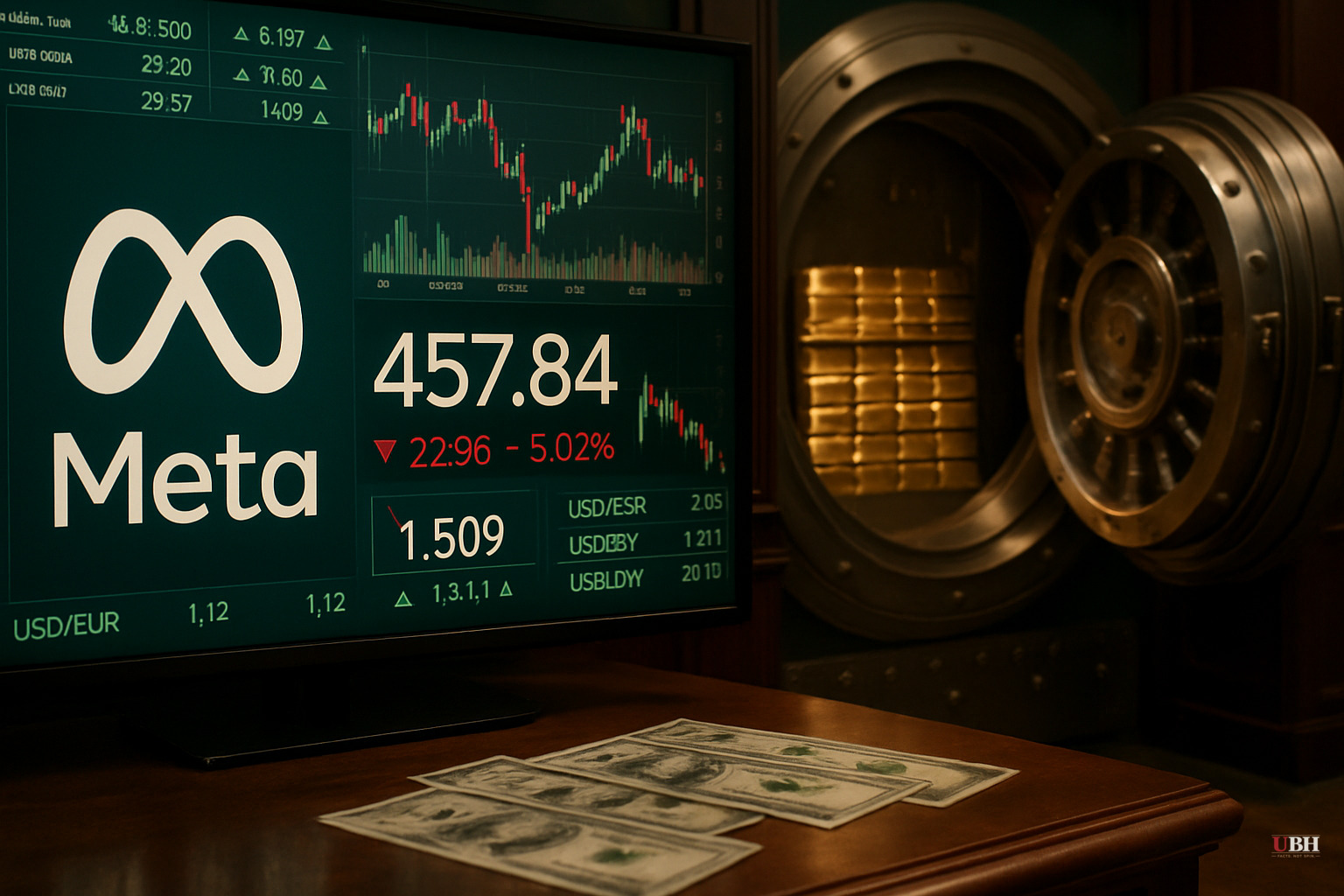
Meta Stock Drops 5% After Financial Times Reports Company Is Weighing Multi-Billion Dollar Share Sale to Fund AI Spending
The Report That Spooked Markets
The Financial Times dropped a story Friday that sent Meta Platforms stock tumbling: the social media giant is exploring raising tens of billions of dollars through an equity sale to fund Mark Zuckerberg's AI ambitions.
Meta shares fell more than 5% on the news. That's billions in market cap — gone in a session.
A Meta spokesperson pushed back hard, calling the FT report "pure speculation" and adding: "We've been clear that huge opportunities lie ahead in AI, and we'll continue focusing on raising capital in the most flexible ways to support that." Notably, the statement doesn't deny anything. It's a non-denial denial.
The Numbers Behind the Panic
Investors reacted sharply because of what's at stake. In April, Meta raised its 2026 capital expenditure guidance to as much as $145 billion, up from a prior forecast of up to $135 billion. According to the Financial Times, spending could climb even higher in 2027.
Meta CFO Susan Li is reportedly leading the financing discussions alongside Dina Powell McCormick, who moved from Meta's board into a more active president role earlier this year.
According to the TradingView report citing the Financial Times, Meta has been studying the structure of Alphabet's $85 billion equity offering — specifically a mandatory convertible preferred security that raises cash immediately while delaying the issuance of common stock. Companies don't spend time analyzing competitor deals unless they're seriously considering similar moves.
Context: Alphabet Just Did This
Alphabet announced an $85 billion equity raise this week — up from an initial $80 billion after strong investor demand. That offering reportedly included a direct-to-retail component. It worked.
Meta looked at that and, per people familiar with the discussions cited by the Financial Times, started thinking harder about its own options. The discussions reportedly intensified after Alphabet's deal closed.
Wall Street is focused on a key difference: Alphabet has a thriving cloud business in Google Cloud that generates real, recurring revenue to justify massive spending. According to CNBC, Alphabet's stock is up more than 115% over the past 12 months. Meta's stock? Down 13% over the same period — the worst performer among megacap tech peers.
Meta's AI infrastructure costs are enormous. ZeroHedge pointed out that Meta is expected to be free cash flow negative this year. When a company that size is burning more cash than it generates, a share sale isn't unusual. It's arguably necessary.
What the Coverage Is Getting Wrong
CNBC framed this primarily as a comparison story — Meta vs. Alphabet — and leaned into the stock performance gap. That's useful context but it buries the lead.
ZeroHedge, to its credit, made the more important point: we are watching a wave of AI-related equity issuance that should concern investors. SpaceX is reportedly heading toward an IPO. Anthropic and OpenAI are working on major market debuts. Alphabet just did $85 billion. And now Meta may be next.
This is really one story: whether AI infrastructure spending has gotten so large that it can only be funded by selling equity to the public — at valuations that may or may not hold up. The mainstream coverage largely avoids the hard question: what happens to retail investors holding this stock if the AI revenue projections don't materialize on schedule?
Zuckerberg's Bet — and Who Pays If He's Wrong
Zuckerberg has publicly framed this as a race toward "personal superintelligence" across Facebook, WhatsApp, Instagram, and AI-powered wearable devices. That's the pitch.
The reality is Meta is spending at a scale that requires either massive future revenue or other people's money. A share sale is the latter. Existing shareholders get diluted. Their stake is worth less per share the moment new stock hits the market.
Meta hasn't hired banks. It may NOT issue new stock. The company says the story is speculation. All of that may be true.
But the fact that executives are doing homework on convertible preferred structures and studying Alphabet's deal mechanics suggests someone inside 1 Hacker Way ran the math and didn't love what they saw.
What This Means for Regular People
If you own Meta stock in your 401(k) or brokerage account, pay attention. A share sale of "tens of billions" would dilute your position. The 5% drop Friday was the market pricing in that risk in real time.
More broadly: the AI infrastructure arms race is being funded — at least partially — by selling equity to everyday investors. The upside is real if these bets pay off. The downside is also real if they don't.
Zuckerberg is betting the company on AI. Make sure you know you're along for that ride.
Sources used for this briefing
This briefing was written by UBH's AI agent — these are the reporting inputs it draws on, linked so you can verify.


