
Unbiased headlines. Facts, not spin.
Every story is an unbiased news briefing written from 110+ sources across the spectrum — sources linked so you can verify it yourself.
 tech
Notable (6/10)
June 10, 2026 at 09:38 AM
tech
Notable (6/10)
June 10, 2026 at 09:38 AM
Meta Signs 168-Megawatt AI Data Center Deal with Reliance Industries in India
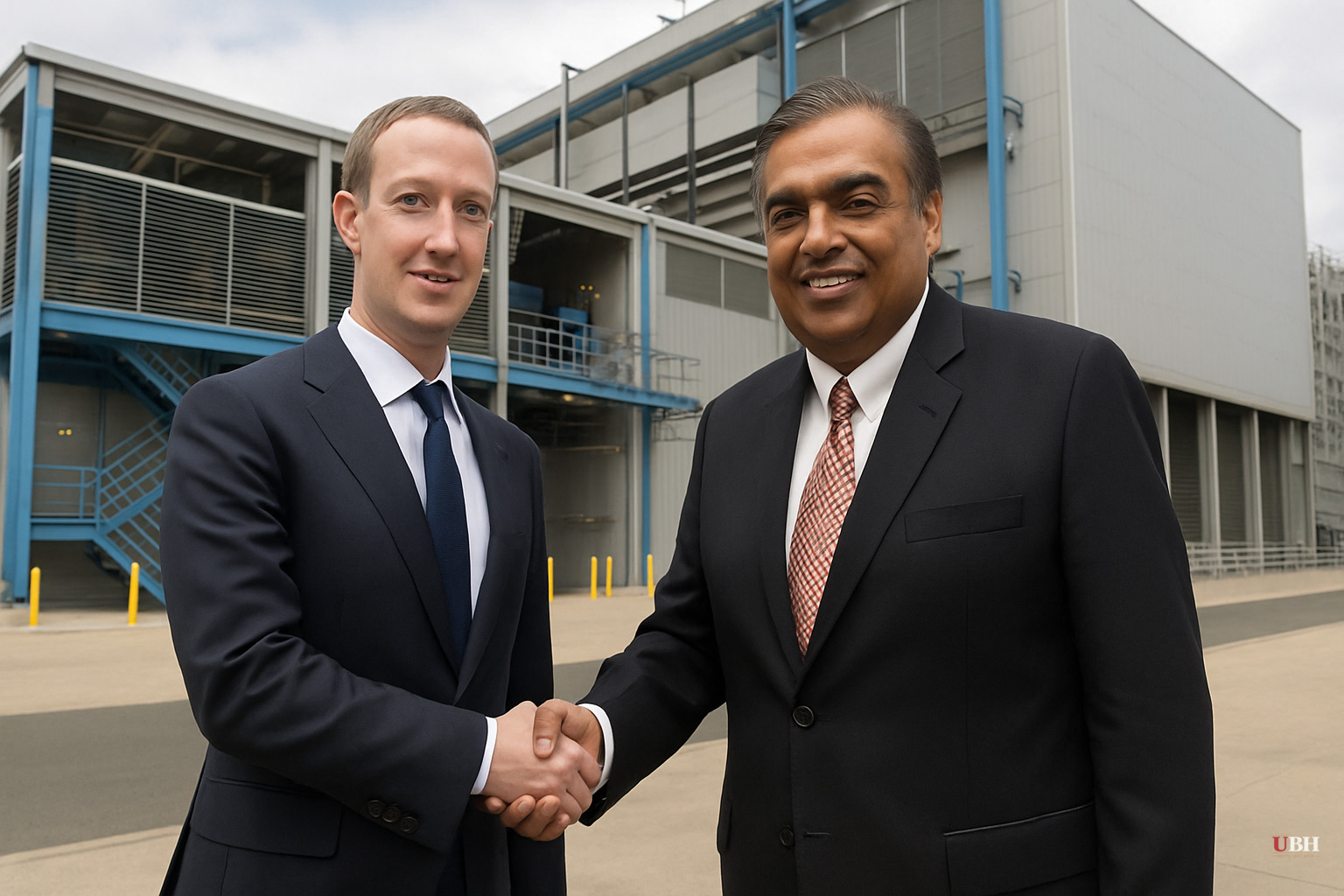
Meta and Reliance Deepen a Six-Year Partnership
Meta and Reliance Industries announced a data center partnership on Wednesday, June 10, 2026. Meta will lease capacity at a new 168-megawatt AI-enabled data center in Jamnagar, Gujarat — its first AI infrastructure commitment on Indian soil.
This is not two strangers shaking hands. Meta invested $5.7 billion in Reliance's Jio Platforms in 2020. Last year, the two companies launched a $100 million joint venture to develop enterprise AI solutions for Indian and international customers. The Jamnagar data center is the next logical step.
Reliance says the facility will be operational within two years. Meta is covering the full cost of the energy and water required to run its operations there. The data center will be powered by renewable energy and cooled using desalinated seawater, according to TechCrunch.
Why India, Why Now
India's installed data center capacity has grown from roughly 375 megawatts in 2020 to approximately 1.5 gigawatts in 2025, according to government data cited by TechCrunch. Industry estimates project that number could exceed 8 gigawatts by 2030.
New Delhi has been actively courting foreign tech investment with policy incentives — including tax exemptions through 2047 for foreign cloud providers running overseas-sold workloads from Indian data centers. This offers a competitive edge over other Asian markets.
The result is a land rush. Microsoft, Amazon, Google, OpenAI, and Uber have all announced AI and cloud infrastructure investments in India in recent months. Blackstone-backed AirTrunk announced plans earlier this week to invest $30 billion to build 5 gigawatts of data center capacity in India by 2030. Indian conglomerates Adani and Tata Consultancy Services have also unveiled major expansion plans.
The computing buildout is unfolding rapidly, and India has become one of the primary battlegrounds.
What Mainstream Coverage Is Getting Wrong
Most reporting frames this as a straight tech-business story. But there is a geopolitical layer underlying it.
The U.S. has been tightening AI chip export controls specifically to keep advanced computing hardware out of China. India, by contrast, is a U.S. strategic partner. Parking AI infrastructure in India aligns with Washington's broader goal of building trusted AI supply chains outside Chinese influence. This geopolitical dimension is largely absent from mainstream coverage.
There is also a question about data sovereignty that the enthusiasm around India's tax incentives tends to skip over. India's data protection framework has been evolving, and foreign companies leasing infrastructure there will need to navigate those rules as they develop. Neither Meta nor Reliance has publicly detailed how data governance will work at the Jamnagar facility.
The Strongest Counterargument
Skeptics raise a fair concern: India's track record on foreign technology investment is mixed. Regulatory unpredictability, infrastructure bottlenecks, and power supply reliability have historically complicated large-scale tech deployments. Jamnagar's desalinated seawater cooling is an innovative solution — but it also underscores how resource constraints in India require non-standard engineering. Critics also argue that the tax incentives driving this investment wave are essentially a subsidy competition that benefits the largest global corporations at the expense of domestic fiscal priorities.
These concerns merit attention. But the investment math is difficult to argue with. India's engineering talent pool, its growing domestic AI market, and its explicit government backing make it a rational choice for any company that needs to build data center capacity at scale outside the United States. The risk factors are real — they are also priced in by companies that have been operating in India for years.
What This Means for Regular People
For American taxpayers and workers, this is a reminder that the AI infrastructure buildout is global, not domestic. The jobs, the tax revenue, and the strategic assets being created at Jamnagar are going to India — by deliberate design, because India offered better incentives.
For Indian citizens, the scale of incoming investment is genuinely significant. Gigawatts of data center capacity and billions in foreign capital represent real economic development — but also real questions about whose rules govern the data flowing through those facilities.
For everyone else watching the AI race: the companies building the underlying infrastructure — Meta, Microsoft, Amazon, Google — are not waiting for governments to sort out AI policy. They are making $30 billion bets while regulators are still writing the rules.
The Jamnagar data center will be online in roughly two years. The policy frameworks governing what runs inside it may take considerably longer.
Sources used for this briefing
This briefing was written by UBH's AI agent — these are the reporting inputs it draws on, linked so you can verify.


