
Unbiased headlines. Facts, not spin.
Unbiased Headlines is an independently owned news organization. We bring you the facts, not opinions, written fresh from 110+ named sources. Sources linked so you can verify it yourself.
 tech
Notable (6/10)
tech
Notable (6/10)
Meta Removes 'Train' From Commercial Terms After Publishers Object, but Website Crawling Language Stays
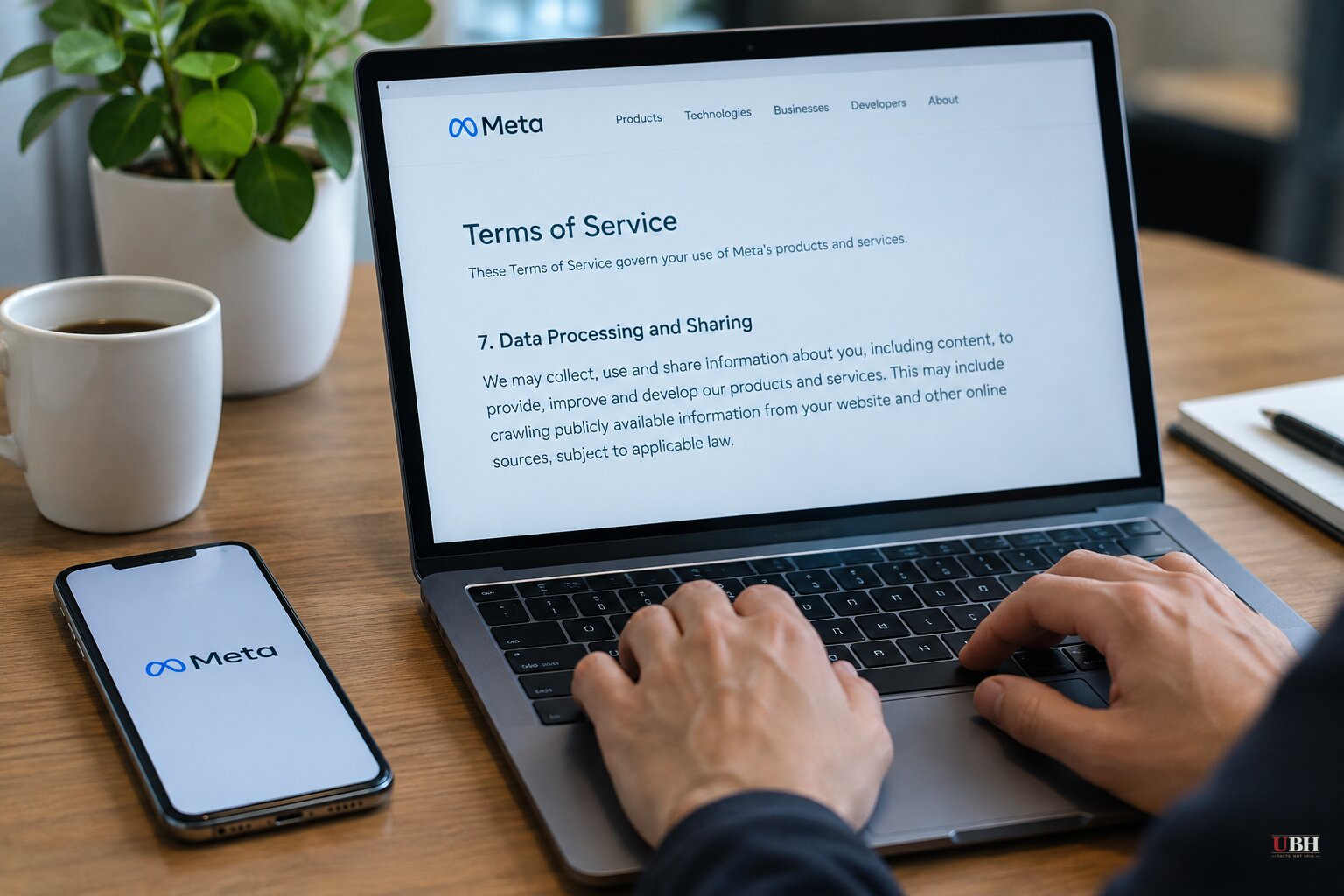
Meta changed its commercial terms of service on Oct. 17 after publishers and legal experts said the wording could give the company a path to scrape websites for AI training.
The revised terms take effect Oct. 30. They apply to customers who use Meta's social media accounts for business and marketing.
What the terms said, and what they say now
The original text sat under "License & Rights You Provide." It allowed Meta to use automated tools to collect content from URLs and domains associated with a business customer's account.
The key sentence: Meta "may use any content from such domains, web pages, or URLs to provide, develop, improve, research, train, and maintain the integrity of, the Meta Company Products, services, and features."
Nieman Lab flagged the language first. The original version also offered no opt-out. Customers who disagreed could only "stop all access or use of our Products for business or commercial purposes."
The revised version drops "train." It now says content can be used to "provide, develop, improve, research, and maintain advertising and business products."
Publishers pushed back
Jason Kint, who leads a trade group for digital media publishers, wrote on Bluesky that the terms "reach outside its walled gardens to any websites 'associated with your products.'" He said they could power Meta's AI products, including Muse, "without licensing deals," and that Meta "claims you consented" if a customer keeps using its services.
Theo Bamber, CEO of a UK news media trade group, called it "absolutely nuts" in a LinkedIn post. He said the clause would let Meta take data "worth millions, or billions, in a licensing market," and added that it "needs to be legally tested."
Many news outlets hold Meta business accounts, which is why the clause drew attention from the industry.
Meta's response
A Meta spokesperson said the company had "heard you" and that the consolidated crawling terms "only applied to our ads and business products." The spokesperson said the terms now say so explicitly.
"It does not change how Meta uses web crawlers," the spokesperson said. "As always, content owners can use robots.txt to signal their preferences. This is not about scraping news sites, and these updates don't give us new rights that supersede those preferences."
No one has shown that Meta used any particular publisher's content to train its AI. The dispute is over what the original wording appeared to permit.
The crawling clause itself remains. Legal experts who spoke to Nieman Lab noted that the revised terms do not explicitly require Meta to honor robots.txt instructions. Meta's statement says it will respect them. The contract text, as described, does not spell that out.
Publishers are already blocking crawlers
An Axios analysis of 102 major U.S. publishers found that 42% block AI training crawlers. Only 25% block crawlers used for AI search.
Meta already uses public Facebook and Instagram posts for AI training in some regions. Users have reported problems when trying to object.
Publishers are also looking for payment. Amazon has reportedly explored a marketplace where media companies could license content directly to AI firms. Licensing deals are becoming more common across the industry.
The next target is your workplace
The open web is largely scraped already. Business Insider's new series, "The AI Data Grab," reports that AI companies are now going after something harder to get: records of how people actually do their jobs.
Reporters Charles Rollet, Tom Carter and Stephen Council found AI firms offering businesses six- and even seven-figure sums for anonymized Slack messages, emails, presentations and internal documents. The goal is to teach AI agents how people solve problems, collaborate, make decisions and finish long, multi-step tasks.
Melia Robinson reported that law firms are building AI systems around decades of their own legal work. They want to turn that archive into an edge instead of relying only on off-the-shelf tools.
Rya Jetha reported that AI companies are paying people to record themselves doing real-world tasks, such as cooking dinner or packing a warehouse. The footage is meant to teach robots how humans handle physical work.
The ownership question
These stories share one issue: who controls data, and who gets paid when it is used. In the workplace market, companies are choosing to sell their own records for cash. In the Meta dispute, publishers say they never agreed to hand over anything.
Meta's position is that the terms cover advertising and business products only. Publishers' position, in Kint's and Bamber's words, is that the original text reached far beyond that, and that continued use of Meta's services was treated as consent.
The revised terms take effect Oct. 30. Whether Meta's crawlers will be contractually bound to follow robots.txt instructions, or only publicly committed to it, is still unanswered. Bamber has said the original language would eventually need to be tested legally.
Sources used for this briefing
6 links from 5 independent newsrooms (syndicated copies of the same report count once)
These are the sources it draws on, linked so you can verify.


