
Unbiased headlines. Facts, not spin.
Unbiased Headlines is an independently owned news organization. We bring you the facts, not opinions, written fresh from 110+ named sources. Sources linked so you can verify it yourself.
 tech
Notable (6/10)
tech
Notable (6/10)
Always-On AI Wearables From Amazon, Apple and Meta Collide With Wiretap Laws Written Decades Ago
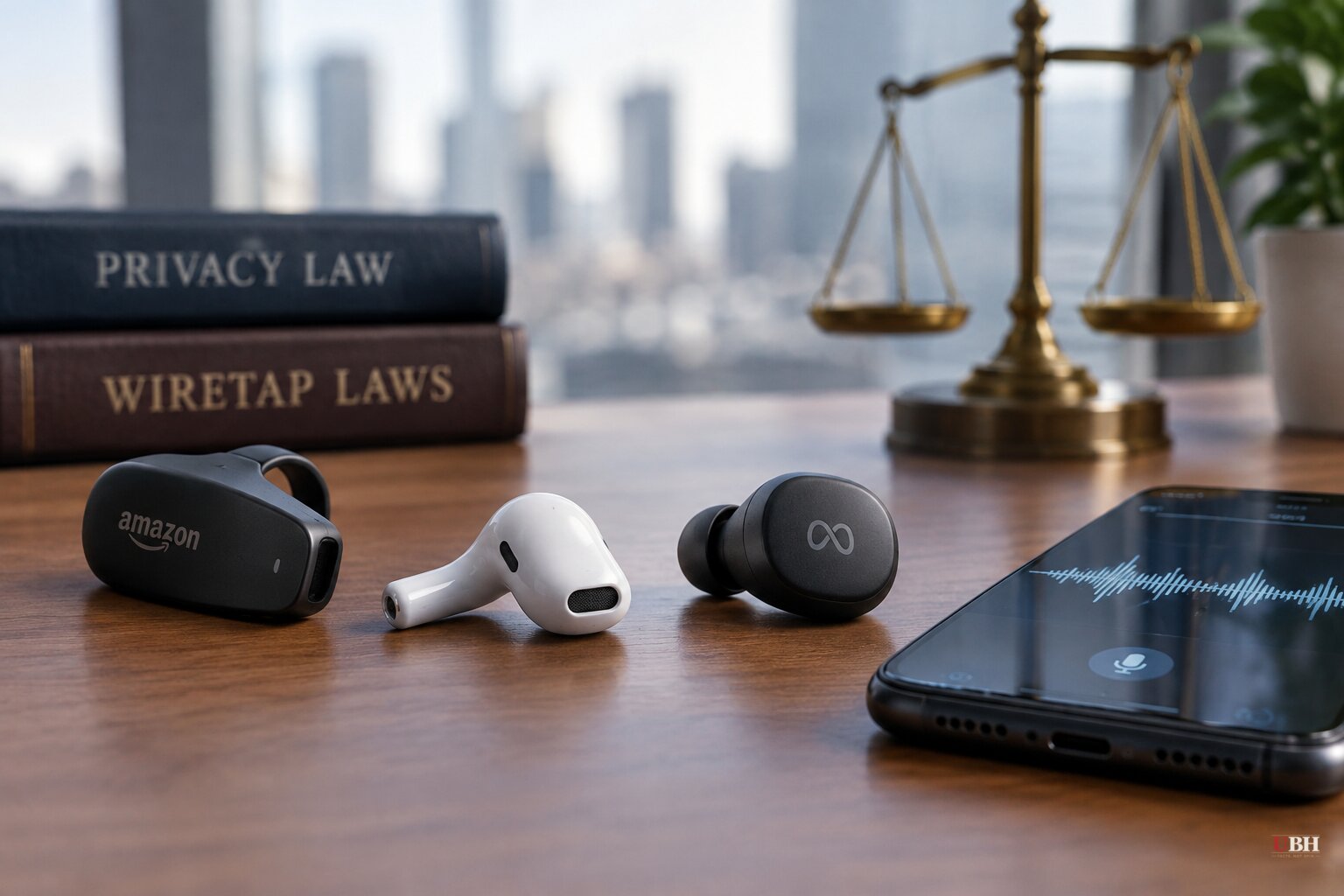
A Pittsburgh business owner named Chris Thomas, 43, wears three recording gadgets at once: Meta's camera-equipped glasses, a Fieldy note-taking pendant and a wristband from Amazon's Bee. He says the stack keeps him organized and gets his bills paid on time.
"I'm forgetful AF," Thomas said. "My life is so crazy that not having to remember to remember is fantastic."
Not everyone around him agrees. Earlier this week a bystander at a local bar spotted his Meta glasses and told him he wasn't comfortable. Thomas says he doesn't just switch the glasses off in that situation. He takes them off, "because people don't really believe it's off."
The hardware is multiplying
Amazon released the Bee Frontier, a wearable, and the Bee Eclipse, a card-shaped add-on for a smartphone, on Thursday, Oct. 15. Both are built to record, transcribe and analyze a user's day.
Apple unveiled the Apple Watch Series 12 in September. It will include Siri Recap, which "ambiently" takes notes through the day and summarizes conversations, and Live Rewind, which recaps the last 15 seconds of a conversation as a text transcript.
Meta's glasses already shoot photos and video and record voice notes. Startups Plaud and Pocket sell card-sized note-takers, and a company called Friend sells an AI necklace.
Where the law gets shaky
Smart speakers drew lawsuits and, in some cases, regulatory fines when they arrived, and those devices at least waited for a wake word. Amazon says an Echo listens only for acoustic patterns that match its wake word, and records and sends audio to the cloud only after it hears one. Amazon also says Alexa devices are built to save as little audio as possible. More than 600 million Alexa-enabled devices have been sold worldwide.
The newer products work differently. Some of them continuously listen, interpret speech and extract its meaning without keeping the underlying audio. That raises a largely untested question: can the processing itself amount to an unlawful interception?
The stakes depend on geography. California, Florida and Illinois are among roughly a dozen states that require every party to a conversation to consent to a recording. California's statute carries potential jail time and civil damages of $5,000 per violation. Legal experts say the exposure in those states may fall on the person wearing the device, not just the company that made it.
Those statutes were written in the 1960s and 70s to deal with government surveillance and secret recordings. They did not anticipate an assistant that needs constant audio input to function.
What the companies and users say
The makers point to design choices. Amazon built indicator lights into the Bee devices to signal active listening. Critics of that approach say the small LEDs are easy to miss in normal lighting. Meta's glasses carry recording indicators of their own. Apple has reportedly built consent prompts into its upcoming wearables, though those only help if users read and follow them.
Users like Thomas see the technology as a practical tool for his own life. Karen Panetta, dean of graduate education at Tufts' School of Engineering and a fellow at the Institute of Electrical and Electronics Engineers, urges caution. "With new technology like this, my statement is always to embrace with caution," she said. She also raised the consent problem that arises once recording extends beyond the owner's own words and into the lives of others.
The practical gap is plain. A wearer can consent to being recorded. The person across the table at a bar or a meeting has not.
States are already moving, in one corner
Legislators are not ignoring the issue, but most action so far targets workplaces. California's AB 1883, signed Sept. 30, 2026, restricts employers from using AI-enabled workplace surveillance tools to recognize, infer or predict an employee's emotional state, or to collect neural data. Neural data is defined in the law as information "generated by measuring the activity of an employee's central or peripheral nervous system, and that is not inferred from nonneural information."
Illinois is weighing a similar approach. Senate Bill 2994 would extend the state's Genetic Information Privacy Act to neurotechnology data and restrict employers from requiring it or making employment decisions based on it. The bill remains pending, according to the Morgan Lewis law firm, whose attorneys describe privacy risk from smart devices as reaching well beyond traditional health privacy law such as HIPAA.
None of that directly answers the consumer question. Those measures govern employers. They do not say whether an everyday wearer in a two-party-consent state is committing a crime by wearing a device that transcribes a nearby conversation.
Open question
Legal scholars argue the wiretap statutes need updating, but legislative reform moves slowly and the products are already on wrists and necklaces. Whether a device that summarizes speech without saving audio triggers an all-party-consent law has largely not been tested, and no court ruling has settled it.
Sources used for this briefing
8 links from 5 independent newsrooms (syndicated copies of the same report count once)
These are the sources it draws on, linked so you can verify.


