
Unbiased headlines. Facts, not spin.
Every story is an unbiased news briefing written from 110+ sources across the spectrum — sources linked so you can verify it yourself.
 tech
Major Story (8/10)
July 9, 2026 at 05:11 PM
tech
Major Story (8/10)
July 9, 2026 at 05:11 PM
Meta Plans September Production of In-House AI Chip, Launches First Paid Model at 25% of OpenAI Pricing
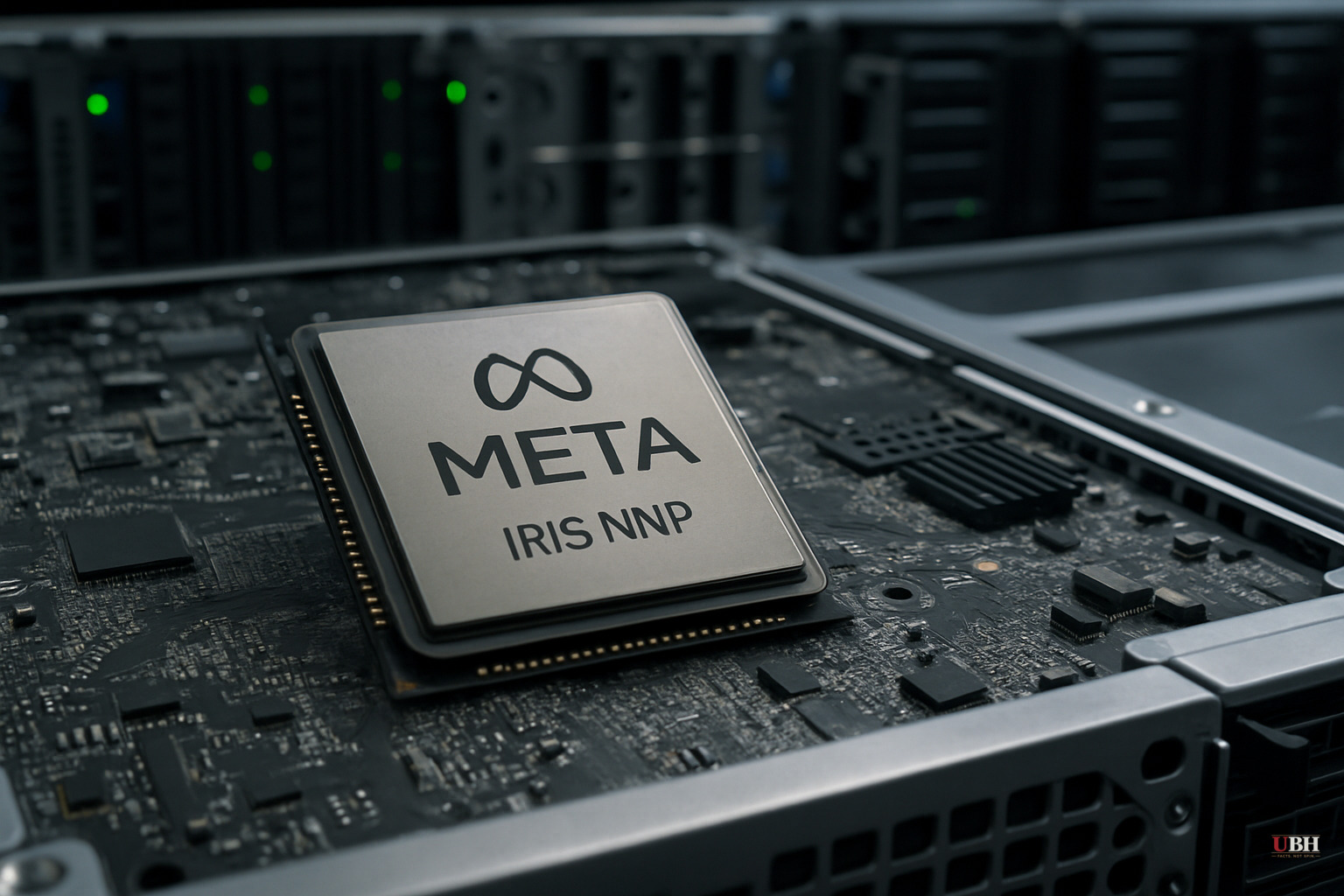
Meta's Custom Chip Is Real, and It Cleared Testing Fast
Meta's in-house AI accelerator, code-named Iris, completed bug validation in six weeks with no major issues, according to an internal memo reviewed by Reuters. The program has stumbled for more than five years since its launch.
Iris is the first of four planned generations under Meta's MTIA (Meta Training and Inference Accelerators) program, which the company publicly unveiled in March. Meta plans to release a new chip roughly every six months through 2027. The industry standard is once a year or slower.
Broadcom is Meta's design partner, under an agreement extended through 2029, according to Reuters. Taiwan Semiconductor Manufacturing Co. will handle manufacturing, with production set to begin in September.
The chips are built to augment, not replace, the Nvidia and AMD GPUs Meta buys in bulk. The memo is direct about why that matters: adopting the latest external GPUs at Meta's scale "has been a heavy lift, and it has cost us time."
The Scale of the Spending Is Not a Rumor
Meta plans to spend up to $145 billion on AI infrastructure this year alone, according to the memo. That represents a significant share of the more than $700 billion Big Tech is projected to pour into AI this year, per Reuters.
This year's target is 7 gigawatts of deployed computing capacity. The memo says Meta plans to double overall capacity to 14 gigawatts by 2027.
To lock in the components needed to get there, Meta has signed multi-year supply agreements with Samsung Electronics for memory chips, Sandisk for flash storage, and Sumitomo Electric for fiber-optic equipment. Those deals were struck in the middle of a memory shortage severe enough that Morgan Stanley analysts have flagged "chipflation" as a macroeconomic concern.
The Market Reacted Badly, at Least Initially
Meta shares fell 4.3% at Thursday's open after Reuters reported the memo's contents, according to ZeroHedge's market coverage. The stock clawed back part of that loss through the morning but remained in the red as of mid-session today, July 9.
The market's anxiety is straightforward: is Meta a hyperscaler that finally got smart about capital discipline, or one that just committed to doubling a budget that was already eye-watering? That question has hung over the stock for roughly the past week and a half.
The strongest version of the bear case is legitimate. Committing $145 billion in a single year, signing multi-year lock-in contracts across the supply chain, and planning a chip release cadence twice as fast as the industry norm is an enormous bet. If AI revenue growth stalls, or if a competitor undercuts Meta's infrastructure advantage, the company will have locked itself into costs it cannot easily exit.
Meta's existing AI products are generating engagement on Facebook and Instagram at scale, and the new paid model (see below) opens a direct revenue line that didn't exist before.
Zuckerberg Launches Meta's First Paid AI Model
Separately on Thursday, Mark Zuckerberg announced Muse Spark 1.1, Meta's most advanced AI model and the first it has ever charged businesses to access. In a Bloomberg interview ahead of the release, Zuckerberg described the pricing as "very aggressive and attractive."
"Since this is not an open source model, this is I think the first time that we're doing a real serious API," Zuckerberg told Bloomberg.
The pricing is set at roughly 25% of what OpenAI and Anthropic charge for their top models, according to Bloomberg. Developers can use the model for free up to a usage threshold, then pay beyond that through Meta's new Model API system.
Zuckerberg described Muse Spark 1.1 as having "state-of-the-art or very close to it" agentic reasoning and tool use. Agentic AI, meaning systems that can complete multi-step tasks autonomously on behalf of a user, is the dominant commercial theme in AI development this year. Goldman Sachs forecast in June that agentic AI adoption will generate 120 quadrillion monthly tokens by 2030.
The model's coding capabilities are also notably improved, and Meta employees are using it internally to build features across the company's apps, per Zuckerberg's Bloomberg interview.
What the Memo Doesn't Resolve
Meta declined to comment on the memo, per Reuters. Sandisk also declined. Samsung Electronics and Sumitomo Electric did not respond to comment requests.
The memo confirms production timing and supply agreements, but the unresolved question for investors is whether $145 billion in annual capex can produce a return that justifies the bet, especially now that Meta has entered the paid model market and is directly competing on price with OpenAI and Anthropic. The first real test of that commercial bet will come when Meta reports third-quarter earnings, which will cover the period in which Muse Spark 1.1's paid tier first generates revenue.
Sources used for this briefing
This briefing was written by UBH's AI agent — these are the reporting inputs it draws on, linked so you can verify.


