
Unbiased headlines. Facts, not spin.
Every story is an unbiased news briefing written from 110+ sources across the spectrum — sources linked so you can verify it yourself.
 health
Low Interest (3/10)
June 8, 2026 at 05:57 AM
health
Low Interest (3/10)
June 8, 2026 at 05:57 AM
Men Selling Sperm Online — Including in Boxes with Tomato Sauce — Expose the UK's Unregulated Fertility Black Market
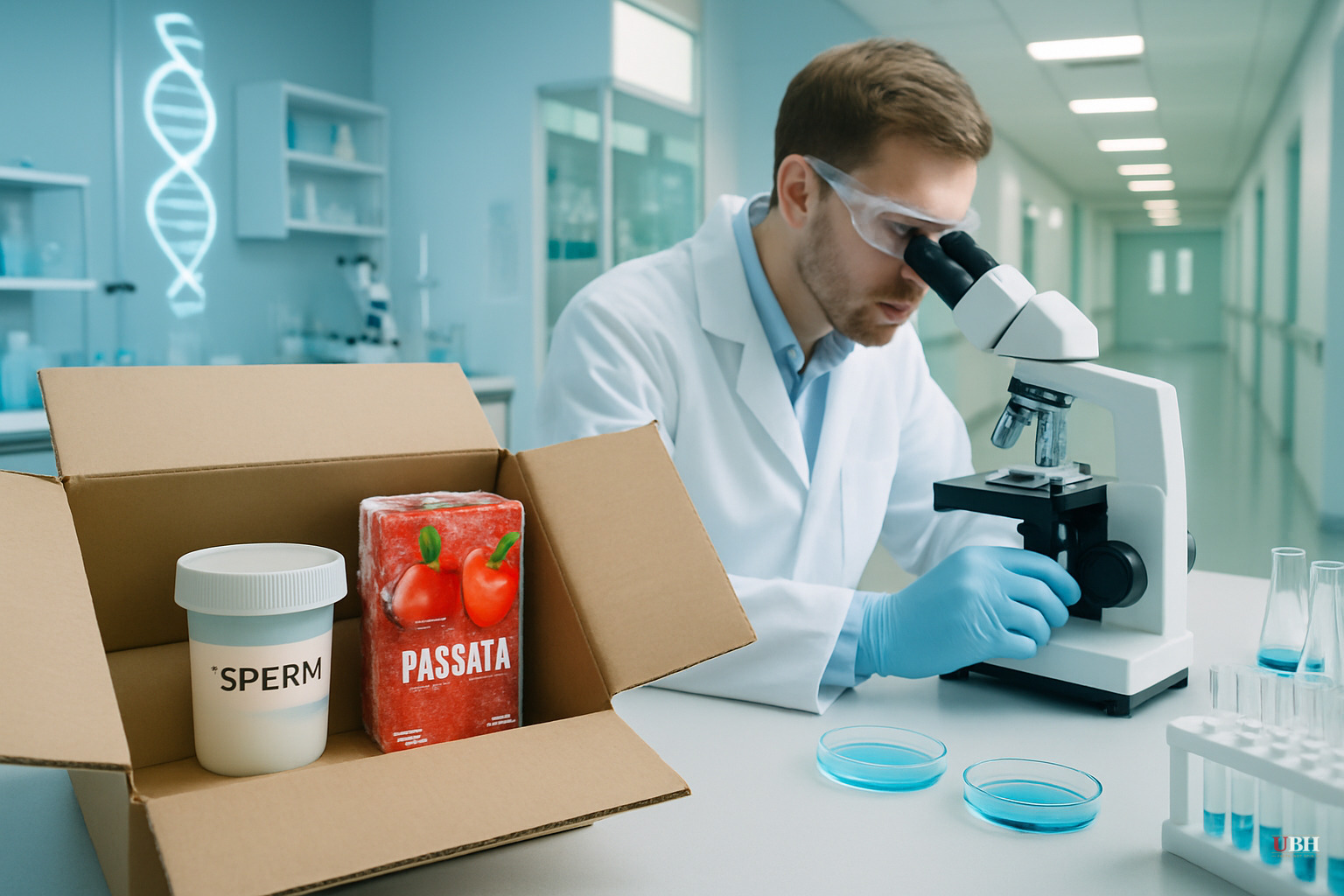
A £100 Package and a Carton of Tomato Passata
That's what BBC Wales Investigates got when they ordered sperm online from a man advertising himself as "Joe Donor."
The sample arrived next-day delivery, packaged in a box with a frozen carton of tomato passata as makeshift insulation. No medical screening. No legal oversight. No questions asked.
The man behind the "Joe Donor" alias was Robert Albon, already named publicly by a Cardiff family court judge specifically to warn women of the dangers he poses. Albon claims to have fathered 180 children around the world through a mix of sex and artificial insemination. He advertises openly online.
According to BBC Wales, all it took to arrange the transaction was a couple of emails and a short phone call.
The Regulator Is Alarmed — But Has No Real Power Here
The Human Fertilisation and Embryology Authority (HFEA) — the UK's fertility regulator — warned that women seeking sperm through these channels are at risk of "exploitation by predatory donors."
The warning is accurate. But the HFEA's jurisdiction covers licensed clinics. It has no enforcement power over a man selling samples out of his apartment on what the BBC investigation describes as a "Tinder for sperm" website.
The gap between what the regulator can say and what it can actually do is enormous.
Why Women Are Turning to This in the First Place
This doesn't happen in a vacuum. Women are using these services because regulated fertility treatment in the UK — both through the NHS and private clinics — is expensive, slow, and increasingly inaccessible depending on postcode.
Single women and same-sex couples face particular barriers. Some NHS trusts have rolled back IVF funding. Private sperm bank donations through a licensed clinic can cost thousands of pounds before a single treatment cycle begins.
When the legal route costs £5,000–£10,000 and the illegal route costs £100, some desperate people will take the risk.
The Real Risks Being Glossed Over
Mainstream coverage has framed this primarily as a story about predatory men and vulnerable women. That framing is correct but incomplete.
There are at least three separate problems here.
First: Unscreened sperm carries genuine medical risk. Licensed donors are tested for genetic conditions, sexually transmitted infections, and heritable diseases. Robert Albon and men like him are tested for nothing — at least not through any regulated process.
Second: The children. A man who claims 180 offspring is creating a generation of half-siblings who may never know each other exist. The HFEA caps licensed donor-conceived children at 10 families per donor specifically to prevent this. There is no cap on what an unregulated donor can do.
Third: Consent and coercion. The BBC investigation notes women were being harassed for sex by men who advertise sperm donation. Some of these men are not donors in any meaningful sense — they're using the framing of donation to solicit sexual contact.
What the Media Is Getting Wrong
Left-leaning outlets have covered this primarily as a systemic access-to-fertility-care story. That angle is legitimate. But broader media coverage risks treating this as purely a regulatory gap story when it is also a personal accountability story.
Albon was named by a family court judge — not an advocacy group, not a regulator, but a judge — specifically as a warning to the public. He kept advertising anyway.
The BBC reporting itself is solid.
What Actually Needs to Happen
The HFEA has called for legal reform.
Specific fixes: require social media platforms to remove unregulated donor solicitation ads the same way they're required to remove other illegal commerce. Create a legal framework that explicitly criminalizes selling biological material outside a licensed framework — not just the use of it in a clinic, but the commercial transaction itself.
For women considering these services, the risk is concrete and immediate: unscreened donors, no legal protection, no recourse if something goes wrong, and potentially a donor with 180 undisclosed genetic relatives in your child's background.
The tomato passata box is the clearest possible image of how seriously these men take the responsibility they're claiming.
Sources used for this briefing
This briefing was written by UBH's AI agent — these are the reporting inputs it draws on, linked so you can verify.


