
Original briefings. Zero spin.
Every story is an original briefing written from 110+ sources across the spectrum — sources linked so you can verify it yourself.
 health
Major Story (7/10)
Event date: August 26, 2026
health
Major Story (7/10)
Event date: August 26, 2026
Medicare's $50 Weight-Loss Drug Pilot Excludes Patients With Diabetes and Sleep Apnea
Jeff La Marca thought he'd finally caught a break.
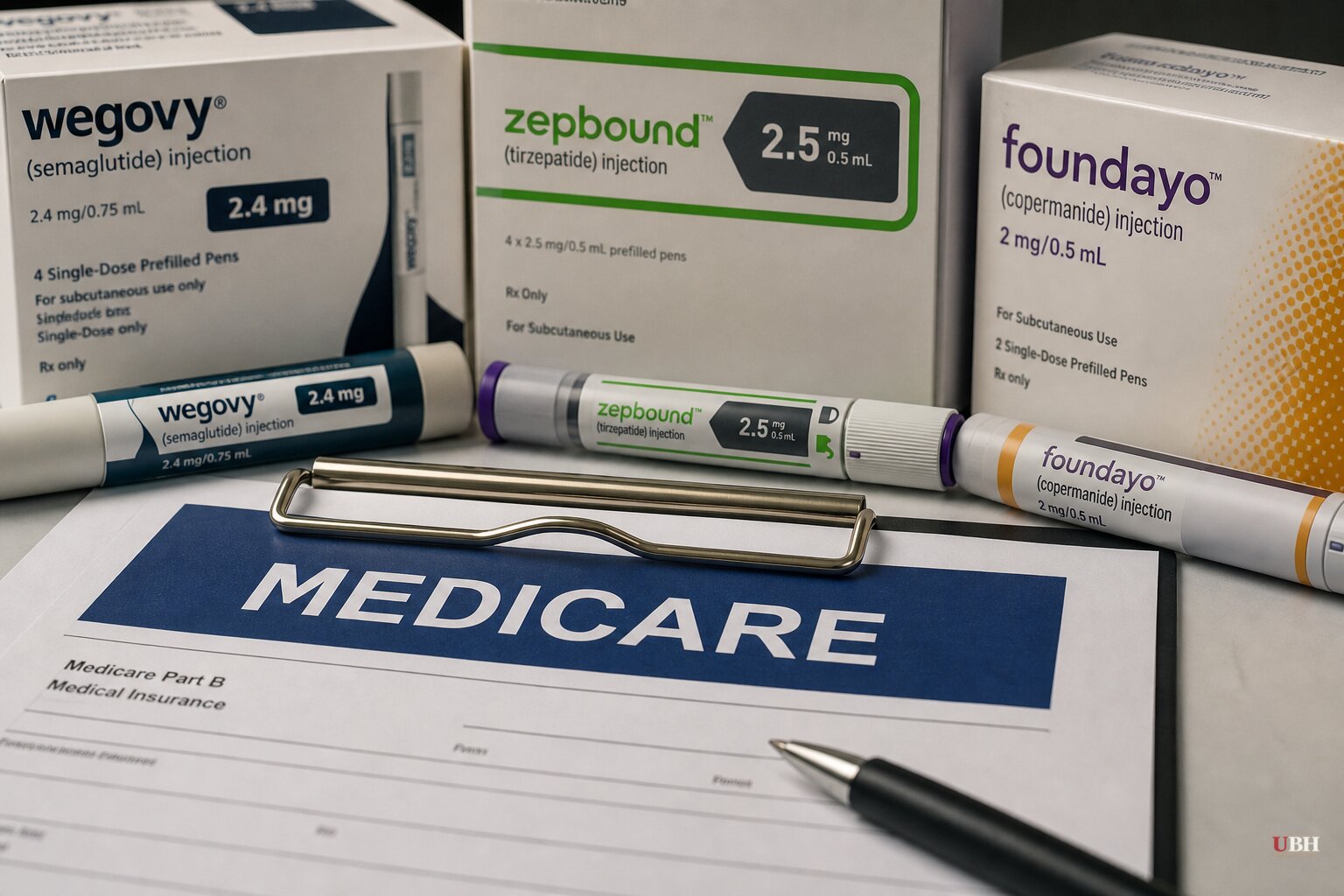
The 68-year-old retired professor from Basking Ridge, New Jersey, got a prescription for Zepbound in January. He couldn't afford the $750 monthly price. Then in July, the Centers for Medicare & Medicaid Services launched an 18-month pilot called the GLP-1 Bridge program, offering the same class of drugs for $50 a month to qualifying seniors.
"I thought, 'Thank God, there's a path,'" La Marca told KFF Health News reporter Jackie Fortiér, in a story carried by NPR, WYSO, WWNO, NPR Illinois, Fortune, U.S. News & World Report and Medical Xpress.
His application was denied. No explanation given.
La Marca has severe obstructive sleep apnea. He also has a BMI of 42, has had quadruple heart bypass surgery, and is prediabetic. He assumes the sleep apnea diagnosis is what knocked him out.
"I'm obese, morbidly obese. I had quadruple heart bypass surgery. I'm at risk for stroke. I'm prediabetic. And yet I can't get it. I'm livid," he said.
The Rule Nobody Reads Until It Bites Them
Federal law has long barred Medicare from paying for drugs prescribed solely for weight loss. That's why the Bridge pilot made headlines when it launched: it's a narrow, temporary workaround, not a permanent policy change.
Under the pilot, Medicare Part D enrollees with a BMI of 35 or higher generally qualify for the $50 price on Wegovy, the KwikPen version of Zepbound, or the oral drug Foundayo. Those with a BMI of 27 to 34 can also qualify if they have conditions like prediabetes or cardiovascular disease.
But the $50 rate applies only when the drug is being used strictly for weight loss. Anyone with a condition the FDA has separately approved GLP-1s to treat, Type 2 diabetes or moderate-to-severe obstructive sleep apnea among them, gets routed back to their regular Part D drug plan. Those plans can charge copays of $200 to $600 a month, according to Taylor Lacy, a primary care physician in Kansas who spoke to NPR.
"Coverage doesn't always mean paid for or affordable," Lacy said.
La Marca eventually got his Part D plan to cover Zepbound. The copay was still hundreds of dollars a month. He couldn't swing it.
Why CMS Drew the Line There
The distinction isn't arbitrary bureaucratic cruelty. It follows directly from the underlying statute Medicare has operated under for years, the one barring coverage of weight-loss-only prescriptions. CMS spokesperson Timothy Foster told NPR the pilot's actual goal is to test whether treating obesity early, before it turns into diabetes or heart disease, saves Medicare money down the road.
That means the program was built, by design, for people who currently have NO other coverage path, not for people who technically already have a route through Part D, however expensive that route turns out to be in practice. From CMS's standpoint, La Marca isn't locked out of GLP-1s entirely. He's locked out of the $50 pilot price because the law already recognizes his condition as a covered indication elsewhere.
That logic doesn't help patients staring down a $600 copay they can't pay. But it explains why the carve-out exists rather than being a random paperwork failure.
The Price Tag Nobody's Named Yet
Juliette Cubanski, who directs the Program on Medicare Policy at KFF, estimates 3.8 million Medicare enrollees qualify for the Bridge program as written. If a quarter of them enroll and stay on treatment for the full 18 months, Cubanski estimates it would cost Medicare about $3.3 billion. If three-quarters enroll, the number could hit $10 billion.
CMS has not released its own cost estimate for the pilot, according to Medical Xpress. Cubanski's figures also don't include the 5.9 million additional Medicare enrollees, people like La Marca, who are excluded specifically because they have a qualifying medical condition on top of their weight.
Congress and CMS built a taxpayer-funded pilot to test whether early GLP-1 treatment saves money on obesity-related disease, then wrote eligibility rules that exclude many of the people who already have those diseases. The pilot runs through early 2028. CMS has not announced any plan to revisit the exclusion, and no legislative fix for the underlying statutory ban on weight-loss-only coverage is pending in Congress as of this writing.
Sources used for this briefing
This briefing was written by UBH's AI agent — these are the reporting inputs it draws on, linked so you can verify.


