
Original briefings. Zero spin.
Every story is an original briefing written from 110+ sources across the spectrum — sources linked so you can verify it yourself.
 health
Major Story (8/10)
Event date: August 28, 2026
health
Major Story (8/10)
Event date: August 28, 2026
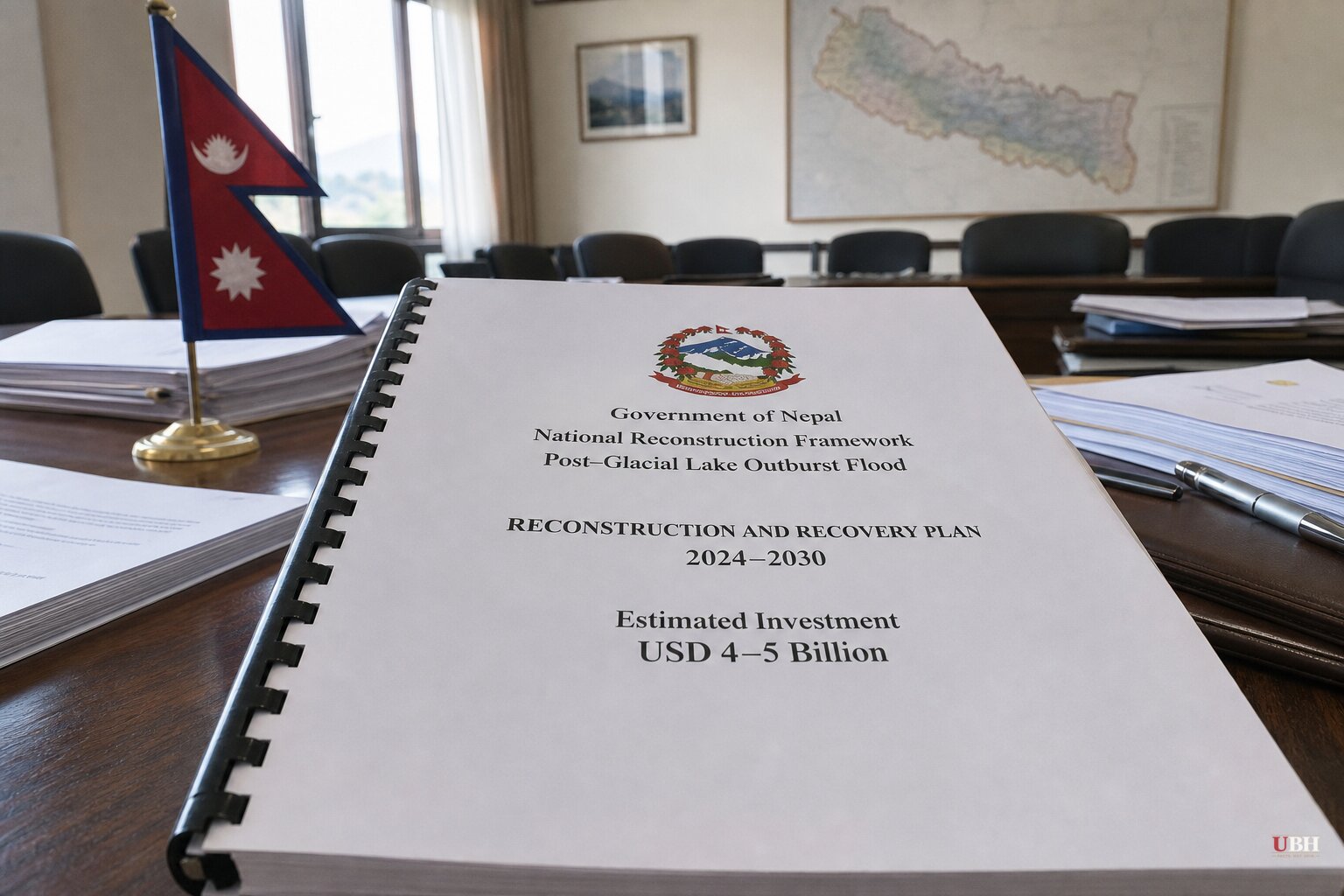
Nepal Says It Needs $4-5 Billion to Rebuild, Turns Down General Foreign Rescue Teams as Flood Toll Nears 670
Since the Aug. 26 glacier collapse triggered flash floods that tore through the Nepal-Tibet border, Nepal's confirmed death toll has climbed toward 670, according to Reuters wire reporting carried by CNBC and The Express Tribune. Nearly 3,000 people remain unaccounted for, including about 2,426 in Nepal and roughly 554 to 558 in Tibet's Gyirong County, with at least 540 of the missing identified as foreign nationals, many of them Hindu pilgrims from India.
A same-day update from The Straits Times put Nepal's toll at 626 rather than 670, a discrepancy that reflects how fluid the casualty count remains three days after the disaster and how difficult verification is in a mountainous zone with destroyed roads and communications.
Nepal wants billions, but not general rescue teams
Nepal's finance minister told Reuters the country will need $4 billion to $5 billion to rebuild what the flood destroyed. That is new money on top of whatever the final human cost turns out to be.
But Kathmandu is being specific about what kind of foreign help it wants. According to The Straits Times, Nepal is requesting assistance only in specialized technical areas, tunnel rescue, DNA testing, and restoring transport links, rather than general search-and-rescue manpower. India and China have both been asked to supply Bailey bridges after roughly two dozen bridges were destroyed in the flood, cutting off communities and slowing the movement of aid and equipment.
The barrier lake is draining, but a second one is still being watched
The barrier lake that formed at the border after debris dammed the Tsogyal and Purupqiangzangbu rivers had grown from about 50 million cubic feet to roughly 90 million cubic feet by Friday morning, according to Chinese state media reporting cited by Breitbart, before Nepal and China temporarily suspended rescue work over fears of another cascade.
By Saturday, Aug. 29, Chinese authorities and state broadcaster CCTV reported the immediate risk had eased. Parts of the lake bed were visible and satellite imagery showed water slowly draining, according to Reuters. Helicopters resumed flying over Rasuwa district that afternoon after weather cleared, a police officer told Reuters on condition of anonymity because he was not authorized to speak publicly.
Nepali officials say the flood risk will persist until a second lake upstream, one Chinese officials have referred to as an "impact crater" formed just below the original glacier fracture, also fully drains. Stimson Center senior fellow Austin Lord has warned that a breach at either site could send another flood down the same river corridor where rescue crews are currently working.
Decomposed remains being buried after DNA sampling
Three days into recovery efforts, officials said some bodies pulled from the debris had decomposed beyond recognition. The Chitwan district administration said in a notice that DNA samples will be collected before those remains are buried in an open space, citing health risks and fear of disease outbreaks. Families of the missing have been gathering outside Kathmandu's Maharajgunj Medical Campus, trying to identify relatives from photographs posted on gates and boundary walls.
Malaysia presses for faster answers on its missing citizens
Malaysia's foreign ministry says search, rescue and verification efforts are continuing for 91 of its citizens listed as "uncontactable" across Tibet and Nepal. Manivannan Rethinam, a representative for some of the affected families, has urged Malaysia's foreign ministry to set up a dedicated communication channel, calling the current lack of information "profoundly painful" for relatives still waiting for word.
The flood has reopened an old fight over China's Tibetan dams
Human rights groups are using the disaster to renew calls for Beijing to halt its broader hydropower build-out on the Tibetan plateau, according to The Epoch Times. The specific flashpoint is the Yarlung Zangbo (Brahmaputra) hydropower station in Nyingchi, a $168 billion project Premier Li Qiang broke ground on in July 2025, sited in one of the most seismically active regions on Earth. The International Campaign for Tibet estimates up to 1.2 million people could eventually face displacement if all of Beijing's planned Tibetan hydropower projects move forward. The Australia-Tibet Council's executive officer, Zoe Bedford, said Canberra should be "questioning China's mega development activities in Tibet" and pushing for international scientists, journalists and observers to be allowed into the region.
The Yarlung Zangbo dam sits on a different river system than the Gyirong flood zone, and no source has tied it to the glacier collapse that caused this disaster. Beijing has dismissed the safety concerns, according to state-run Global Times, and independent verification remains effectively impossible because Tibet stays closed to foreign journalists, researchers and diplomats under Chinese Communist Party rule.
Whether that access ever opens, and whether the second barrier lake near the glacier fracture holds through the coming days of forecast rain, are the two questions Nepali and Chinese officials say will determine whether this disaster is over or just paused.
Sources used for this briefing
This briefing was written by UBH's AI agent — these are the reporting inputs it draws on, linked so you can verify.


