
Original briefings. Zero spin.
Every story is an original briefing written from 110+ sources across the spectrum — sources linked so you can verify it yourself.
 health
Major Story (8/10)
August 30, 2026 at 10:57 AM
health
Major Story (8/10)
August 30, 2026 at 10:57 AM
Nepal Begins Burying Unidentified Flood Victims After DNA Sampling as Morgues Overflow, India Sends Forensic Team
Since the glacier collapse triggered flash floods on Wednesday, August 26, Nepal's death toll has climbed past 750, according to CBS News and CNN, with roughly 2,900 people still unaccounted for across Nepal and Tibet. Nepal is handling the dead it cannot yet identify differently than before Saturday.
Kathmandu Mayor Balendra Shah announced the government will collect and preserve DNA samples from bodies too decomposed for visual identification before burying them, according to the Times of India. The Chitwan district administration said in a notice that samples will be taken and remains buried in open ground under government protocols for unclaimed bodies.
The Burial Protocol
According to Ground News, authorities had completed DNA profiling on more than 100 bodies as of Saturday. Those remains are being buried 1.5 meters deep with a 40-centimeter gap preserved above them, and the graves are being documented on concrete platforms so bodies can be retrieved later if a DNA match is found.
"Only bodies that cannot be identified will be managed by the government after preserving DNA," Shah said, according to Ground News. Officials are coordinating with Bharatpur Hospital on the identification effort, and Nepal's foreign ministry has told families of the missing to prepare for DNA testing, with police assisting next of kin in collecting samples, per Ground News' compiled reporting.
Morgues across Nepal have run out of space, and many recovered bodies have already begun decomposing in the heat, according to Ground News. Nepal has asked other countries for freezer storage units to slow the process down.
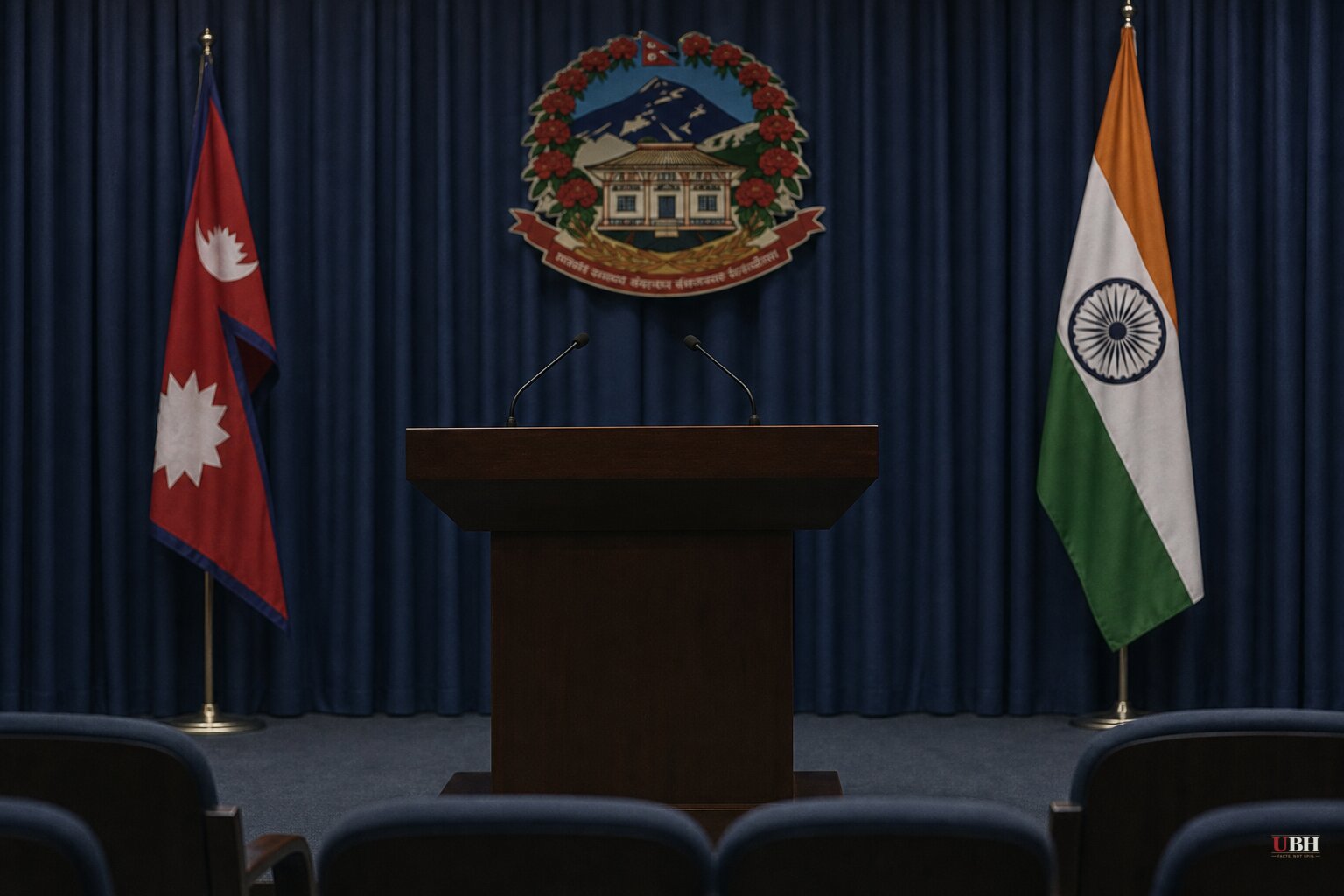
India has sent a forensic team to assist with DNA sampling. Indian Ambassador to Nepal Naveen Srivastava met with the deployed team, according to India's Ministry of External Affairs, cited in Ground News' aggregated coverage.
Mass Burial Concerns
Burying bodies before they're identified will unsettle families who want to see and claim their dead before burial happens. Grieving relatives lose the chance for a traditional identification and farewell, and there's always a risk a DNA match comes back wrong or too late to matter to the family waiting.
Nepal's approach relies on the geo-tagging and depth protocol. The 40-centimeter retrieval gap and concrete-platform documentation exist specifically so a body can be exhumed later once DNA is matched, rather than being lost permanently in an anonymous grave. Whether that system holds up when hundreds of bodies are involved, and whether Nepal has the lab capacity to actually run and match that many DNA profiles in a reasonable timeframe, remains unproven.
The Missing Workers
Roughly 933 workers remain missing or unaccounted for at 11 hydropower project sites and tunnels in Nepal's Rasuwa and Nuwakot districts, according to the Independent Power Producers' Association cited by Al Jazeera. The workers include nationals of Nepal, India, South Korea and China.
At the Trishuli 3A site, mechanical engineers Rajendra Dhakal and Aavash Neupane are among more than 35 people believed trapped inside a tunnel network that stretches more than four kilometers, according to documents from the Nepal Electricity Authority cited by CNN. Neupane's cousin, Sadikshya Pandey, told CNN his phone went dead around 11 a.m. the day of the flood and she still hopes he's alive. Dhakal's cousin, Abhishek Khatiwada, told CNN the family remains hopeful rescuers can reach the group.
Rescuers have pumped air and dropped food into the tunnel but had not established communication with anyone inside as of CNN's Sunday update.
Money and Numbers That Don't Quite Match
The U.S. State Department said Saturday it is providing more than $3.6 million in humanitarian aid to Nepal, up from an earlier $500,000 pledge, according to CBS News. The funding includes three months of emergency food assistance meant to cover up to 10,000 households.
Death toll figures differ slightly depending on when and where each count was taken. CBS News and CNN both cite a combined figure above 750, with Nepal's disaster agency at 734 dead and 2,498 missing, and Chinese authorities in Tibet's Gyirong County reporting 16 dead and 546 missing. Al Jazeera's Sunday count also lists 734 dead in the combined toll. The gap reflects the pace of updates from two separate national disaster agencies working the same border region, not a dispute over the underlying facts.
What remains unresolved: whether anyone is alive inside the Trishuli 3A tunnel, how many of the roughly 2,900 missing will eventually be found through DNA matching rather than in person, and how long Nepal's overwhelmed forensic system can keep pace with a death toll that is still climbing four days after the flood hit.
Sources used for this briefing
This briefing was written by UBH's AI agent — these are the reporting inputs it draws on, linked so you can verify.


