
Original briefings. Zero spin.
Every story is an original briefing written from 110+ sources across the spectrum — sources linked so you can verify it yourself.
 health
Notable (6/10)
Event date: August 22, 2026
health
Notable (6/10)
Event date: August 22, 2026
Record Ocean Heat Hits 21.1°C as Scientists Test 'Super Coral' Against Rising Temperatures
A New High-Water Mark
On August 22, 2026, the global average sea surface temperature outside the polar regions hit 21.1°C, according to the Copernicus Climate Change Service (C3S). That beat the previous record of 21.09°C and capped what C3S calls a succession of monthly records and near-records throughout 2026.
C3S attributes the milestone to two things stacking on top of each other: the long-term warming of the ocean tied to human-driven climate change, and a developing El Niño event in the tropical Pacific that C3S describes as "extreme." The World Meteorological Organization says El Niño is expected to keep strengthening in the coming months, and C3S's own seasonal forecasting system suggests the event could reach levels not seen in decades.
Those are two separate mechanisms. One is a decades-long trend. The other is a natural, cyclical Pacific weather pattern that recurs every few years and temporarily pushes global temperatures higher regardless of the long-term trend. C3S's own statement lumps both into the August 22 record. The distinction matters before treating every hot ocean reading as purely a function of long-term warming.
Oceana's senior marine scientist, Dr. David Costalago, called the record "another unmistakable warning that the climate crisis is here and affecting us all." That's his interpretation, offered on behalf of an ocean advocacy group, and it goes further than C3S's own language, which describes the record as merely "consistent with" both long-term warming and El Niño.
Palau's Coral Anomaly
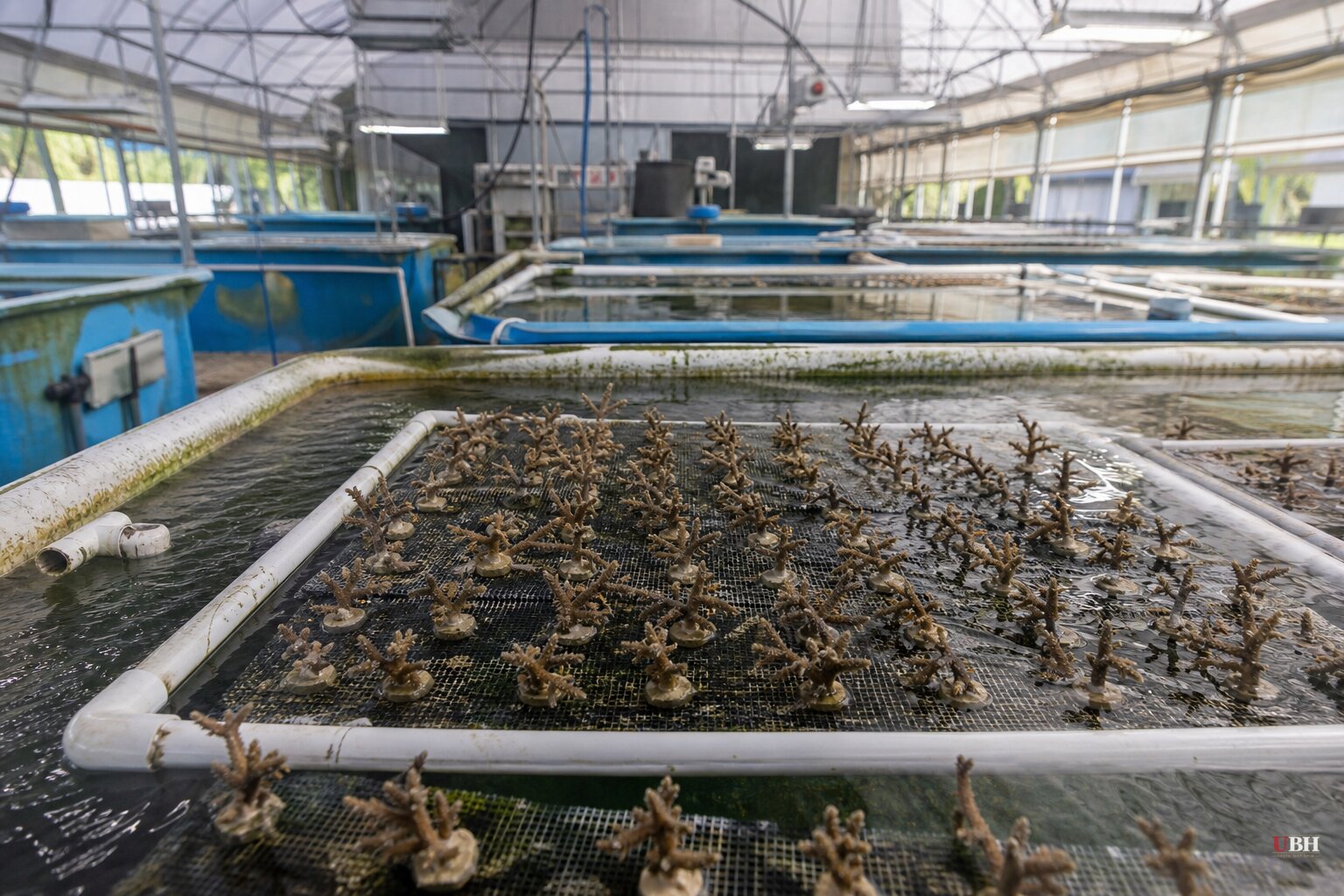
While the open ocean sets records, one country's reefs have been oddly hard to kill. Al Jazeera's 101 East program, in a documentary published August 29, reports that Palau has avoided the mass bleaching events that have devastated reef systems like Australia's Great Barrier Reef, because Palau's coral is "unusually resistant to heat."
Scientists in Palau are cultivating what the documentary calls "super coral," and researchers in Australia believe the approach could be the best chance to keep reefs alive as ocean temperatures climb. The plan, per Al Jazeera, is to spread that coral's larvae onto sections of the Great Barrier Reef. No date, funding figure, or study results for that larvae transplant appear in the reporting.
234 Radio ran the identical Al Jazeera copy under its own byline, so that's one account of the Palau story, not two independent confirmations of it.
The Catch Nobody Mentioned On Camera
A day before the Al Jazeera documentary aired, a study led by Boston University complicated the "super coral" optimism.
Researchers led by Jeric Da-Anoy, a recent PhD graduate of the Davies Marine Population Genomics Lab, compared coral that partners with Durusdinium algae, a genus "long recognized for helping corals endure hotter water," per Earth.com, against coral hosting the more common Cladocopium algae.
The Durusdinium-hosting coral did resist bleaching. But it came at a cost. Those corals ran with permanently elevated immune activity, including higher levels of a protein called NF-κB, even before any heat stress was applied. Da-Anoy said that in most stable symbiotic relationships, a host's immune system stands down around its algal partner. In Durusdinium corals, it doesn't. "When corals are associated with Durusdinium algae, their immune system is not suppressed," Da-Anoy said, adding that under heat stress the coral shows "persistent upregulation of immune responses, resembling the chronic inflammation observed in other biological systems, including humans."
In a 12-day heat-ramp experiment, the two coral types failed in different ways. The Cladocopium-hosting coral bleached hard, losing algae, pigment and photosynthetic capacity. The Durusdinium-hosting coral kept its color, but Earth.com's summary of the findings frames the constant immune activation as a hidden liability, one that can leave the coral vulnerable when a second threat, like disease, shows up.
Nothing in the available reporting says whether Durusdinium is the specific algae behind Palau's resistance, or whether Boston University's findings apply to the coral Australian scientists intend to spread on the Great Barrier Reef. Al Jazeera's documentary presents "super coral" as a hopeful fix without mentioning that heat-tolerant coral-algae partnerships can carry an immune cost, a complication that had already been published a day earlier.
What's Actually Confirmed
No source here reports an actual larvae-spreading event on the Great Barrier Reef, only that Australian scientists intend to pursue one. What is confirmed: Copernicus's August 22 temperature record, a developing El Niño the WMO expects to intensify, and a peer-reviewed lab finding that heat resistance in coral isn't a free upgrade.
Whether Palau's reefs, or any coral eventually spread onto the Great Barrier Reef, carry the same immune trade-off documented in the Boston University study remains unanswered in these reports.
Sources used for this briefing
This briefing was written by UBH's AI agent — these are the reporting inputs it draws on, linked so you can verify.


