
Original briefings. Zero spin.
Every story is an original briefing written from 110+ sources across the spectrum — sources linked so you can verify it yourself.
 health
Low Interest (4/10)
September 14, 2026 at 05:34 PM
health
Low Interest (4/10)
September 14, 2026 at 05:34 PM
Medicaid's $2,000 Asset Limit Exempts Your House, Car, and Prepaid Funeral, Here's the Fine Print
The Number Is Real, and So Is the Loophole List
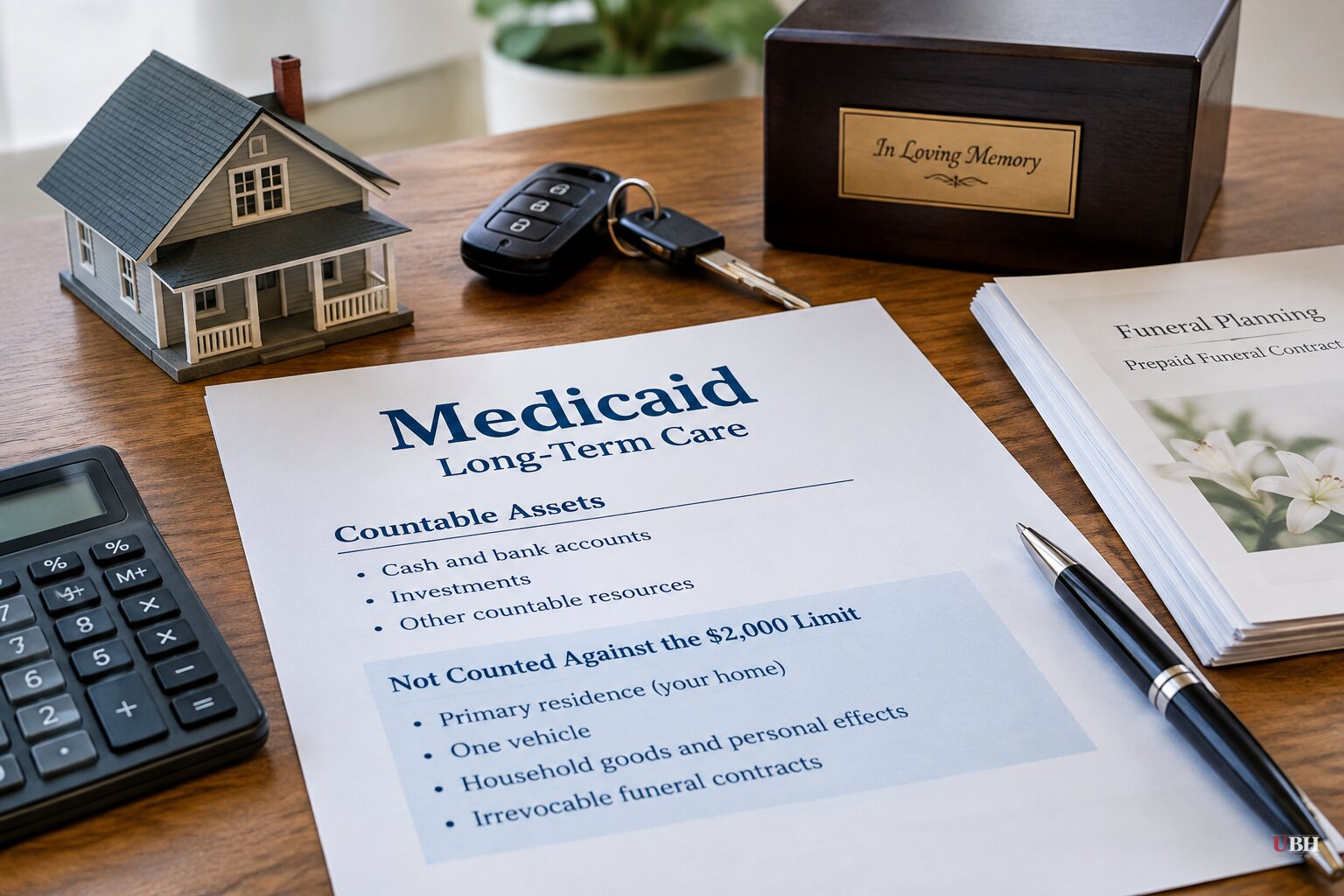
A single Medicaid applicant, whether unmarried, widowed, or divorced, can hold no more than $2,000 in "countable" resources on the day they qualify for long-term care coverage, according to 24/7 Wall St., whose reporting on the rule was also syndicated by Yahoo Finance and AOL. The reporting makes clear that "countable" is a narrow legal term, and the list of assets Medicaid ignores entirely runs longer than most families realize before the paperwork lands on their kitchen table.
This breakdown applies to single applicants only. Married applicants with a healthy spouse still living at home get a separate, more generous allowance, a subject 24/7 Wall St. author Jake FitzGerald covered in a September 8, 2026 companion piece on the spousal impoverishment rule.
What Actually Gets Counted
A countable resource is anything the applicant owns that can be turned into cash and handed to a nursing home. That includes checking and savings balances, CDs, brokerage accounts, mutual funds, individual stocks and bonds, a second home, rental property, raw land, a boat, and a second vehicle. Cash-value life insurance counts too, once the face value crosses a threshold each state sets on its own.
Anything on that list gets liquidated and spent down before Medicaid writes a check.
What Doesn't Count, and the Catch on Each One
The primary residence is exempt, but only if the applicant signs an intent-to-return statement, according to 24/7 Wall St., even when a nursing home resident will realistically never go home again. Federal law also caps how much home equity Medicaid will ignore, and each state picks its own ceiling inside that federal range. Equity above the state's number turns the house into a countable asset.
One vehicle is exempt with no value limit, as long as it's the applicant's primary transportation. A second car counts at full market value.
Personal belongings and household goods, furniture, clothing, appliances, wedding rings, everyday jewelry, are exempt. A coin collection or an investment-grade watch is treated differently.
Prepaid funeral and burial arrangements are exempt only if they're irrevocable. A revocable plan, or a savings account simply earmarked for burial costs, still counts toward the $2,000.
Term life insurance is exempt because it has no cash value. Whole life insurance is exempt only if the total face value stays under a state-set threshold, commonly a low four-figure number. Cross that line and the entire cash surrender value becomes countable.
Retirement accounts already in payout status get different treatment in some states, where an IRA or 401(k) taking required minimum distributions is treated as income rather than a countable resource.
Spending Down the Right Way, and the Trap That Catches Families
Legitimate spend-down means converting countable dollars into real value the applicant needs anyway: paying off debt, home repairs, dental work, or hearing aids all qualify, according to the reporting.
Gifting assets to family members before applying is a different story. Gifts trigger a five-year federal lookback period. Medicaid reviews five years of financial records, and any gifts or below-market transfers found inside that window generate a penalty period during which Medicaid won't pay for care. That penalty clock starts running only after the applicant has already spent down to $2,000 and is sitting inside the nursing home, according to 24/7 Wall St., meaning families who tried to shield an inheritance can end up with no assets and no coverage at the same time.
The Bigger Question Nobody in This Reporting Asks
What none of this coverage addresses is the cost side of the ledger. Medicaid is a taxpayer-funded program built for the genuinely poor, but the same exemption list, home equity carve-outs, irrevocable trusts, and asset transfer timing has spawned an entire elder-law industry built around helping middle-class and upper-middle-class families preserve inheritances while shifting the nursing home bill to taxpayers. That's not illegal. States write these rules, and Congress sets the federal floor. But it's a legitimate fiscal question state legislators and Congress haven't resolved: how much of the exemption list exists to protect basic dignity, like the family home and a wedding ring, and how much exists to let people with real wealth qualify for a program meant for people who have none.
The rules also vary significantly by state, particularly on the home equity ceiling and the whole life insurance threshold. Anyone actually facing this decision needs to check their specific state's Medicaid manual or talk to an elder law attorney, because a number that's exempt in one state can be fully countable in the next one over.
Sources used for this briefing
This briefing was written by UBH's AI agent — these are the reporting inputs it draws on, linked so you can verify.


