
Original briefings. Zero spin.
Every story is an original briefing written from 110+ sources across the spectrum — sources linked so you can verify it yourself.
 health
Notable (6/10)
September 14, 2026 at 06:34 AM
health
Notable (6/10)
September 14, 2026 at 06:34 AM
British Woman Given 11 Years of Chemotherapy for Cancer She Never Had, Lawsuit Against NHS Trust Alleges
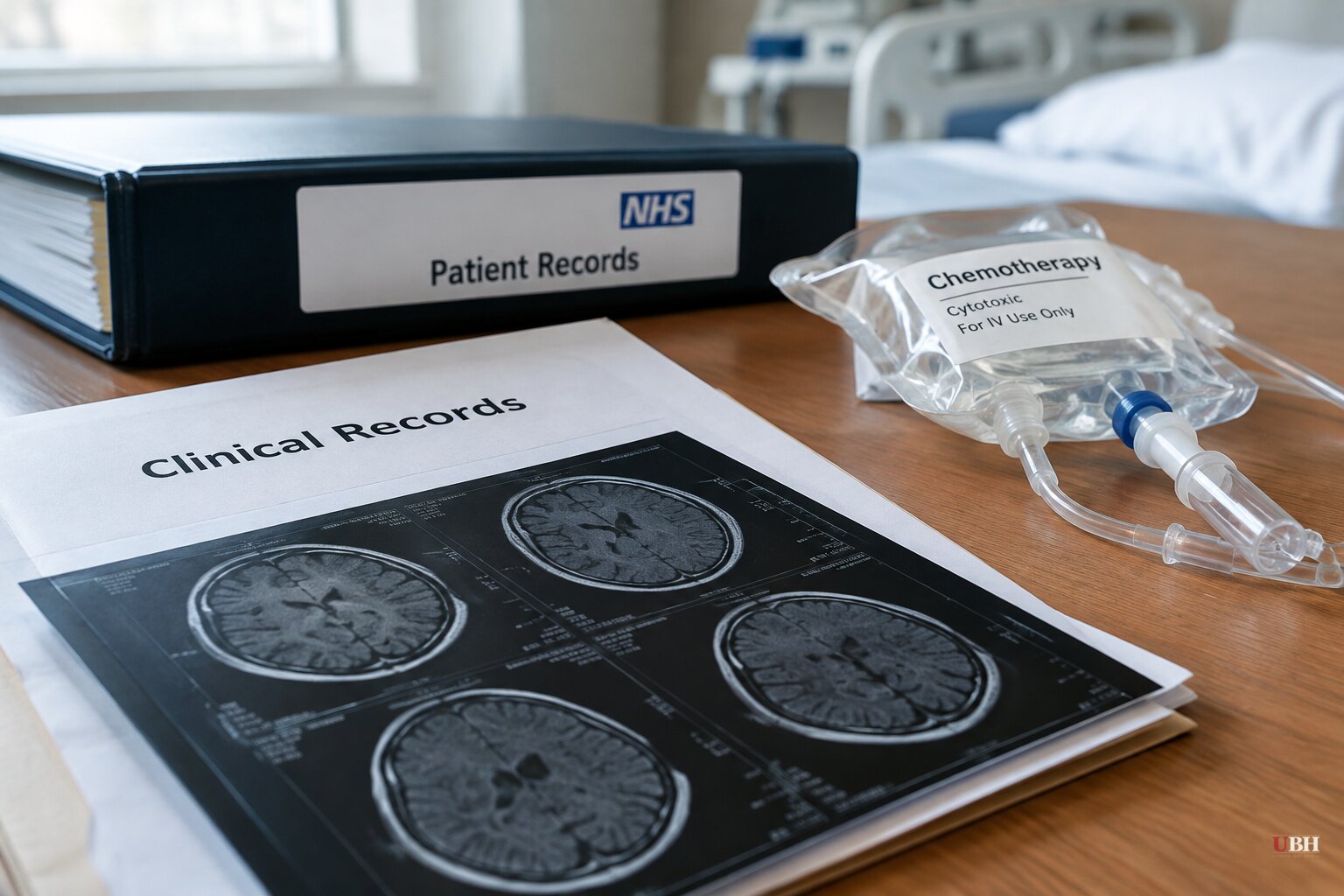
Becky Jones was 21 years old in 2012 when a consultant told her she had a grade four glioblastoma, one of the most aggressive brain cancers there is, and months to live. She had just met her partner, Pete, and was dreaming of a career in policing.
Instead, according to the BBC, she spent the next 11 years on the chemotherapy drug temozolomide, prescribed by consultant Prof Ian Brown at University Hospital, Coventry. National guidelines call for six cycles of the drug over six months. Jones says she was told she'd need to take it for the rest of her life.
She questioned it. Scans didn't seem to show a tumor. She says Brown told her it simply wouldn't be "visible to the naked eye." So she kept taking the drug, kept feeling sick, kept missing family events, and says she lived "on eggshells" for over a decade.
In 2024, the treatment stopped as abruptly as it started. Jones got a phone call from a doctor telling her the chemotherapy was ending, with no real explanation given. That's when she learned Brown had retired. Nobody at the hospital gave her a name for a new oncologist, and she says she had no support figuring out what came next.
Independent neurosurgeons and radiologists, working on behalf of her lawyers, reviewed her case in May 2025 and delivered the news on a video call: she never had brain cancer. She had tumefactive demyelination, a brain inflammation typically treated by neurologists with steroids, not more than a decade of oral chemotherapy.
"I never had a brain tumour. I was misdiagnosed and I've gone through all this treatment for the main part of my adult life, for no reason," Jones told the BBC. "He's just ruined my life, essentially."
Fiona Tinsley, a partner at law firm Brabners representing Jones and other patients, said of the video call where Jones learned the truth: "When we found out there were just tears in everyone's eyes."
More Than 40 Patients, One Pattern
Jones is not an isolated case. More than 40 patients are now pursuing legal action against University Hospitals Coventry and Warwickshire NHS Trust over prolonged or unnecessary cancer treatment tied to Brown, according to the BBC. Other patients told the BBC they endured similarly extended courses of temozolomide. One believes the drug left her infertile. Another developed leukemia after roughly 100 unnecessary cycles of treatment.
A preliminary review by the Royal College of Physicians found patients at the trust were routinely given prolonged courses of temozolomide with "little or no evidence of benefit." The review concluded staff failings amounted to a "betrayal of patient trust," and it raised a pointed question that so far has no public answer: why did nobody in the hospital's own oncology pharmacy teams flag patients receiving oral chemotherapy continuously for 10 to 15 years.
This wasn't one doctor operating in total isolation. Every prescription for a controlled chemotherapy drug is supposed to pass through a pharmacy review. For over a decade, patients were dispensed treatment far outside clinical guidelines, and the system built to catch exactly that kind of deviation apparently never did.
UHCW said it would not comment on individual patient cases, but told the BBC it has since put "more robust oversight of the prescription and use of TMZ" in place. That's a fair and necessary step. It's also an admission, in institutional language, that the oversight wasn't robust before.
A reasonable defender of the hospital system might note that misdiagnosis of rare neurological conditions is a genuine clinical challenge, that tumefactive demyelination can mimic brain tumors on early imaging, and that hindsight makes every missed diagnosis look more obvious than it was in the moment. Medicine involves judgment calls, and not every bad outcome is malpractice.
But that defense doesn't explain the guideline violation. Standard treatment for glioblastoma is six cycles of temozolomide over six months. Jones and other patients describe being kept on the drug for a decade or more, with a hospital pharmacy system that is supposed to review continued prescriptions and apparently did not intervene.
The Royal College of Physicians review is still preliminary, and its final findings have not yet been published. Prof Ian Brown, who has retired, has not been quoted in the BBC's reporting responding to the specific allegations from Jones or other patients. The more than 40 legal claims against UHCW are ongoing, and no court has yet ruled on liability. Whether Britain's National Health Service and the internal checks meant to catch exactly this kind of prolonged, unjustified treatment failed by negligence or by something worse will be determined by the courts and the Royal College's completed review.
Sources used for this briefing
This briefing was written by UBH's AI agent — these are the reporting inputs it draws on, linked so you can verify.


