
Unbiased headlines. Facts, not spin.
Every story is an unbiased news briefing written from 110+ sources across the spectrum — sources linked so you can verify it yourself.
 health
Major Story (7/10)
July 27, 2026 at 10:02 AM
health
Major Story (7/10)
July 27, 2026 at 10:02 AM
Measles Cases Hit 35-Year High, Pushing Biotech Firms to Develop Treatments That Don't Exist Yet
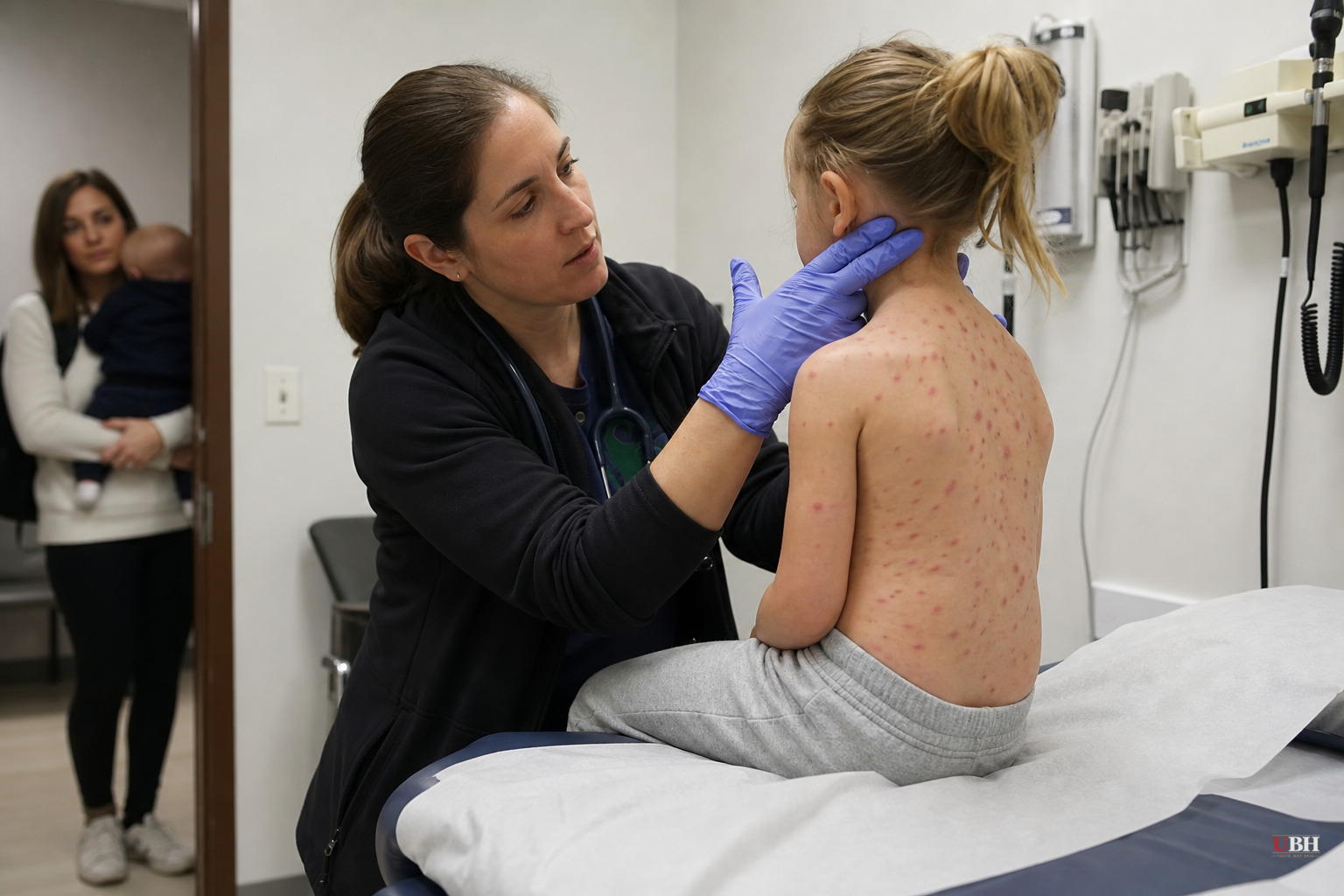
A disease with a 60-year-old fix is spreading anyway
The measles vaccine has existed since 1963. It works. It's cheap. And for decades it made treatments for measles largely irrelevant, because almost nobody caught the disease in places with good vaccine coverage.
According to Wired, the US had already surpassed last year's total of 2,289 measles cases by July of this year, and 2024 saw just 285 cases for the entire year. Case counts are climbing fast, driven by large outbreaks in South Carolina and Utah, Wired reported.
The reason is not a mystery. Measles needs at least 95 percent of a community vaccinated with both doses to keep the virus from spreading to infants too young to be vaccinated and to people with weak immune systems. Wired reported that vaccination rates have dropped well below that threshold in many parts of the country.
Why this actually matters medically
Measles is not a mild childhood rash. The World Health Organization describes it as a highly contagious virus that infects the respiratory tract and then spreads through the entire body, causing high fever, cough, and a full-body rash. WHO data shows an estimated 95,000 people died from measles in 2024, mostly children under five, despite a vaccine that is both safe and cheap.
Young kids face the worst of it. The virus can cause pneumonia by directly damaging the lining of the respiratory tract and by wrecking the immune system, according to Wired, leaving children open to secondary bacterial infections. It can also cause deafness and, in severe cases, fatal brain damage. WHO adds that measles can make the immune system "forget" how to fight off other infections entirely, a lingering effect that leaves survivors vulnerable long after the rash fades.
Right now, doctors have no way to fight the virus itself. Wired reported that supportive care is the only option: preventing dehydration, managing breathing problems, giving steroids for inflammation. Vitamin A is sometimes administered because measles depletes it in the body, but the supplement doesn't touch the virus.
Biotech companies are stepping in, late
Michael Mina, an epidemiologist and chief medical officer at the Connecticut biotech firm Invivyd, told Wired plainly what the problem is: "What we're seeing now as we get a resurgence of measles in communities is a horrible lack of options when somebody gets exposed."
Invivyd is developing a monoclonal antibody therapy for measles, the same category of treatment that saw wide use during Covid-19, especially for immunocompromised patients who didn't respond well to vaccination. Given by IV or injection, these antibodies mimic what the immune system produces naturally and can offer protection lasting a few months, according to Wired.
Mina said Invivyd, which already built a Covid antibody product, has been fielding inquiries from health care providers asking when something similar will exist for measles. The pitch is straightforward: if there's a local outbreak, a monoclonal antibody could give short-term protection to high-risk people who were exposed.
There's a catch. Wired reported that Invivyd hasn't tested its measles antibody in humans yet. This is early-stage work, not something available in emergency rooms today or anytime soon.
The obvious tension nobody's resolving
There is already a near-perfect tool for this problem, and it's the vaccine, not a future antibody drug. The MMR vaccine is decades old, well-studied, and highly effective. The reason biotech firms are suddenly interested in measles treatments isn't that the vaccine stopped working. It's that fewer people are getting it.
A reasonable vaccine-skeptical parent's concern deserves to be stated fairly: some parents want more information on ingredients, timing, or spacing of childhood vaccines, and want the choice to be theirs rather than mandated by the state. That's a legitimate parental-rights argument, and nothing in the WHO or Wired reporting suggests parents raising those questions are acting in bad faith.
But that argument doesn't change the epidemiology. WHO and Wired both describe measles as one of the most contagious viruses known, requiring a 95 percent vaccination threshold just to prevent community spread. When rates fall below that, outbreaks aren't a possibility, they're close to a certainty in a connected population. Neither source in this story presents evidence disputing vaccine safety or efficacy; the reporting focuses entirely on falling vaccination rates as the driver of rising case counts.
Wired raised a question with no clean answer: even if a monoclonal antibody treatment for measles gets approved, will people who already refused the vaccine bother taking it? Mina and Invivyd don't have that answer. Neither does anyone else right now.
The treatment Invivyd is developing hasn't been tested in a single human patient. It will likely be years before anything reaches a pharmacy shelf, according to Wired. In the meantime, the case count for 2026 keeps climbing past a disease that a 60-year-old shot was already built to stop.
Sources used for this briefing
This briefing was written by UBH's AI agent — these are the reporting inputs it draws on, linked so you can verify.


