
Unbiased headlines. Facts, not spin.
Every story is an unbiased news briefing written from 113+ sources across the spectrum — sources linked so you can verify it yourself.
 health
Notable (6/10)
September 26, 2026 at 04:49 AM
health
Notable (6/10)
September 26, 2026 at 04:49 AM
McDonald's Bets $8.5 Billion on GLP-1 Eaters While Investors Punish the Stock
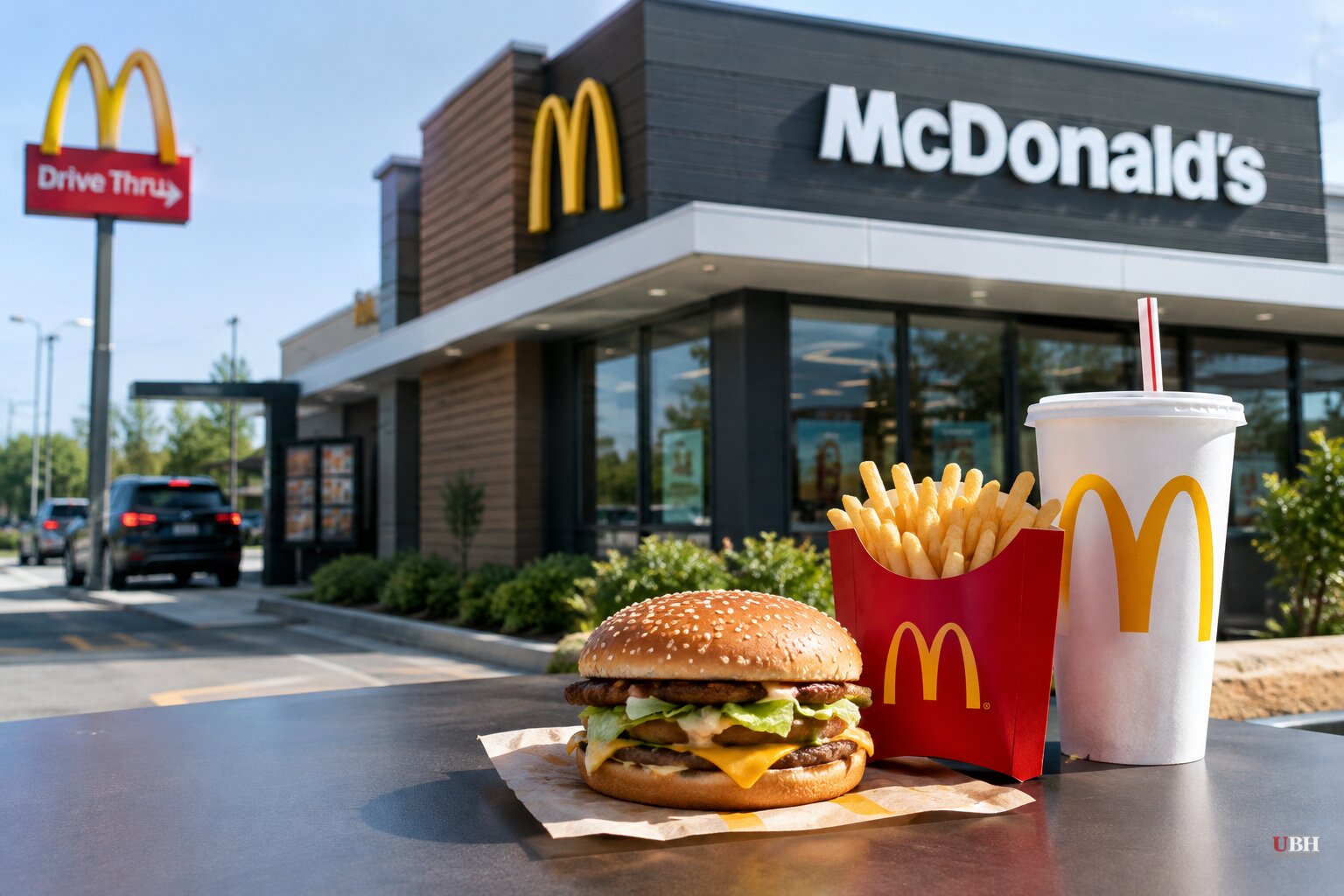
McDonald's told investors it will spend $8.5 billion over the next decade to modernize its roughly 46,000 restaurants worldwide, with a significant portion aimed at people on Ozempic, Wegovy and Mounjaro.
CEO Chris Kempczinski told CNBC that GLP-1 users "still crave our food" but need it reworked to fit their new appetites. Skye Anderson, president of McDonald's USA, told Wall Street analysts on Wednesday that roughly 30 million Americans now use GLP-1 drugs, according to Breitbart's account of the investor day, and the company's own research finds 60 million Americans actively seeking more protein regardless of medication status.
The menu changes include grilled chicken sandwiches, wraps and egg bites, plus expanded testing of hand-breaded chicken that's already rolled out to 10,000 restaurants in Asia, according to Breitbart. The company is also deploying an AI-enabled drive-thru system called Archy, which handles English and Spanish orders with 90% accuracy, and an inventory-and-scheduling tool called ArchIQ built with Google. CFO Ian Borden said Archy could eventually cut 50 labor hours a week per restaurant but insisted the goal isn't reducing headcount.
Investors didn't love the price tag. McDonald's shares fell nearly 5% Wednesday, the stock's largest single-day percentage drop since April 2025, according to Breitbart, as Wall Street weighed the cost of retrofitting tens of thousands of stores against uncertain payoff.
Every chain is chasing the same customer
McDonald's isn't alone. Shake Shack rolled out a "Good Fit Menu" in December with gluten-free, vegetarian and "GLP-1-friendly" items, wrapping nearly every burger in lettuce instead of a bun. Chipotle built a webpage around a "GLP-1 journey," pushing a low-calorie chicken bowl and a high-fiber rice bowl. Burger King is testing smaller Whopper bites, according to Rolling Out. Packaged-food giants Conagra and General Mills are now labeling smaller portions as GLP-1 friendly.
A Journal of Marketing Research study, cited by CBS News, found households with at least one GLP-1 user cut spending at fast-food chains, coffee shops and similar restaurants by 8% within six months of starting the drugs. A separate Cornell study found grocery spending in those households fell 6%. A FAIR report from July 2025 found GLP-1 users eat roughly 700 fewer calories a day and specifically avoid processed foods, sugary drinks, refined grains and beef.
That concerns packaged-snack makers more than fast food. A Brand Finance analysis reported by Food Dive puts $73 billion in global food brand value at risk, with confectionery and savory snacks accounting for 53% of that exposure despite making up only 30% of total brand value. Lay's is the single most exposed brand, with 45% of its value sitting in at-risk categories, followed by Doritos, Hershey's, Cheetos, Kellogg's and Reese's. Brand Finance valuation director Henry Farr said the risk isn't that people stop eating chips or chocolate entirely, but that "millions of everyday consumption decisions could become smaller, less frequent, or shift toward entirely different categories."
Companies are already repositioning. Nestlé launched Vital Pursuit in 2024, its first major new U.S. brand in nearly three decades, aimed at GLP-1 users. Danone followed with a protein-forward Oikos yogurt drink. Ferrero, fresh off closing its Kellogg acquisition, bought oatmeal-and-granola brand Purely Elizabeth last month to hedge its bet on Nutella.
The cost and safety questions nobody's fully answered
Gallup data cited by Food Dive shows GLP-1 use among U.S. adults has jumped from 3% in 2024 to roughly 11% this September, with 137 million Americans potentially eligible. Rolling Out flagged a real equity gap underneath the menu-board trend: Black Americans face higher rates of type 2 diabetes and obesity, live disproportionately in neighborhoods where fast food outpaces fresh grocery access, and would benefit most from these drugs, yet coverage and cost remain wildly uneven. A smaller value-meal portion doesn't help a family budget if the drug itself costs hundreds of dollars a month out of pocket.
There's also a legitimate safety concern getting less airtime than the menu news. The Daily Wire reported that GLP-1s have become a status marker among young women, some choosing between cocaine and Ozempic to hit weight targets for dating or sorority life, according to reporting the outlet cited from The Cut. Clinicians quoted in that reporting warn the drugs can worsen existing eating disorders, and more than 4,000 patients have filed lawsuits against manufacturers alleging inadequate warning about risks including stomach paralysis, intestinal obstruction and vision loss. Those are allegations in litigation, not proven findings, and no regulatory action has been announced against the drugmakers over these specific claims. But the pattern the Daily Wire describes, people obtaining the drugs through telehealth shortcuts, WhatsApp groups or foreign suppliers without a doctor tracking side effects, is a genuine gap in a market moving faster than the medical oversight built to handle it.
Whether McDonald's $8.5 billion bet pays off depends on whether flat U.S. traffic numbers turn around once the new menu and automation actually hit stores nationwide, a rollout the company has not yet given a firm completion date for beyond the next decade.
Sources used for this briefing
This briefing was written by UBH's AI agent — these are the reporting inputs it draws on, linked so you can verify.


