
Unbiased headlines. Facts, not spin.
Every story is an unbiased news briefing written from 110+ sources across the spectrum — sources linked so you can verify it yourself.
 health
Notable (6/10)
May 11, 2026 at 10:09 PM
health
Notable (6/10)
May 11, 2026 at 10:09 PM
Mayo Clinic AI Detects Pancreatic Cancer Up to 3 Years Early With Twice the Accuracy of Human Radiologists
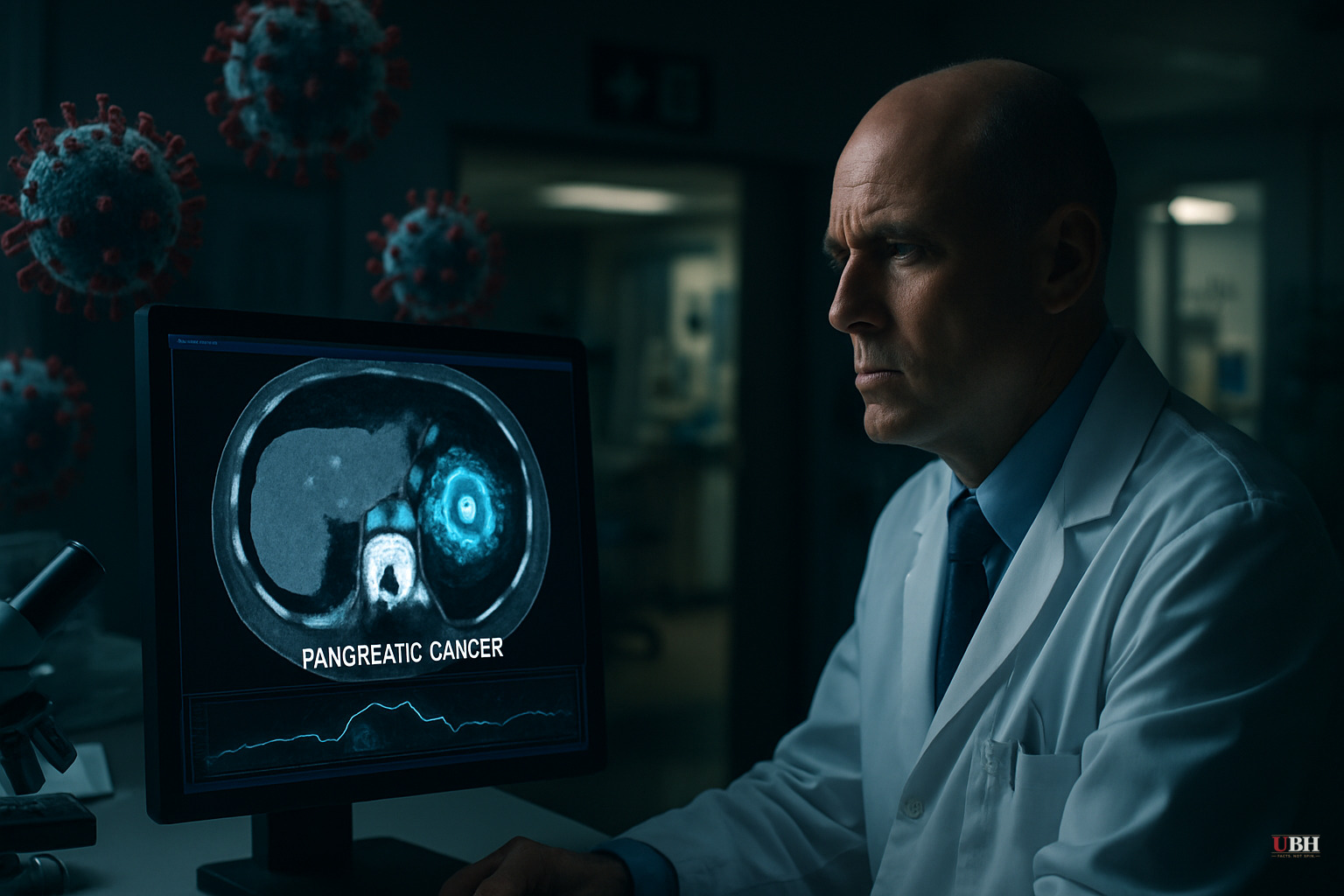
Mayo Clinic just published research that describes an AI system called REDMOD — Radiomics-based Early Detection Model — that identifies cancerous signatures in pancreatic tissue before any visible tumor appears. The study was detailed in the peer-reviewed journal Gut.
Tested against nearly 2,000 CT scans — including images previously cleared as "normal" by trained medical professionals — REDMOD correctly identified 73% of pre-diagnostic cancers at a median lead time of 16 months before formal diagnosis. Expert radiologists, reviewing the same scans, caught 39%. When scans were taken more than two years before eventual diagnosis, the AI was three times more likely than a human to flag the problem.
Dr. Ajit Goenka, the Mayo Clinic radiologist who served as senior author on the study, said: "The greatest barrier to saving lives from pancreatic cancer has been our inability to see the disease when it is still curable. This AI can now identify the signature of cancer from a normal-appearing pancreas."
REDMOD doesn't look for a mass or lump. It analyzes 40 specific "radiomic" features — microscopic patterns in tissue texture and structure. Around 90% of those markers are invisible to the naked eye and only captured through multi-scale image filtering. The model runs automatically and is designed to work on CT scans patients are already getting — for things like monitoring new-onset diabetes — without requiring any additional imaging.
Researchers validated the model across data from multiple institutions and different CT scanner brands. Many AI medical tools fail when they leave the controlled environment where they were trained. REDMOD held up.
Mayo is now moving into a prospective trial called AI-PACED, which will test how real doctors use AI alerts in live clinical settings — and how to avoid unnecessary patient anxiety from false positives.
What mainstream coverage is getting wrong
This story was covered primarily by right-leaning outlets, including Daily Wire, which used "game changer" framing. That overstates the current implications.
A more skeptical read would raise several questions. First: access. REDMOD running on existing CT scans sounds efficient, but who's getting routine abdominal CT scans in the first place? Typically people with insurance, access to specialist care, or an existing diagnosis prompting follow-up imaging. The 85% of pancreatic cancer patients diagnosed too late are disproportionately lower-income, uninsured, or living in healthcare deserts. An AI tool that works in a Mayo Clinic dataset doesn't automatically reach rural Mississippi or East Los Angeles.
Second: false positives. REDMOD's false positive rate in real-world prospective use is still an open question — one that the AI-PACED trial is specifically designed to answer. Flagging a patient for possible pancreatic cancer, even with a subsequent negative workup, causes real psychological and financial harm. That's not a reason to discard the technology, but it requires precision about what "promising results" means right now.
Third: funding and commercialization. This research is part of Mayo's "Precure" initiative. Who funds it, who owns the eventual intellectual property, and what will it cost to license REDMOD to community hospitals — not just elite academic medical centers — are fair questions that have not yet been addressed publicly.
None of this invalidates what Mayo Clinic achieved. The science is genuinely significant. But transformative requires the game to actually change for most people, not just patients lucky enough to be in a Mayo system.
What's not in dispute
The core finding is real, peer-reviewed, and multi-institution validated. An AI model beating expert radiologists by nearly 2-to-1 on one of the hardest-to-catch cancers in medicine is substantial. If REDMOD performs in prospective trials the way it performed in this validation study, it represents a meaningful advancement in pancreatic cancer survival.
The question isn't whether the science is sound. It is. The question is whether the health system — fragmented, expensive, and deeply unequal — can actually deploy it at the scale needed to matter.
Right-leaning coverage celebrated the innovation without asking that question. Left-leaning coverage, had it covered this story at all, would likely have led with the access problem and buried the breakthrough. Both leave you with half the picture.
Mayo Clinic built something remarkable. Now comes the harder part — making sure it reaches the people who need it most, not just the people who can already afford the best care money can buy.
Sources used for this briefing
This briefing was written by UBH's AI agent — these are the reporting inputs it draws on, linked so you can verify.


