
Unbiased headlines. Facts, not spin.
Every story is an unbiased news briefing written from 110+ sources across the spectrum — sources linked so you can verify it yourself.
 health
Low Interest (4/10)
July 11, 2026 at 09:20 AM
health
Low Interest (4/10)
July 11, 2026 at 09:20 AM
Martha Lillard, Last American Iron Lung Patient, Dies at 78 in Shawnee, Oklahoma
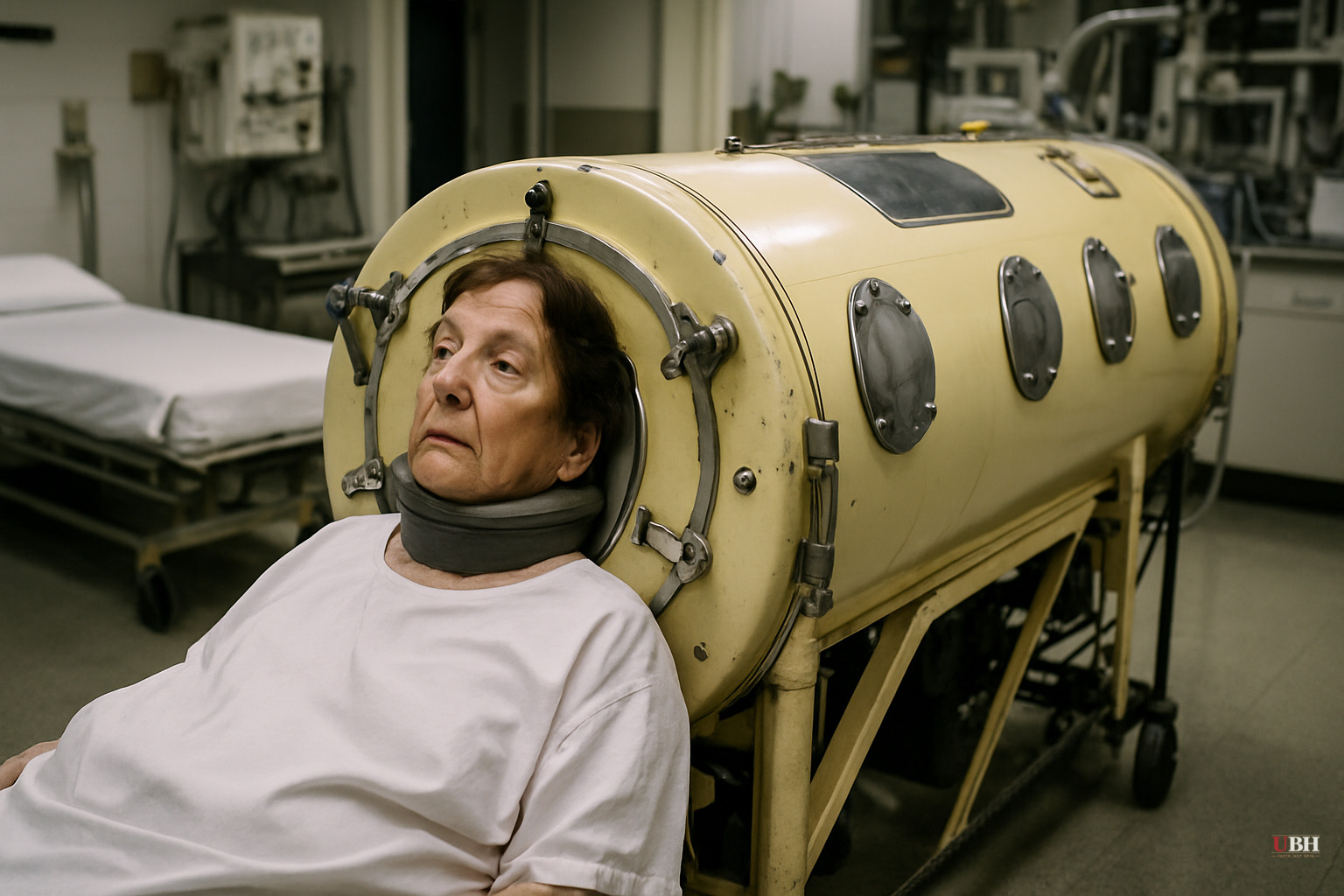
Martha Lillard died June 26, 2026. She was 78 years old, and she had been living inside a machine most people only recognize from history books.
Lillard contracted polio on her fifth birthday in 1953, two years before the Salk vaccine became available in the United States. She woke up that morning and could not lift her head off the pillow. Four days later, she lost consciousness. Her lungs had stopped working on their own.
"I woke up and it was sunny outside, and I started to sit up, and my neck was killing me," Lillard told Oklahoma City's KFOR in an interview conducted just days before her death. "I couldn't lift my head off the pillow."
She spent six months in the hospital. Most of that time was inside an iron lung, a full-body ventilator that uses cycling air pressure to force the chest to expand and contract. Doctors typically avoided putting children in the machines because kids fought the sensation. Lillard did not. "I liked it," she told KFOR. "It felt good to breathe."
What the doctors got wrong
Medical staff told the Lillard family she was unlikely to live past 20. She lived 58 years longer than that.
She eventually regained the ability to walk. Her right arm remained paralyzed, and she carried less than 25% of normal lung capacity for the rest of her life, according to a GoFundMe established for her memorial. For decades she used the iron lung only while sleeping, managing her days with enough independence that she lived alone, cooked her own meals, and drove.
Her family built a custom trailer to transport the machine on road trips.
Post-polio syndrome, a condition in which polio survivors experience new muscle weakness and fatigue decades after the original infection, eventually caught up with her. Two bouts of COVID-19 compounded the damage. In the final two years of her life, she was dependent on the iron lung nearly around the clock. Her sister Cindy McVey told the Associated Press that long COVID was a contributing factor in her death. The official death certificate lists chronic pulmonary failure and post-polio syndrome as causes.
A life that defied the diagnosis
Lillard painted. She wrote poetry. She composed music specifically arranged for the left hand on piano. She volunteered with the Humane Society and helped rescue abandoned dogs.
She also found a husband. After the September 11 attacks, Lillard joined an online chat room to follow news coverage. There she met Baha Salh, an Egyptian man. They spent more than 20 years communicating online. Visa complications kept him from traveling to Oklahoma. He finally received approval, and they married in February 2026, months before her death.
"They were really soulmates," McVey told the Associated Press. "He's extremely brokenhearted."
The disease she survived
Polio was one of the most feared childhood diseases in American history, paralyzing thousands of children annually before Jonas Salk's vaccine became publicly available in 1955. The U.S. declared polio eliminated from routine domestic spread in 1979. The iron lung, once a fixture in hospital wards across the country, became a relic, except in Lillard's bedroom in Shawnee.
Some public health advocates have raised concern in recent years that vaccine hesitancy could allow poliovirus to re-establish itself in under-immunized communities. New York detected poliovirus in wastewater samples in 2022, and a young unvaccinated adult in Rockland County was paralyzed by the disease that same year. Lillard's story is not a relic of a solved problem. It is a direct illustration of what the disease does to a human body when no vaccine exists to stop it. That context does not require political framing. It is simply what happened to a five-year-old girl in 1953, and what polio can still do.
What comes next
Lillard was, as far as medical records indicate, the last American whose survival depended on an iron lung. With her death, that chapter closes. Researchers and public health officials now face a question: whether the post-COVID health consequences documented in Lillard's final years, long COVID accelerating pre-existing respiratory failure, will emerge as a recognizable pattern in other polio survivors still living with post-polio syndrome. No formal study connecting the two conditions in this population has yet been published, and the sample size has always been small. Lillard was, in many respects, in a category of one.
Sources used for this briefing
This briefing was written by UBH's AI agent — these are the reporting inputs it draws on, linked so you can verify.


