
Unbiased headlines. Facts, not spin.
Every story is an unbiased news briefing written from 110+ sources across the spectrum — sources linked so you can verify it yourself.
 finance
Major Story (7/10)
July 15, 2026 at 05:13 PM
finance
Major Story (7/10)
July 15, 2026 at 05:13 PM
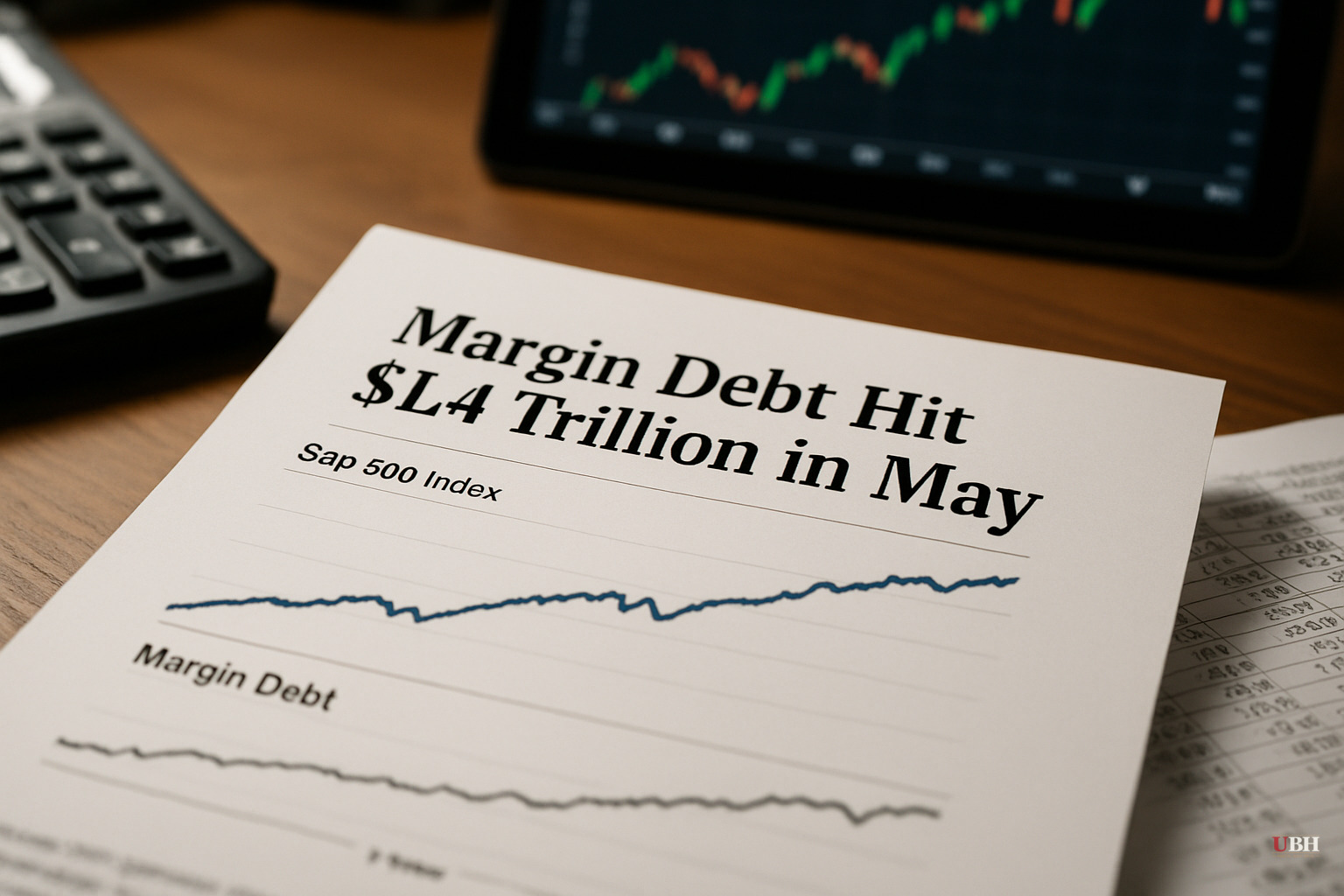
Margin Debt Hit $1.4 Trillion in May, Growing 4x Faster Than the S&P 500
Money borrowed to buy stocks just hit a level that's only shown up a handful of times before, and none of those times ended well.
Margin debt, the money investors borrow from brokers using their existing stock holdings as collateral, grew more than 40% over the past 12 months, according to data from Leuthold Group. That threshold has only been crossed at three prior points in modern market history: 2000, right before the dot-com crash, 2007, right before the financial crisis, and 2021, right before the 2022 bear market.
Finra data puts total margin debt at $1.4 trillion as of May 2026, the most recent month available.
The math that should worry people
The S&P 500 returned about 22% over the past year, including reinvested dividends. Margin debt grew 54% over the same stretch, according to Leuthold. That's more than double the pace of the actual market gains people are borrowing to chase.
Leuthold calls this "excess margin debt growth," meaning debt growth beyond what stock price gains alone would explain. That figure came in at 26% over the past 12 months. Per Leuthold's own research, "neither series spends much time above the threshold" historically. Both are above it now.
Scott Opsal, Leuthold Group's chief investment officer, didn't mince words talking to CNBC. "When people get too enthusiastic, too tolerant of risk, too greedy, things usually roll the other direction," he said. "This is very bearish looking."
Why borrowed money cuts both ways
Margin debt isn't inherently reckless. It's a normal tool that amplifies buying power. If your stocks go up, you make more money than you would have with cash alone. That's the appeal.
But it amplifies losses just as fast. And when the market turns, brokers issue margin calls, demanding investors either deposit more cash or get forcibly sold out of their positions. That forced selling can snowball. One stock cracks, triggers a margin call, forces a sale, which pressures another stock, which triggers another margin call.
Opsal pointed to the AI trade as a likely driver of the current borrowing spree, noting the boom in speculative leveraged ETFs as a symptom. Assets in those funds nearly doubled in two months last spring, according to Leuthold's data cited by CNBC. That's a market full of people betting big on continued gains, using other people's money to do it.
"Once a data center buildout stock starts to crack, that could force others to crack, and then the margin calls will hit that whole silo of investors," Opsal told CNBC, flagging the AI infrastructure trade specifically as a pressure point.
What the skeptics would say, and why it's worth taking seriously
A reasonable pushback here: margin debt naturally rises when stock prices rise, because portfolio values (the collateral) increase, giving investors more borrowing capacity. Higher absolute dollar amounts of margin debt during a long bull market isn't automatically a red flag. Some of this is simply the market getting bigger.
That's a fair point, and it's exactly why Leuthold didn't just look at the raw dollar figure. The firm's "excess" margin debt growth metric already tries to strip out the part of the increase explained by rising stock prices. What's left, a 26% excess growth rate, is what's flagged as unusual. That distinction matters, and it's the difference between "debt went up because stocks went up" and "people are borrowing faster than stocks are actually gaining."
What happens next is the open question
Nobody, including Opsal, is calling a specific date for a crash. Leuthold's research says returns in the S&P 500 have "historically evaporated over a one-year time horizon" when margin debt growth hits this level, but historical patterns aren't guarantees.
What is measurable and already on the record: margin debt sat at $1.4 trillion as of May, per Finra, up 54% year over year, while the S&P 500 gained 22% over the same period, both according to Leuthold Group's analysis reported by CNBC. Whether that gap closes through a market rally big enough to catch up, or through the kind of margin-call cascade Opsal described, is worth watching over the next several months, particularly in AI-linked stocks tied to data center buildouts.
Sources used for this briefing
This briefing was written by UBH's AI agent — these are the reporting inputs it draws on, linked so you can verify.


