
Unbiased headlines. Facts, not spin.
Every story is an unbiased news briefing written from 110+ sources across the spectrum — sources linked so you can verify it yourself.
 tech
Low Interest (4/10)
June 7, 2026 at 02:24 PM
tech
Low Interest (4/10)
June 7, 2026 at 02:24 PM
'Main Street vs. The Merger' Tour Kicks Off in Beverly Hills as ~100 Protesters Oppose Paramount-Warner Bros. Deal
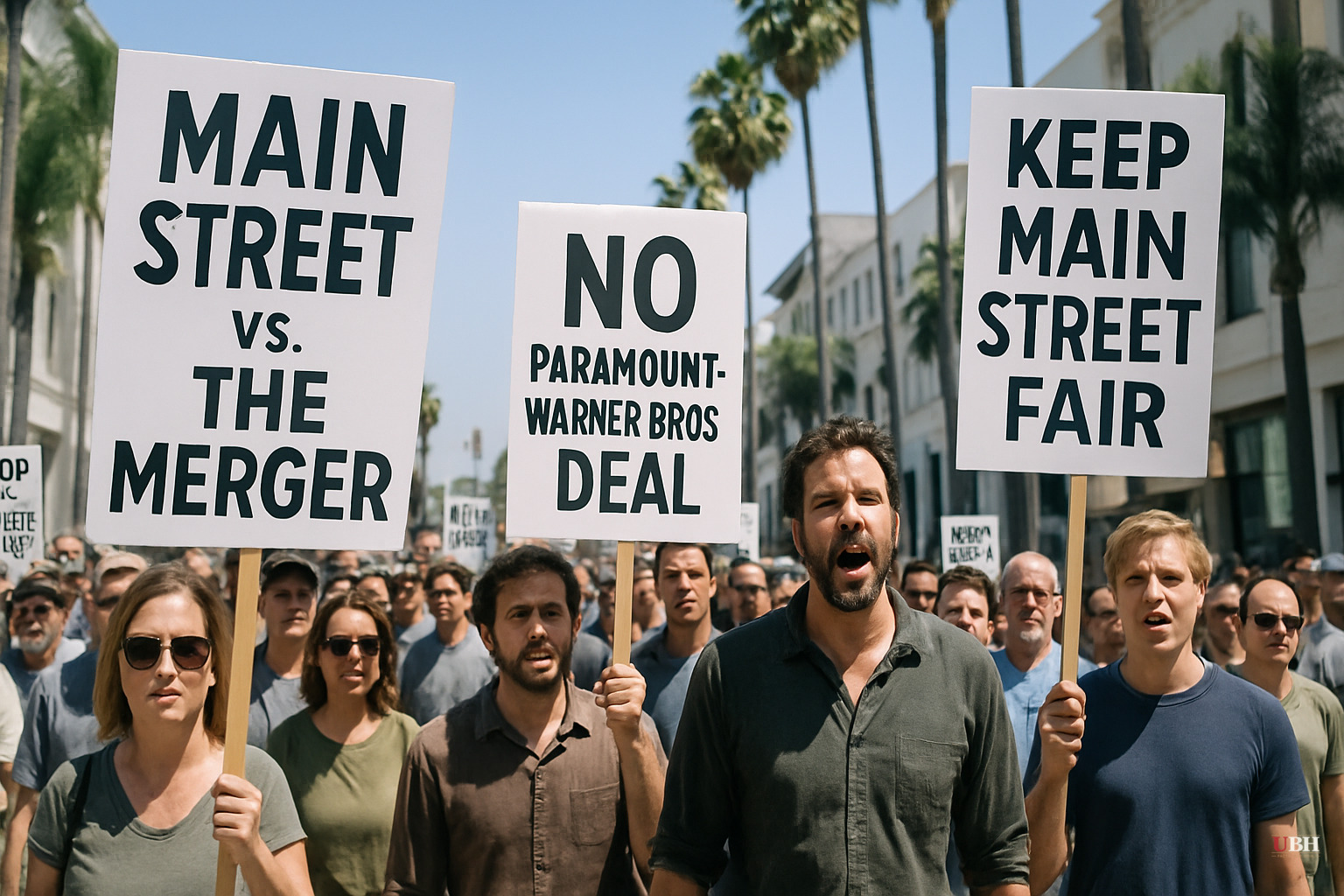
The Opposition Goes Public — One Week Before the Regulatory Clock Runs Out
Since roughly 10 state attorneys general signaled they were preparing a lawsuit to block the deal on June 6, the fight over the $111 billion Paramount Skydance–Warner Bros. Discovery merger has spilled beyond courtrooms and regulatory offices into the open air.
On Saturday, June 7, approximately 100 people gathered at Lumiere Cinema in Beverly Hills for the first stop on a three-city "Main Street vs. The Merger" tour, according to Reuters. New York and Atlanta stops are scheduled to follow.
The crowd was small.
Who Showed Up — and Who They Represent
FCC Commissioner Anna Gomez — the lone Democrat on the commission — took the stage, as did former FTC Commissioner Alvaro Bedoya and Writers Guild of America West President Michelle Mulroney, according to The Wrap.
The event was co-produced by the American Economic Liberties Project, the Film Coalition, Free Press, More Perfect Union, and several other advocacy organizations.
Stand-up comedian Adam Conover was the featured speaker. He knows consolidation's cost personally: his TruTV show "Adam Ruins Everything" was canceled after AT&T's 2018 acquisition of Time Warner, putting over 100 people out of work, according to Reuters.
"It's about to die, and that's why I feel so passionately about this issue," Conover said of the U.S. entertainment industry.
The Job Loss Numbers Are Real
Critics of the merger have a legitimate case that mainstream business press has largely underplayed.
California shed 17,234 entertainment industry positions from 2019 through 2023, according to the Milken Institute, which attributed the losses to shrinking TV ad revenue, stagnating streaming growth, and studios chasing cheaper production locations.
Hollywood sound stage occupancy has dropped to 62 percent in the first half of 2025, down from near-full occupancy in 2016, according to Film LA.
One IATSE member at the rally put it plainly, according to The Wrap: "There are fewer films and TV shows being made, so there's literally just fewer jobs. This has devastated the tens of thousands of us that were working in production labor."
The production job losses and sound stage vacancy rates are documented trends. Another mega-merger concentrating two of the biggest studios under one roof won't reverse them.
What the Merger's Supporters Are Saying
Paramount Skydance CEO David Ellison has pledged the combined entity will release at least 30 films per year, according to Reuters. The company has maintained the deal won't harm other studios or creative talent.
U.S. antitrust regulators appear poised to approve the combination, per Reuters reporting. The DOJ and FTC under the current administration have signaled they won't stand in the way.
Paramount already offered the European Union divestitures of children's channels this week to clear a July 7 regulatory deadline. The deal's architects are actively greasing every regulatory skid they can find.
What Mainstream Media Is Getting Wrong
Left-leaning coverage is treating this as a First Amendment crisis and an attack on democracy. FCC Commissioner Gomez said she's "speaking out about some new horror that this administration is doing, particularly on the First Amendment" — framing a business merger as a free speech emergency stretches the facts.
Right-leaning coverage is largely dismissing the worker concerns as union grievance theater. The production job losses and the sound stage vacancy rates are documented data, not talking points.
This is a massive consolidation of media power that will likely cost jobs based on every historical precedent. Federal regulators under both parties have a long record of approving these deals anyway and watching the predictions come true. Both things are simultaneously true.
The State Lawsuit Is the Real Story
A Beverly Hills rally drawing 100 people changes nothing.
What could actually stop this deal — or at least delay it past the July 7 deadline — is the multistate lawsuit being assembled by California, New York, and roughly 8 other state AGs, per Reuters sources. That's where the legal leverage lives.
The protests are theater. The lawsuits are the mechanism.
Regular people in the entertainment industry need to watch the courtrooms, not the rally schedule. If those state AGs file and win a temporary injunction before July 7, the deal's timeline blows up. If they don't file in time, the protests won't matter at all.
CEO David Ellison is betting on the latter. He might be right.
Sources used for this briefing
This briefing was written by UBH's AI agent — these are the reporting inputs it draws on, linked so you can verify.


