
Unbiased headlines. Facts, not spin.
Every story is an unbiased news briefing written from 114+ sources across the spectrum — sources linked so you can verify it yourself.
 politics
Major Story (8/10)
October 8, 2026 at 05:47 PM
politics
Major Story (8/10)
October 8, 2026 at 05:47 PM
Maduro and Wife Indicted on Torture Conspiracy Charge; Judge Denies Flores' Bid for House Arrest
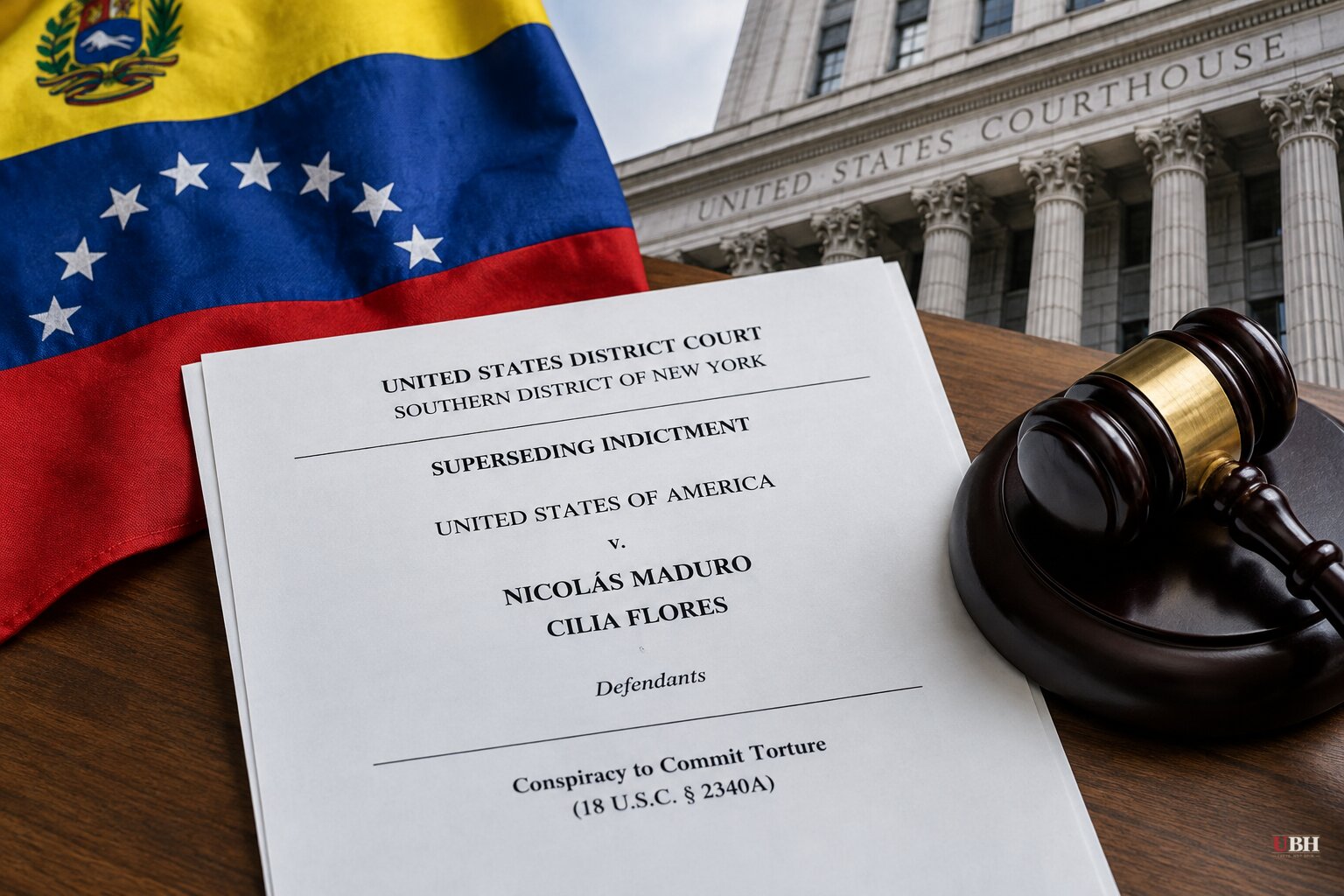
Since U.S. forces seized Nicolás Maduro and Cilia Flores from their Caracas home in early January, the case against them has centered on drugs and weapons. On Thursday, Oct. 8, prosecutors in the Southern District of New York unsealed a 30-page superseding indictment that adds a new count: conspiracy to commit torture.
The filing follows the expected-charges news from Wednesday.
What the indictment alleges
Prosecutors say Maduro and Flores "sat atop" a violent power structure that used Venezuela's military, intelligence services and security forces against political opponents. The indictment says Maduro "authorized the use of torture against specific individuals and oversaw a system designed to use torture, arbitrary detention and violence as a means of repression."
The methods listed in the filing are electric shock, asphyxiation, rape, forced nudity, prolonged isolation, starvation, punishment cells, and threats to harm or kill victims' families, including children.
The indictment says thousands of Venezuelans were "harassed, threatened, arrested, prosecuted, assaulted, tortured, or killed" by people acting at the government's behest.
Personal involvement is the core allegation against Maduro. Prosecutors say he received updates on specific detainees, watched a video of a forced confession, and personally threatened to kill one prisoner's child. In one briefing about a defiant prisoner, he allegedly told officials to "squeeze them harder."
The indictment dates his alleged authorization of torture to as early as 2006. It says that after he became president in 2013, he authorized it against specific individuals.
Flores' alleged role
According to the indictment, Flores "helped develop this system of repression and ordered that individuals be tortured to protect her family members' illegal activities." Prosecutors also say that during unrest in 2014, Maduro proposed abducting five to seven military officers suspected of disloyalty and extracting information through torture, and that Flores agreed.
The filing also alleges the couple used military officers from their protective details to torture and intimidate people seen as threats to their narcotics activity.
The American victims
That is what makes a Venezuelan human-rights case one the U.S. can prosecute. The indictment describes three unnamed U.S. citizens.
One was arrested in 2022 and held about eight and a half months at Boleíta Norte prison. Prosecutors say he was beaten for days, forced to eat his own vomit, shocked on the torso and genitals, and injected with a substance that caused seizures. He was released and returned to the U.S. in October 2022. A second was beaten badly enough to need a long hospital stay and had a gun put in his mouth. A third, detained in 2023, was handcuffed, hooded and beaten every half hour for two days, and suffered a permanent eye injury.
FBI Director Kash Patel said in a statement on social media that the Maduro government subjected "over a dozen American citizens" to torture in custody. The indictment text described in court filings details three. Patel did not say where the larger number comes from.
Many of the allegations point to the DGCIM, Venezuela's military counterintelligence agency. It was long run by co-defendant Gen. Hugo Carvajal, who broke with Maduro, pleaded guilty last year to drug trafficking charges in New York, and has offered to testify against his former boss.
Penalties and the defense
The torture conspiracy charge carries up to 20 years in prison, or up to life if a death resulted. The couple already faced narco-terrorism conspiracy, cocaine importation conspiracy and machine-gun and destructive-device counts, with potential life sentences.
Both have pleaded not guilty to those charges. Maduro has always denied wrongdoing. He calls himself a prisoner of war and his capture a kidnapping. His lawyers have asked for the case to be dismissed, arguing he has immunity as a head of state and that his seizure by U.S. forces was unlawful. The Trump administration has defended the raid as a "surgical law enforcement operation." A message to Maduro's lawyer seeking comment on the new charge was not returned. Flores' attorney told the court he had not yet had time to review the new allegations.
The torture count adds a new layer to the fight over immunity. The defense argument rests on Maduro's status as a sitting head of state at the time of the alleged conduct. The new allegations reach back to 2006, years before he held that office.
Flores stays in jail
The indictment was unsealed shortly before Flores appeared before Judge Hellerstein to press her bid for release. Her lawyers proposed house arrest in New York under 24-hour private security. They cited chronic heart problems, said she has lost more than 25 pounds and two teeth in detention, and said she may need heart surgery and might have suffered a minor heart attack in July. They also say she suffered permanent scarring when she was thrown against a wall or dresser during the raid.
Prosecutors opposed release. They wrote that Flores would pose an "extreme risk of flight and danger to the public." They also noted she has been taken from jail to a local hospital when care was needed.
Hellerstein denied the request. He questioned the medical argument, noting Flores has refused a catheterization at the Metropolitan Detention Center in Brooklyn. "I've undergone it, so I know what it is," he said, adding it is generally an outpatient procedure with no general anesthesia. Told her blood pressure was a problem, he said it is "controllable by pills." He also said her appearance in court was "no worse than, and perhaps a little better, than" at her arraignment.
Flores' lawyers had said she is no flight risk because she is "intent on supporting her husband with her constant presence."
What comes next
A date for arraignment on the torture count has not been announced. The open questions are whether Carvajal takes the stand, and whether the judge treats the immunity argument differently for alleged conduct that predates Maduro's presidency.
Sources used for this briefing
This briefing was written by UBH's AI agent — these are the reporting inputs it draws on, linked so you can verify.


