
Unbiased headlines. Facts, not spin.
Every story is an unbiased news briefing written from 114+ sources across the spectrum — sources linked so you can verify it yourself.
 politics
Notable (6/10)
October 8, 2026 at 03:21 PM
politics
Notable (6/10)
October 8, 2026 at 03:21 PM
South Korea Recalls Ambassador to Ukraine Over Zelenskyy's Disclosure of North Korean POW Transfer
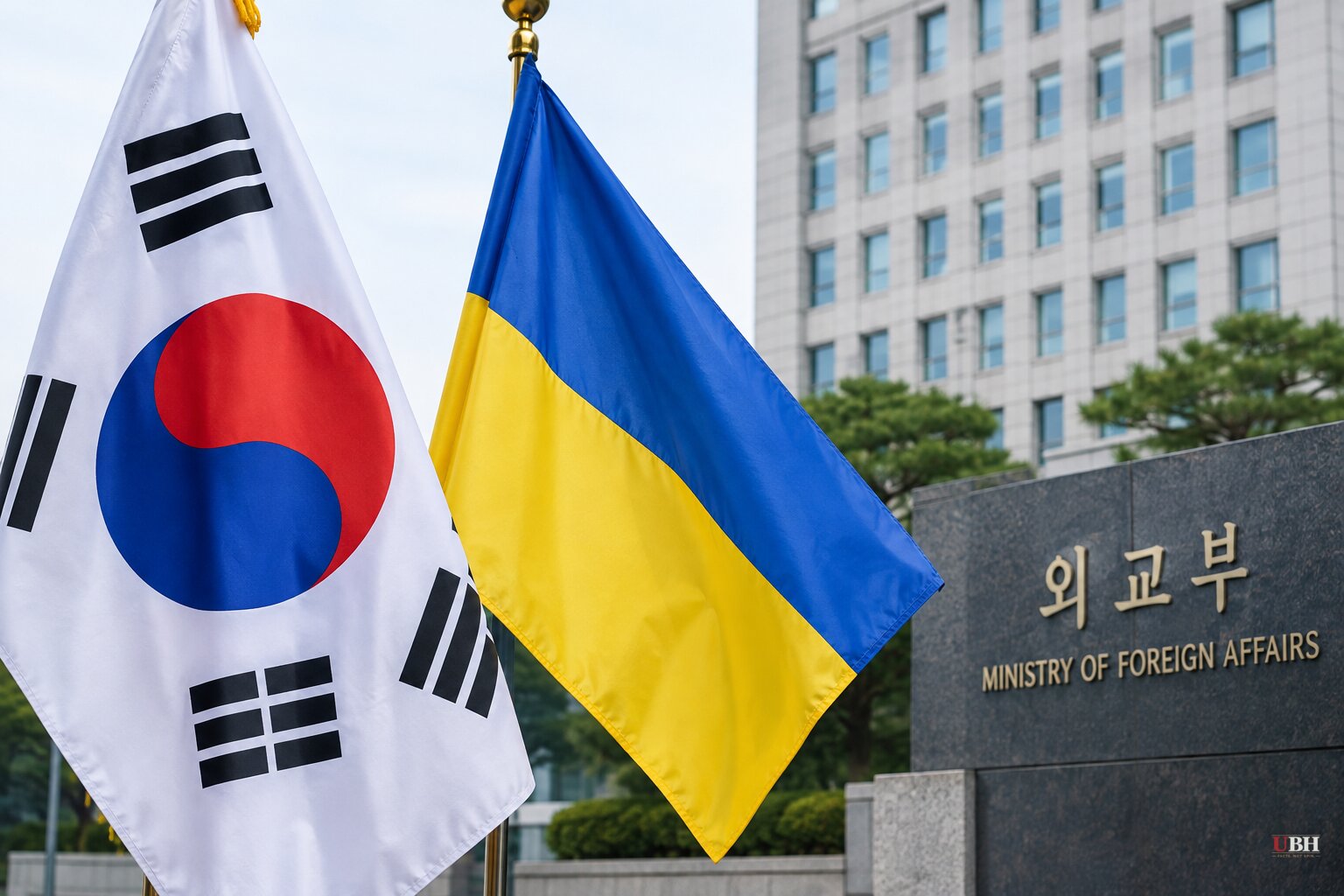
South Korea said Thursday, Oct. 8, that it will recall its ambassador to Ukraine, Park Ki-chang, over Ukrainian President Volodymyr Zelenskyy's public disclosure that two captured North Korean soldiers were transferred to Seoul.
"The government has decided to recall its ambassador to Ukraine," the Foreign Ministry said in a statement. The ministry hopes all outstanding issues "will be resolved amicably" and that consultations with Kyiv will continue. It did not say when the ambassador will leave. The embassy in Kyiv stays open.
How the row started
Zelenskyy told the U.N. General Assembly on Sept. 23: "Recently, we sent two North Korean prisoners of war to the Republic of Korea." He said one of them tried to kill himself when he realized he would be taken alive.
Ukrainian forces captured the two men in Russia's Kursk region in January 2025, while they were fighting alongside Russian troops. Since then they have said they want to resettle in the South, because they could face persecution if sent home. Seoul legally treats the North as part of its territory and has a policy of accepting and financially supporting defectors.
South Korean President Lee Jae Myung reacted the next day on X. He called the disclosure "cruel and irresponsible" and said Ukraine had breached a confidentiality agreement. Lee also acknowledged there were internal arguments for going public, since it "would clearly have helped recover the government's approval ratings," but said secrecy was "appropriate in every respect."
Seoul's stated reason for secrecy is the safety of the soldiers and of their relatives in North Korea, where families of those who fall into enemy hands can be punished.
Two accounts of the agreement
The central fact in dispute is whether an agreement existed. Seoul says it did and that Kyiv itself asked for secrecy. A senior Foreign Ministry official told reporters Seoul has written documents showing both sides agreed to keep the transfer secret.
Kyiv says otherwise. Dmytro Lytvyn, an adviser to Zelenskyy, wrote at the end of September: "There was no such agreement, that is not true. And it would be wrong to conceal what happens to particular prisoners." Zelenskyy's office has also said South Korea was told in advance that he planned to mention the transfer, and that he gave no identifying details about the soldiers or operational specifics.
Seoul summoned Ukraine's acting ambassador, Andriy Beshkin, on Sept. 28. First Vice Minister Park Yun-ju told him the denial was a source of "strong regret" and demanded an official explanation and apology. Ukraine has had no ambassador in Seoul since September 2025.
On Oct. 1, Ukrainian Foreign Minister Andrii Sybiha called the dispute a "diplomatic misunderstanding" and said Kyiv wanted a quick resolution. Lee answered on Oct. 2: "If you continue to refuse to acknowledge the facts and publicly apologize, we will take additional measures."
Foreign Minister Cho Hyun told lawmakers on Tuesday that he had received a message from Sybiha containing an apology. He said it fell short of what Seoul expected, and that firm measures, including a recall, were under consideration.
A second front in the quarrel
Lee also took aim at Kyrylo Budanov, Zelenskyy's chief of staff. Budanov had said North Korea is learning from the Russian war to prepare for combat on the Korean Peninsula, and that incidents along the border are growing more dangerous. According to Lee's social media message, Kyiv responded to Seoul's demand for acknowledgment by talking of an imminent North-South clash. Lee wrote that Ukraine had made him look like a liar. Budanov's remarks did not mention the prisoners.
Separately, Ukraine is raising a complaint of its own. The Guardian, citing port documents and vessel-tracking data, reported that South Korean ports shipped more than 176,000 tonnes of fuel oil, mostly diesel, to Russia in July and August. Seven tankers made 14 voyages, and three of the tankers are under UK and EU sanctions.
Vladyslav Vlasjuk, Ukraine's presidential envoy on sanctions policy, said the timing was no coincidence. "These deliveries began precisely when Ukrainian strikes on Russian oil refineries reduced processing volumes and caused a fuel shortage in the Russian Federation," he said. South Korea's government has not responded to that charge publicly. No source ties the fuel shipments to the recall decision.
What Seoul has at stake
South Korea has given Ukraine $445 million in humanitarian assistance since 2022. Lee pledged another $100 million in July during a meeting with Zelenskyy.
Analysts say good relations with Kyiv serve Seoul's interests. Ukraine can share intelligence on North Korea's expanding cooperation with Russia and on how North Korean troops have performed on the battlefield. Those analysts also note Lee's government may worry that publicity about the soldiers' arrival could hurt its efforts to improve ties with Pyongyang. North Korea has refused talks with Seoul and Washington since 2019 and has focused on its nuclear program. Its state media has not commented on the transfer, though it has previously accused Seoul of kidnapping defectors.
What comes next
A source told the Korea Times it was unclear whether Ukraine had been notified of the recall when it was announced. The source also said Seoul does not know whether Kyiv will respond by pulling its chargé d'affaires from Seoul.
Two questions are open: whether the written documents Seoul cites are ever shown publicly, and whether Lee's "additional measures" stop at the recall.
Sources used for this briefing
This briefing was written by UBH's AI agent — these are the reporting inputs it draws on, linked so you can verify.


