
Unbiased headlines. Facts, not spin.
Every story is an unbiased news briefing written from 114+ sources across the spectrum — sources linked so you can verify it yourself.
 politics
Notable (6/10)
October 8, 2026 at 11:00 AM
politics
Notable (6/10)
October 8, 2026 at 11:00 AM
Israel Says British Consulate in East Jerusalem Is Closed, UK Renames It a 'Mission' With Seven Diplomats
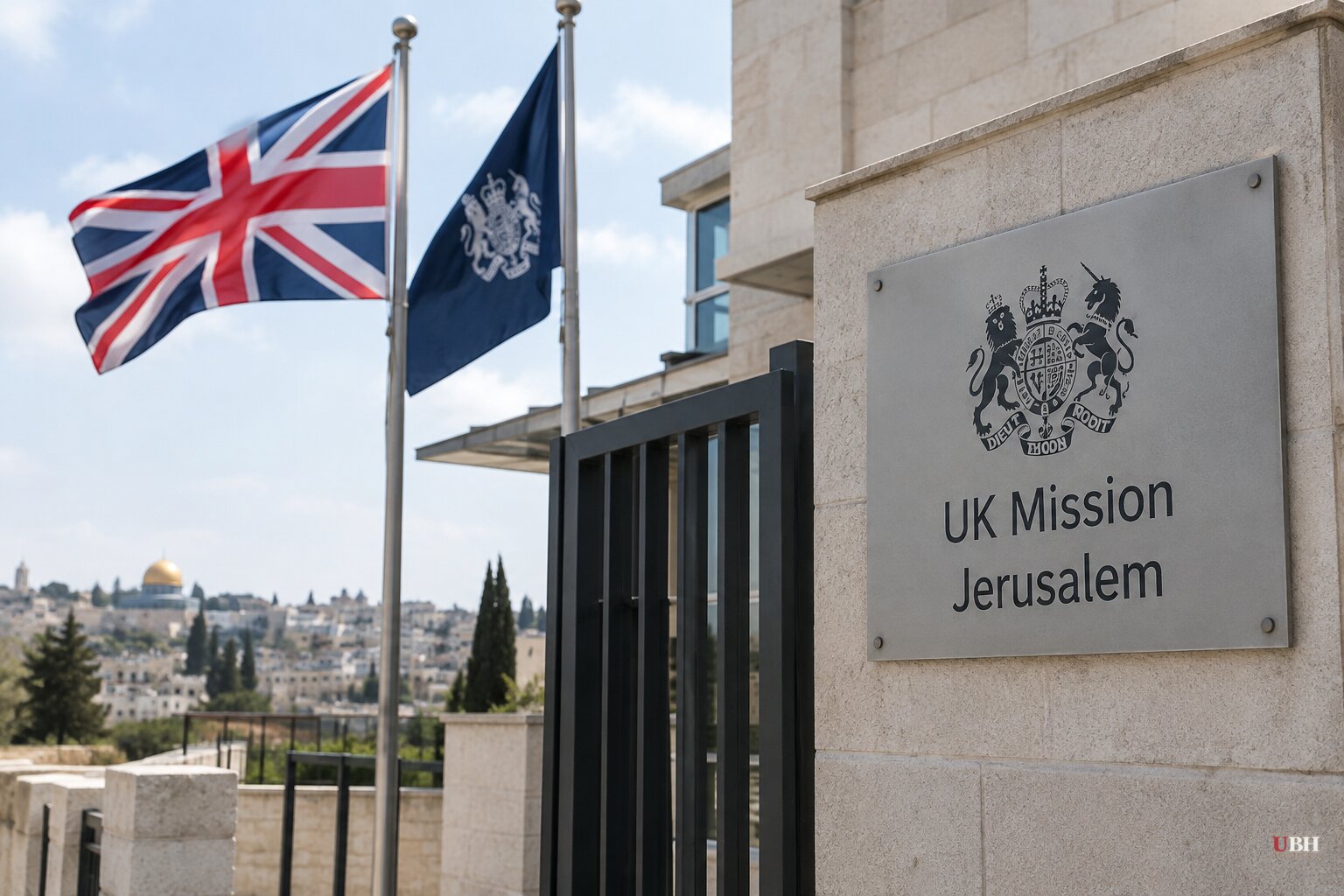
The deadline Israel set for the British consulate in East Jerusalem arrived Thursday, and both governments are describing the result differently.
Israeli Foreign Minister Gideon Sa'ar said the consulate is "closing its operations today" and that its sign has been removed. He said 20 diplomats, including the consul general, are ending their assignments and will leave Israel. A "task force of only seven diplomats with a very limited scope of activity" is authorized to keep working in the building.
British Foreign Secretary Ed Miliband said the opposite. "Our Consulate General building will not be closing, and will be known as the UK Mission, Jerusalem from today," he said in a statement. He said the mission "will continue to deliver vital services and our work with the Palestinian people."
How this started
Israel announced on September 8 that it would shut the consulate within 30 days. That announcement followed British sanctions on Israeli settlements in the occupied West Bank. Miliband told Parliament in early September that the UK would impose an import ban on goods from settlements. The package also includes sanctions on companies and individuals who support settlement expansion, and a planned ban on advertising for the settlements in Britain.
Miliband also said the government agrees there is "ethnic cleansing" of Palestinians in parts of the West Bank, carried out by "settler terrorists." Sa'ar called those accusations "outrageous lies."
Prime Minister Andy Burnham described the British measures as "carefully judged, targeted steps that are not aimed at the Israeli people, but at the unacceptable policies of the current Israeli government."
The UN and most governments consider the settlements illegal under international law. Israel disputes that.
Two versions of the same building
The consulate dates to 1838. It handles UK dealings with Palestinians in East Jerusalem, the West Bank and Gaza. It is separate from the British embassy in Tel Aviv, which is the main channel to the Israeli government.
Sa'ar acknowledged that the building is "the property of the British government." That is why the compromise looks the way it does. Israel can say the consulate closed and most of its diplomats are gone. Britain can say the premises stayed open under a new name.
The British flag was still flying Thursday morning, and staff were seen entering. Workers had removed the "British Consulate General" plaque and the sign for the consular section.
Miliband said the UK does not accept that Israel has the legal right to close the consulate. He said some staff and their families had been "temporarily withdrawn" for security reasons in recent weeks. He added that the UK would work to build up staffing at the mission in the coming months.
Israel's other measures
Sa'ar listed four steps against British activity in Israel. They include removing British representatives from the International Gaza Support Center in Kiryat Gat and barring 12 named people from entering Israel, among them former Labour leader Jeremy Corbyn.
"We established a clear principle: It is not possible to act against Israel without Israel taking appropriate measures in response," Sa'ar said. "We did not want to reach this point, but the actions of the UK Labour government brought us here." He said that under the agreement with London, "no steps will be taken against Israel."
Israeli media had reported that the UK threatened to expel Israeli diplomats from London. The Guardian reported that Miliband dropped that idea, arguing it would be unwise during the Israeli election campaign. Miliband said Britain will take no reciprocal action while the two sides are in talks.
The Guardian also reported a dispute inside the British government over whether tough measures could help Netanyahu's re-election chances before the vote on October 27.
The Iran dispute
The consulate fight is unfolding alongside a separate security issue between the two governments. Burnham said there are "strong indications" that Iran played a part in an incident at RAF Fairford over the weekend. The base is used by U.S. forces, and five men were arrested near it. Burnham called it an "ongoing, complex, and serious police investigation."
Iran's embassy in London said it "categorically rejects and strongly condemns" any suggestion of Iranian involvement.
Netanyahu told Fox News host Sean Hannity on Wednesday: "We gave the Brits the intel that there was going to be an attack, and it's an Iranian-sponsored attack." He did not say what the intelligence contained or when it was passed on. He tied it to the sanctions, saying "pretty much the next day, they slapped sanctions on us." The British government has not said it was warned by Israel, and the sources do not establish a link between the two events.
What comes next
The arrangement is a pause, not a settlement. Israel says the consulate is closed. Britain says it is not, and says it will rebuild staffing beyond the seven diplomats. Whether Israel will allow that expansion has not been stated.
The next test is the October 27 election. Netanyahu's campaign is built around the October 7, 2023 attack, and his opponents argue he should answer for the failures that preceded it. The talks between London and Jerusalem, and any new British retaliation, will run through that vote.
Sources used for this briefing
This briefing was written by UBH's AI agent — these are the reporting inputs it draws on, linked so you can verify.


