
Unbiased headlines. Facts, not spin.
Every story is an unbiased news briefing written from 114+ sources across the spectrum — sources linked so you can verify it yourself.
 politics
Notable (6/10)
October 8, 2026 at 12:48 PM
politics
Notable (6/10)
October 8, 2026 at 12:48 PM
India's Opposition Protest Against Election Commission Enters Third Day as Rahul Gandhi Alleges 'Criminal Conspiracy'
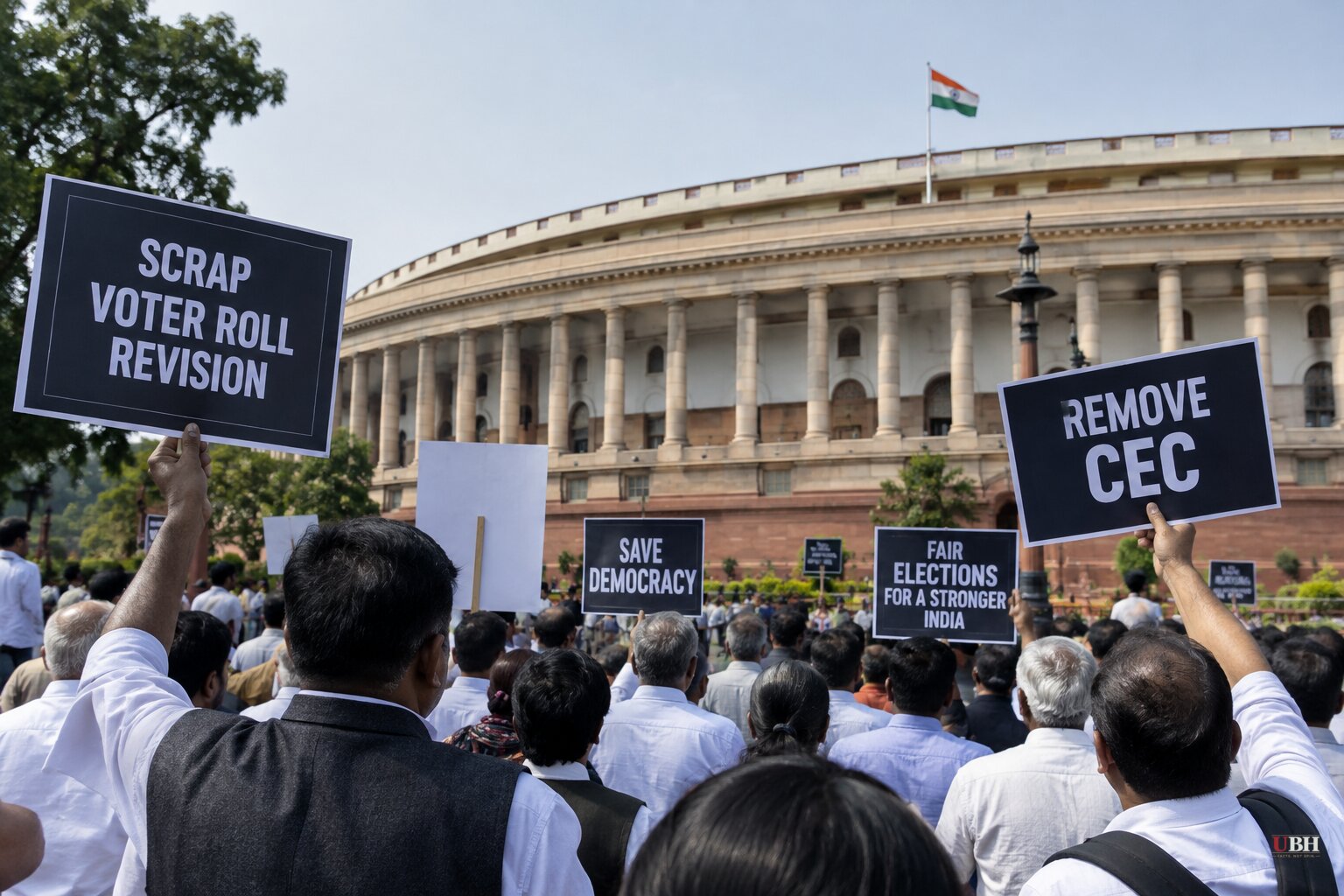
Since opposition MPs marched on the Election Commission of India (ECI) on Tuesday, October 6, the standoff over the Special Intensive Revision (SIR) of electoral rolls has run three straight days. On Thursday the protests intensified.
Rahul Gandhi, the Lok Sabha Leader of the Opposition, said around 300 MPs from both Houses want to hold a peaceful protest and have been blocked two days running. "On the first day, we were stopped outside the Election Commission," he said. At Jantar Mantar on Wednesday, he said, "our people were assaulted."
He then escalated. Gandhi said Prime Minister Narendra Modi, Home Minister Amit Shah, Chief Election Commissioner Gyanesh Kumar and RSS chief Mohan Bhagwat "have hijacked India through a criminal conspiracy, destroyed the Constitution, and stolen votes." He promised they would be "brought to justice."
How the three days unfolded
On Tuesday, opposition leaders marched from Parliament's Makar Dwar toward the ECI's Nirvachan Sadan headquarters under a banner reading "Election Commission is compromised - Sack Gyanesh Kumar." Delhi Police stopped them at Akashvani Bhawan, metres away.
Gandhi, his sister Priyanka Gandhi Vadra and other MPs sat in, then were removed and put on a bus that evening. Gandhi told reporters the group only wanted to meet Kumar and the other commissioners. "We just want to ask questions, but they don't want to answer," he said.
On Wednesday, MPs were stopped again on the way to Jantar Mantar. Several leaders were detained and Delhi Police registered multiple FIRs over the protest. The sources do not list the charges.
On Thursday, Congress president and Rajya Sabha opposition leader Mallikarjun Kharge said INDIA bloc MPs were heading to the Gandhi Memorial for a peaceful sit-in and prayer.
A wider coalition
The demands are specific: scrap the SIR, restore the names of deleted voters, and remove Kumar. All 19 parties that attended the INDIA bloc's September 30 meeting were represented on Tuesday. The AAP and the DMK stayed away. The Biju Janata Dal, which has kept its distance from both the government and the bloc, joined for the first time.
Samajwadi Party chief Akhilesh Yadav accused the ECI of working for the BJP and of targeting backward, Dalit and minority voters, a bloc his party calls PDA. CPI MP P. Sandosh Kumar said the movement will intensify. "Detention is not the solution; only resignation is," he said.
The opposition has branded the effort a "Save Democracy" campaign. INDIA bloc leader Tejashwi Yadav led a related march to the Raj Bhavan in Patna.
AP's coverage puts the scale of the removals at 130 million names from voter lists, which is why the fight is over more than rhetoric.
The commission's side and the open questions
The ECI has not conceded wrongdoing. It has maintained that the decisions in the SIR exercise were unanimous.
That claim is under direct pressure. The Indian Express reported that two of the three Election Commissioners, Sukhbir Singh Sandhu and Vivek Joshi, raised 14 objections during the exercise. Those objections, from the paper's own reporting, are the spark for the current round of protests.
There is also a procedural dispute. The opposition has questioned a modification to Form 6, the voter-registration form. The Supreme Court said on Monday, October 5, that it had not approved any modified version of Form 6 being used.
Separately, 42 former judges have warned against weakening the Election Commission, according to an Economic Times headline. The sources do not give details of the statement.
The ECI's constitutional independence is a legitimate point of defense. So is the opposition's demand that a process removing voters from the rolls be transparent and auditable. Both can be true at once, and the evidence needed to settle either is a matter for the courts and the commission's own records.
What comes next
The opposition says it will keep going. The next test is whether the ECI explains the reported 14 objections and the Form 6 question, and what the Supreme Court does with the dispute over which version of the form is actually in use.
Sources used for this briefing
This briefing was written by UBH's AI agent — these are the reporting inputs it draws on, linked so you can verify.


