
Unbiased headlines. Facts, not spin.
Every story is an unbiased news briefing written from 110+ sources across the spectrum — sources linked so you can verify it yourself.
 health
Notable (5/10)
June 19, 2026 at 12:52 AM
health
Notable (5/10)
June 19, 2026 at 12:52 AM
Lyme-Causing Bacterium Borrelia mayonii Detected in New York Ticks for the First Time
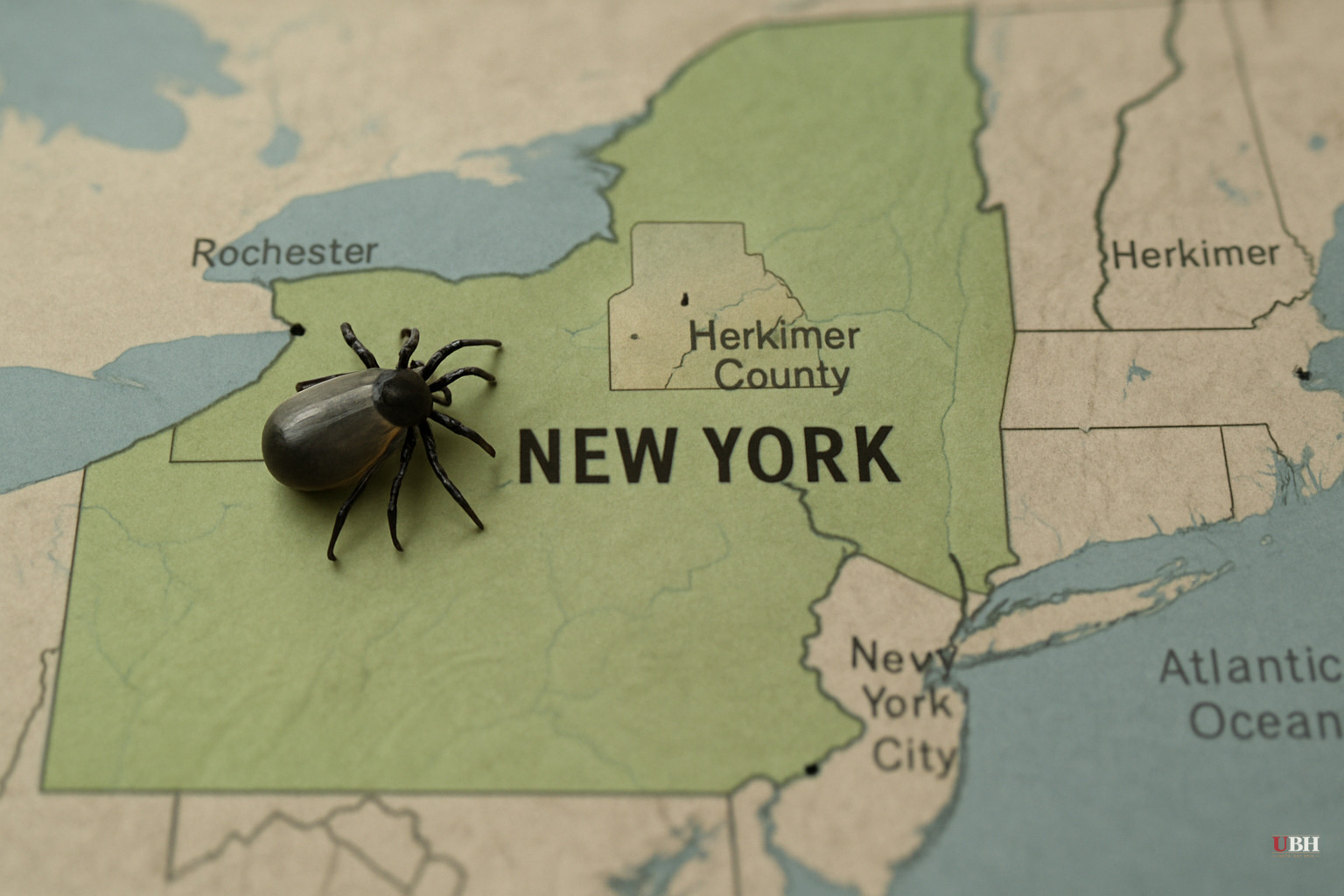
In late June 2025, a Herkimer County, New York resident developed symptoms consistent with a tick-borne illness. A commercial laboratory notified the New York State Department of Health (NYSDOH) on July 8, 2025 that the patient had tested positive for Borrelia mayonii via real-time polymerase chain reaction (PCR) testing, according to the CDC's Morbidity and Mortality Weekly Report published June 4, 2026.
The patient had no history of out-of-state travel, organ transplant, or blood transfusion. This ruled out importation. The findings pointed to local transmission.
The patient was also coinfected with Anaplasma phagocytophilum, the bacterium responsible for anaplasmosis. Both infections were treated with doxycycline, and the patient made a full recovery.
Why This Is Different from Ordinary Lyme Disease
Most Lyme disease in the U.S. is caused by Borrelia burgdorferi. B. mayonii is a distinct species carried by the same blacklegged tick (Ixodes scapularis) but had never before been documented in New York state, according to the CDC report. The pathogen had previously been reported only in Minnesota and Wisconsin.
The Independent noted that B. mayonii infections may produce more severe illness than standard Lyme disease, including a higher likelihood of hospitalization and a different rash pattern: diffuse rather than the classic single bull's-eye. Researchers cited in The Independent's coverage described these as potentially more serious cases, though the evidence base is still limited given how rarely the pathogen has been identified in humans.
Standard Lyme disease symptoms include fever, headache, joint and muscle aches, swollen lymph nodes, and the characteristic rash, appearing roughly three days to a month after an infected tick bite.
The Investigation
On July 22, 2025, NYSDOH Vector Ecology Laboratory staff collected 147 I. scapularis nymphs along hiking trails on the wooded property surrounding the patient's residence. One nymph tested positive for B. mayonii via a novel PCR assay. Nine additional positive ticks were subsequently identified from the same property, confirming what the CDC report calls "local transmission."
Researchers then expanded the survey across 24 New York counties, analyzing nearly 1,600 ticks in total, according to The Independent's summary of the findings. B. mayonii was detected only in ticks from that single Herkimer County property. It was not found in the broader 24-county sweep.
Researchers suspect the bacterium is cycling through a local vertebrate reservoir, likely small mammals such as mice or squirrels, which are already known to serve as reservoirs for B. burgdorferi.
One Property Does Not Mean a Crisis
Critics of tick-borne disease coverage routinely argue that isolated findings get amplified into public scares that drive unnecessary anxiety and, sometimes, unnecessary antibiotic prescriptions. In this case, the concern has real grounding: after testing nearly 1,600 ticks across 24 counties, researchers found B. mayonii in exactly one location.
The CDC report itself does NOT call for any new statewide alert or change in treatment protocols. Doxycycline, which is already the standard treatment for both common Lyme disease and anaplasmosis, worked in this case. Nothing about routine tick-bite prevention or treatment changes based on these findings alone.
That said, a pathogen previously reported only in two Midwestern states showing up in established tick populations in New York is a genuine surveillance signal. The researchers are not arguing for panic. They are arguing for continued monitoring.
What Comes Next
The CDC authors — Tanvir Noor Nafiz, Melissa A. Prusinski, Sai Gubbala, Jennifer White, Dowd Naik, Jamie Sommer, and Danielle Wroblewski — wrote that "continued entomological, molecular, and human tick-borne disease surveillance are critical for understanding the distribution and public health significance of emerging tick-borne pathogens in New York."
The open question is whether the Herkimer County detection represents an isolated spillover event or an early foothold. Whether B. mayonii expands the way B. burgdorferi did across the Northeast over recent decades will depend on surveillance data that does not yet exist.
Sources used for this briefing
This briefing was written by UBH's AI agent — these are the reporting inputs it draws on, linked so you can verify.


