
Unbiased headlines. Facts, not spin.
Every story is an unbiased news briefing written from 110+ sources across the spectrum — sources linked so you can verify it yourself.
 finance
Notable (5/10)
July 26, 2026 at 12:17 PM
finance
Notable (5/10)
July 26, 2026 at 12:17 PM
Luxury Brands Are Losing Customers, So They're Betting on Outlet Malls
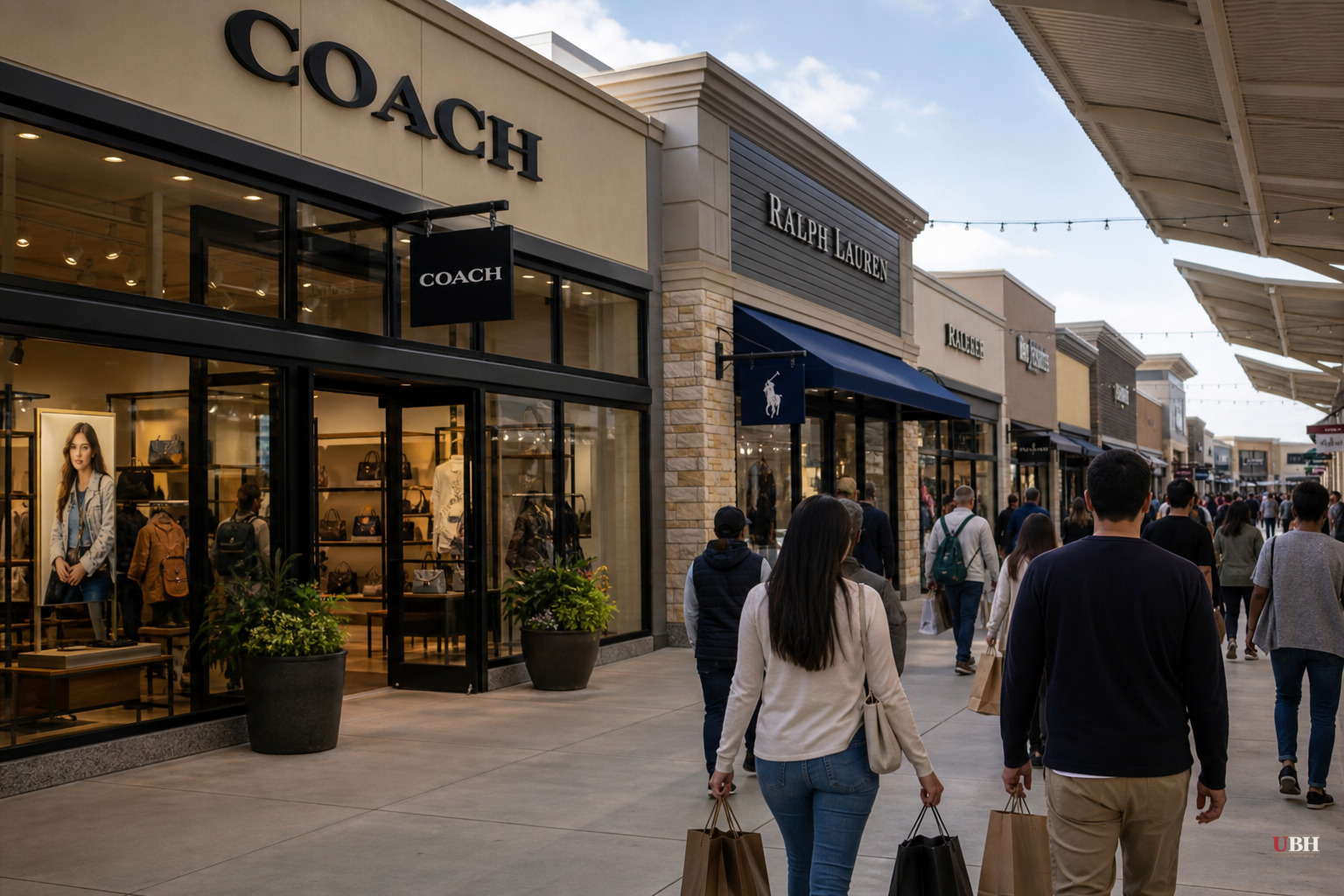
The luxury industry is shrinking, and the brands that make it up are adjusting where they actually make money.
According to a report from consulting firm Bain, the global luxury market has lost about 70 million customers since 2022, dropping to roughly 330 million by the end of 2025. Sales fell about 2% that year, landing just north of $400 billion. That's not a collapse, but it's not growth either, and Wall Street has noticed.
The U.S. Global Investors Funds Global Luxury Goods Fund, which holds companies like LVMH, Ferrari, Hermes and Christian Dior, is down about 7% year-to-date, according to FactSet data cited by CNBC. Meanwhile the S&P 500 is up more than 8% over the same stretch. That gap suggests the luxury slowdown is showing up in actual returns, not just survey data.
The outlet strategy
Instead of treating outlet stores as places to dump last season's leftovers, companies like Tapestry-owned Coach and Ralph Lauren are turning them into legitimate retail destinations. They're stocking made-for-factory apparel and accessories alongside select full-price mainline products, according to CNBC.
Kinshuk Jerath, a professor at Columbia Business School, told CNBC that outlets used to be an "inventory clearance mechanism." Not anymore. "Now it's kind of different," Jerath said. "Outlets are like an alternate channel for value-conscious consumers who still want to spend the money to get a sort of a premium brand."
That's a meaningful distinction. The old model assumed outlet shoppers were a stepping stone, people who'd eventually "trade up" to full-price stores. Jerath says that's not how it works anymore. "It's not about shifting them into a higher tier anymore," he said. "This is a stable segment that will continue to buy from there."
Who's actually buying luxury
The math behind this shift is straightforward: the ultra-wealthy don't move the needle as much as people assume.
Bernstein analyst Aneesha Sherman told CNBC that "the ultra-wealthy are actually quite a small percentage of revenues... even for those high-end luxury brands." She said the majority of revenue for luxury brands comes from "aspirational consumers who are well off, but it's a splurge for them."
These companies built reputations on exclusivity and price tags most people can't touch, but their actual revenue depends heavily on upper-middle-class shoppers stretching their budgets for a status purchase. When those shoppers pull back, or 70 million of them disappear from the market entirely, that's a direct hit to the bottom line.
Citi analyst Paul Lejuez credited Coach and Ralph Lauren specifically for executing the shift well. "Coach and Ralph Lauren have certainly done a good job of really elevating the outlet experience, becoming less promotional and introducing more full-price products that they know are working in other channels," Lejuez told CNBC. "It's a way to connect with new customers."
What's missing from this story
CNBC's coverage focuses heavily on the retail strategy and the analyst upside case, but it doesn't dig into why 70 million customers dropped out of the luxury market in the first place. Inflation, interest rates, and a weaker Chinese consumer have all been cited elsewhere as drivers of softening luxury demand, and none of those macro factors get mentioned in the sourcing here. That absence matters for anyone trying to judge whether this outlet pivot is a smart long-term repositioning or a defensive move in response to forces well outside any single retailer's control.
It's also fair to note the skeptical read: elevating outlet stores could risk diluting the brand equity these companies spent decades building. If a shopper can get a "premium" experience at a discount mall, the incentive to pay full price at the flagship store weakens. Neither CNBC report addresses that tension directly, though Lejuez's comment about brands becoming "less promotional" at outlets suggests companies are trying to manage that risk by curating what actually shows up on those shelves.
What comes next
The open question is whether this dual-tier approach reverses the customer exodus or just slows it. Bain's 330-million-customer figure for 2025 is the most recent hard number available. The next major test will be whether luxury conglomerates' upcoming quarterly reports show outlet and value-channel revenue actually offsetting softness in mainline sales, or whether the entire sector keeps shrinking regardless of retail strategy.
Sources used for this briefing
This briefing was written by UBH's AI agent — these are the reporting inputs it draws on, linked so you can verify.


