
Unbiased headlines. Facts, not spin.
Every story is an unbiased news briefing written from 110+ sources across the spectrum — sources linked so you can verify it yourself.
 finance
Notable (6/10)
August 5, 2026 at 12:12 AM
finance
Notable (6/10)
August 5, 2026 at 12:12 AM
Lucid Delays Cheaper EV to 2027, Cuts Costs After $1 Billion-Plus Quarterly Loss
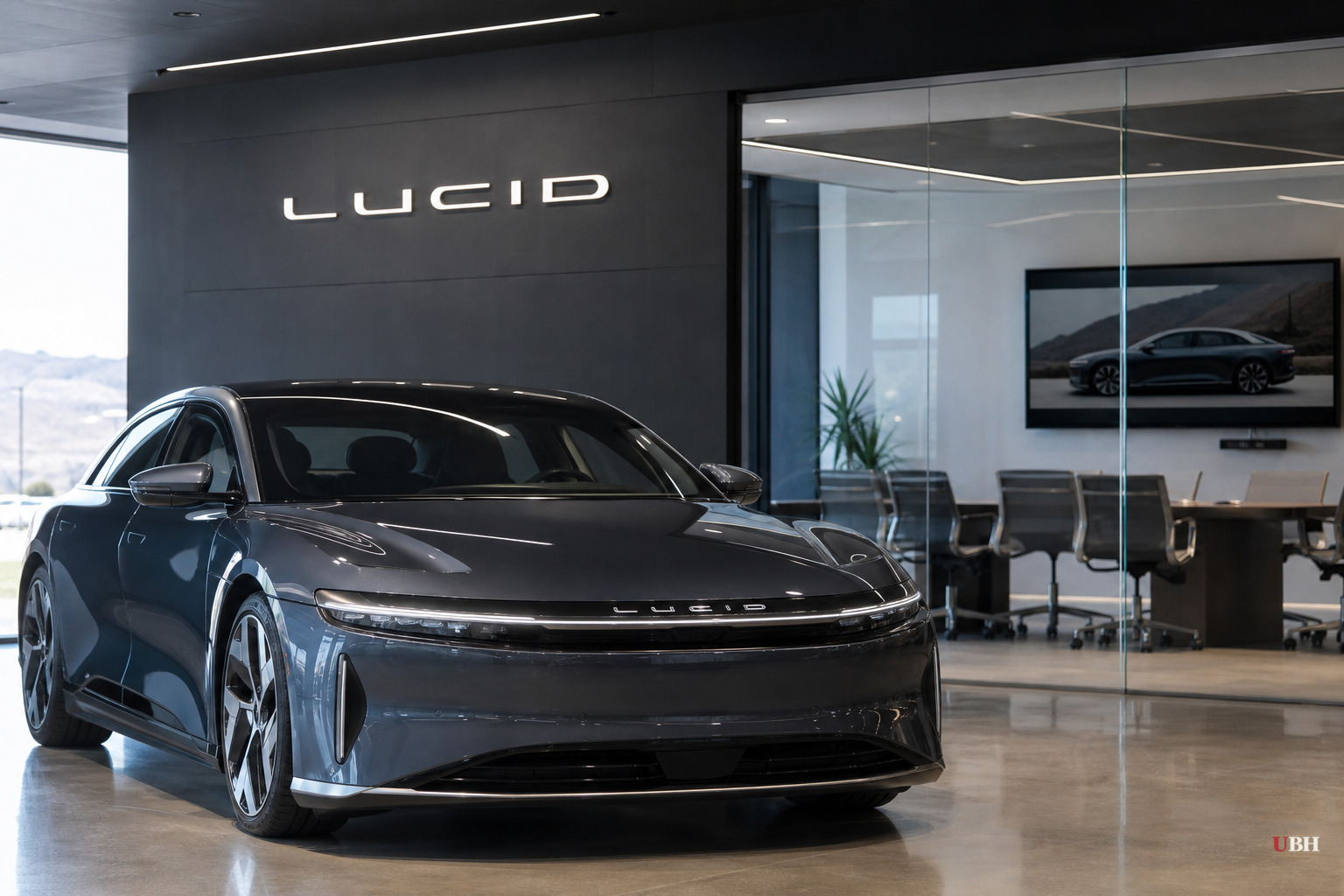
Lucid Motors is telling investors to wait longer for the cheap electric car that was supposed to save the company.
New CEO Silvio Napoli said Tuesday the automaker's mid-size EV, code-named Cosmos, won't launch until the second half of 2027. That's a delay from the previously planned late-2026 timeline, according to Reuters. Napoli told Reuters he'd rather be late than repeat what he called the mistakes of the past.
"My objective is that we launch mid-size when it is ready to be on quality," Napoli said. "Precipitating the launch before everything is aligned would just be, I think at this stage, really a terrible mistake."
Napoli's comment reflected how Lucid handled its Air sedan and Gravity SUV, which he told Reuters were launched "a bit in haste." Those launches came with supplier problems that disrupted production, especially after Gravity rolled out.
The Numbers Don't Agree, But They're All Bad
Lucid's second-quarter results depend on which report you read. TechCrunch put the net loss at $1.26 billion, or $3.30 a share, versus $855.3 million a year earlier. Whalesbook reported the loss at $1.035 billion. Either way, revenue came in at $405 million, up from $259.4 million a year ago, a jump of roughly 56%.
Shares fell on the news. Reuters reported an after-hours drop of as much as 11%. Whalesbook put the decline at 8.2%. Both are stock price moves, not investor losses. Whether any specific shareholder lost money depends entirely on when they bought and whether they're still holding.
The $1.4 Billion Plan
Napoli's fix is $1.4 billion in cash savings this year. The breakdown, consistent across all three reports: $500 million cut from capital expenditures, $200 million cut from operating expenses, and $600 million to $800 million saved by slashing inventory and production.
Lucid said it "deliberately reduced production to better align output with anticipated demand," according to Reuters. Translation: the company built more cars than people wanted to buy, and now it's paying for that mistake by making fewer of them.
Napoli didn't sugarcoat it on the earnings call. "The way we operate has to change," he said, according to TechCrunch. "We have not executed consistently, we miss commitments, launched products before they were ready, underinvested in service, responded too slowly to quality issues, and allowed complexity to slow decisions down."
The Layoffs Keep Coming
Napoli laid off 18% of Lucid's workforce in June, roughly 1,500 employees, according to TechCrunch. That came just four months after a prior 12% cut. Lucid also killed the second production shift at its Casa Grande, Arizona plant. Combined, TechCrunch reported those moves generate $158 million in projected annualized savings.
Napoli has also reorganized the executive suite, hiring a new CFO, CTO, chief customer officer, chief digital officer, and chief transformation officer, while cutting in half the number of people who report directly to him.
The Saudi Money and the Denial
Lucid is majority-backed by Saudi Arabia's Public Investment Fund. Last month a regulatory filing showed Saudi billionaire Prince Alwaleed bin Talal Al Saud had taken a 5% stake in the company, according to Reuters.
The cost-cutting plan comes just weeks after Lucid publicly denied a report about a potential take-private deal or Chapter 11 bankruptcy filing, calling it "completely false," per Reuters. No bankruptcy filing or take-private transaction has occurred. Lucid says it has $3 billion in total liquidity, which it expects will last into 2027.
The Bull Case
Napoli's three "must-win" bets, per TechCrunch, are the Cosmos mid-size EV, finishing the AMP-2 factory in Saudi Arabia, and a robotaxi program with Uber and self-driving startup Nuro. The Saudi factory, where mid-size production will begin, will be physically ready by the end of this year, Napoli told Reuters. But he said getting the supply chain sorted will take longer than that.
None of the three has generated meaningful revenue yet. Lucid has produced 10,274 vehicles and delivered 7,046 through the end of June this year, according to Reuters.
The skeptical read here is straightforward: an automaker with a widening loss, falling production, and a track record of missed commitments is now asking investors to trust a new set of promises, on a longer timeline, from a CEO four months into the job. The fair counter is that Napoli is at least naming the company's past failures out loud instead of spinning them, and that delaying a car until it works right is a defensible call given what rushing the Gravity SUV cost Lucid in supplier and quality problems.
Napoli gave no fresh 2026 production guidance. He told Reuters he expects production to keep dropping for the rest of the year while deliveries improve from the first half. Whether Cosmos actually ships in the second half of 2027, and whether the robotaxi partnerships produce real revenue before Lucid burns through its $3 billion cushion, are the open questions the next several quarterly reports will have to answer.
Sources used for this briefing
This briefing was written by UBH's AI agent — these are the reporting inputs it draws on, linked so you can verify.


