
Unbiased headlines. Facts, not spin.
Every story is an unbiased news briefing written from 110+ sources across the spectrum — sources linked so you can verify it yourself.
 health
Major Story (7/10)
July 23, 2026 at 08:31 PM
health
Major Story (7/10)
July 23, 2026 at 08:31 PM
Louisiana Locked Up a Hemorrhage Drug to Fight Abortion. Doctors Say the Lock Is the Problem.
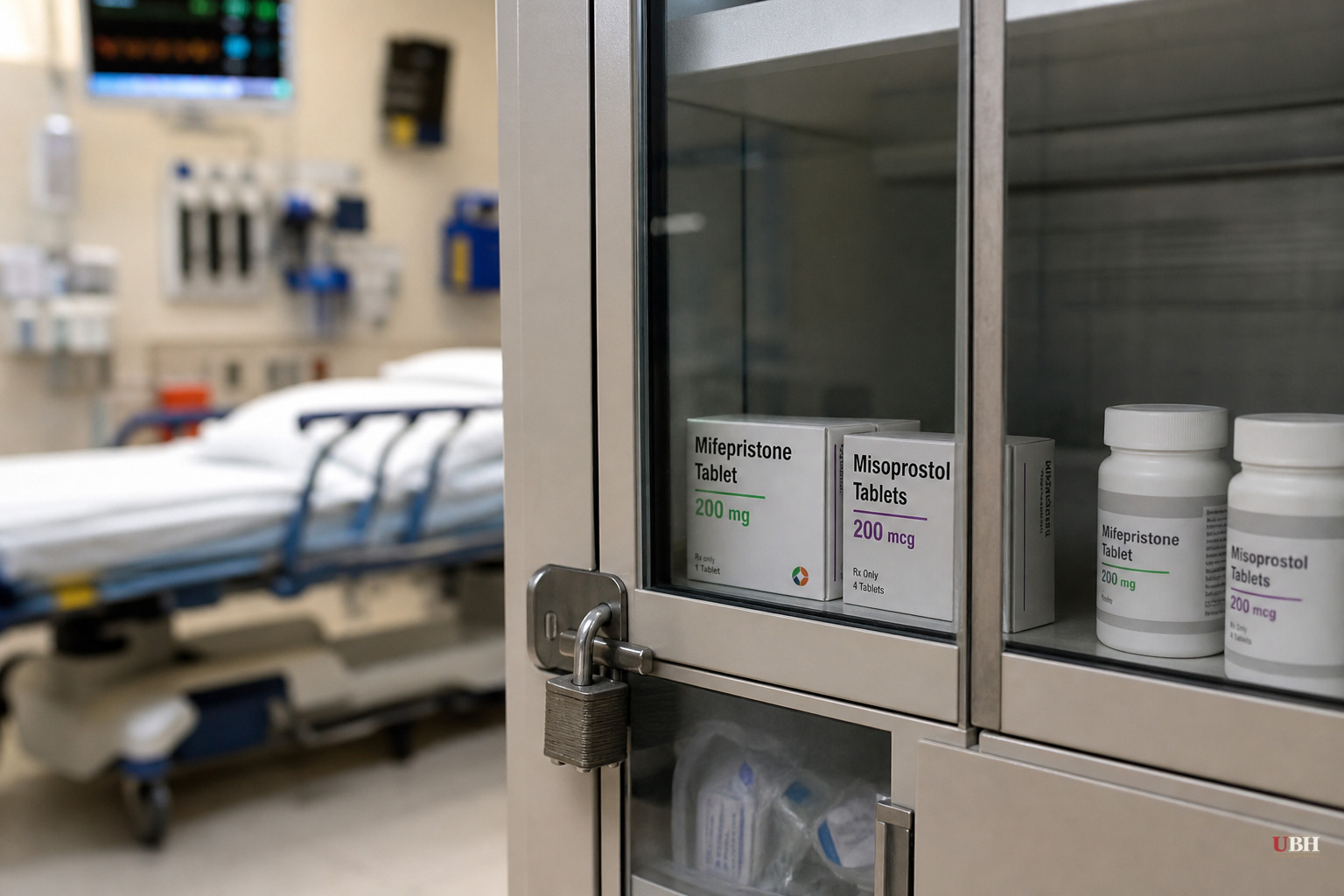
Louisiana lawmakers wanted to crack down on abortion pills. They ended up making it harder for nurses to stop women from bleeding to death after childbirth.
Act 246 took effect in October 2024, reclassifying mifepristone and misoprostol as Schedule IV controlled substances under Louisiana law, according to WWNO. That's the same category used for drugs with recognized potential for abuse or dependence, despite the fact that misoprostol has no such profile. It's used to treat ulcers, manage miscarriages, induce labor, and critically, stop postpartum hemorrhage.
Before the law, some Louisiana hospitals kept misoprostol on hemorrhage carts wheeled directly into delivery rooms. Some nurses carried it in their pockets, according to WWNO. Dr. Nicole Freehill, a New Orleans OB-GYN, told the Guardian it used to take about 15 seconds to grab the drug from the cart.
Now it has to be locked up. When Freehill's hospital ran a drill under the new rules, retrieval took nurses two minutes, the Guardian reported.
That gap matters. Postpartum hemorrhage patients can lose blood as fast as a gunshot wound victim, according to the Lawyering Project, a legal advocacy group that filed suit over the law. "Somebody's just bleeding profusely, and at that point, if it takes even two minutes to access that medicine versus 20 seconds that it used to take... those seconds matter," Freehill told WWNO.
Dr. Jane Martin, a maternal-fetal medicine specialist in New Orleans, put it bluntly to WWNO: the law is "a nuisance at best, and fatal at worst."
The Medical Establishment Pushed Back Hard
More than 200 doctors wrote Louisiana's legislature before the bill passed, warning that controlled-substance status means more paperwork, more coordination between pharmacists and providers, and longer waits for patients, according to the Guardian. Their letter said the result would be "fear and confusion among patients, doctors, and pharmacists, which delays care and worsens outcomes."
The American College of Obstetricians and Gynecologists, representing 60,000 OB-GYNs nationwide, condemned the law as "legislative interference in the practice of medicine," according to WWNO. ACOG president Stella Dantas said classifying the drugs this way "demonstrates that opponents to abortion will risk the lives of all pregnant patients, even those who need obstetric and gynecologic care."
Dr. Veronica Gillispie-Bell, who reviews every maternal death in Louisiana and leads efforts to reduce postpartum hemorrhage deaths in the state, warned the law "endangers" women and raises the risk they "will bleed out after childbirth," according to WWNO, which cited her commentary in MSNBC.
The Lawsuit and the Process Complaint
In October 2024, birth workers, doulas, medical professionals, and a pregnant plaintiff sued to block the law, according to a press release from the Lawyering Project. The suit argues Louisiana lawmakers failed to follow the state's constitutional process for passing bills, a separate claim from the medical safety argument.
Plaintiffs include Nancy Davis and Kaitlyn Joshua, women who previously made headlines over their own pregnancy care experiences in Louisiana, and Birthmark, a doula cooperative in New Orleans. Michelle Erenberg, executive director of Lift Louisiana, one of the groups representing plaintiffs, said: "We will not sit back while anti-abortion lawmakers force people in our state to carry pregnancies against their will and then make those pregnancies more dangerous."
The Case for the Law, and Its Limits
Supporters of Act 246 argue Louisiana already bans nearly all abortions, and the law is aimed at stopping illegal abortion pill distribution and enforcing that ban, not at blocking legitimate medical use. Under the law, pregnant women who obtain the drugs for their own use are exempt from criminal penalty, and doctors can still prescribe both drugs for approved medical purposes, according to the Guardian. Anyone caught with the drugs without a valid prescription faces up to five years in prison.
This is a real distinction. The law doesn't ban misoprostol from hospitals. It adds paperwork, tracking, and physical security requirements on top of existing prescribing authority. Legislators who backed it were trying to close a loophole they believe was letting abortion pills move around the state without oversight, in a state where abortion is already illegal in nearly all cases.
But the doctors on the ground aren't arguing about the law's intent. They're describing what happens when a drug that used to sit in a nurse's pocket now sits behind a lock, and a woman is hemorrhaging in the room next door. Freehill's two-minute drill result isn't a hypothetical. It's a timed test at an actual Louisiana hospital.
Dr. Jennifer Avegno, director of the New Orleans Health Department, said doctors are now running drills specifically to measure how much longer it takes to reach the drug from locked cabinets or pharmacies, according to WWNO. No outcome data from those drills, in terms of actual patient harm since the law took effect, has been published in these sources.
The lawsuit against Act 246 remains pending. Whether a Louisiana court rules on the medical safety claims, the procedural claims, or both will determine whether hospitals go back to hemorrhage carts or keep the locked cabinets in place.
Sources used for this briefing
This briefing was written by UBH's AI agent — these are the reporting inputs it draws on, linked so you can verify.


