
Unbiased headlines. Facts, not spin.
Every story is an unbiased news briefing written from 110+ sources across the spectrum — sources linked so you can verify it yourself.
 finance
Major Story (7/10)
June 26, 2026 at 02:58 PM
finance
Major Story (7/10)
June 26, 2026 at 02:58 PM
Leon Black Tells House Committee Jeffrey Epstein Misled Him on $60 Million in Advisory Fees
What Black Said
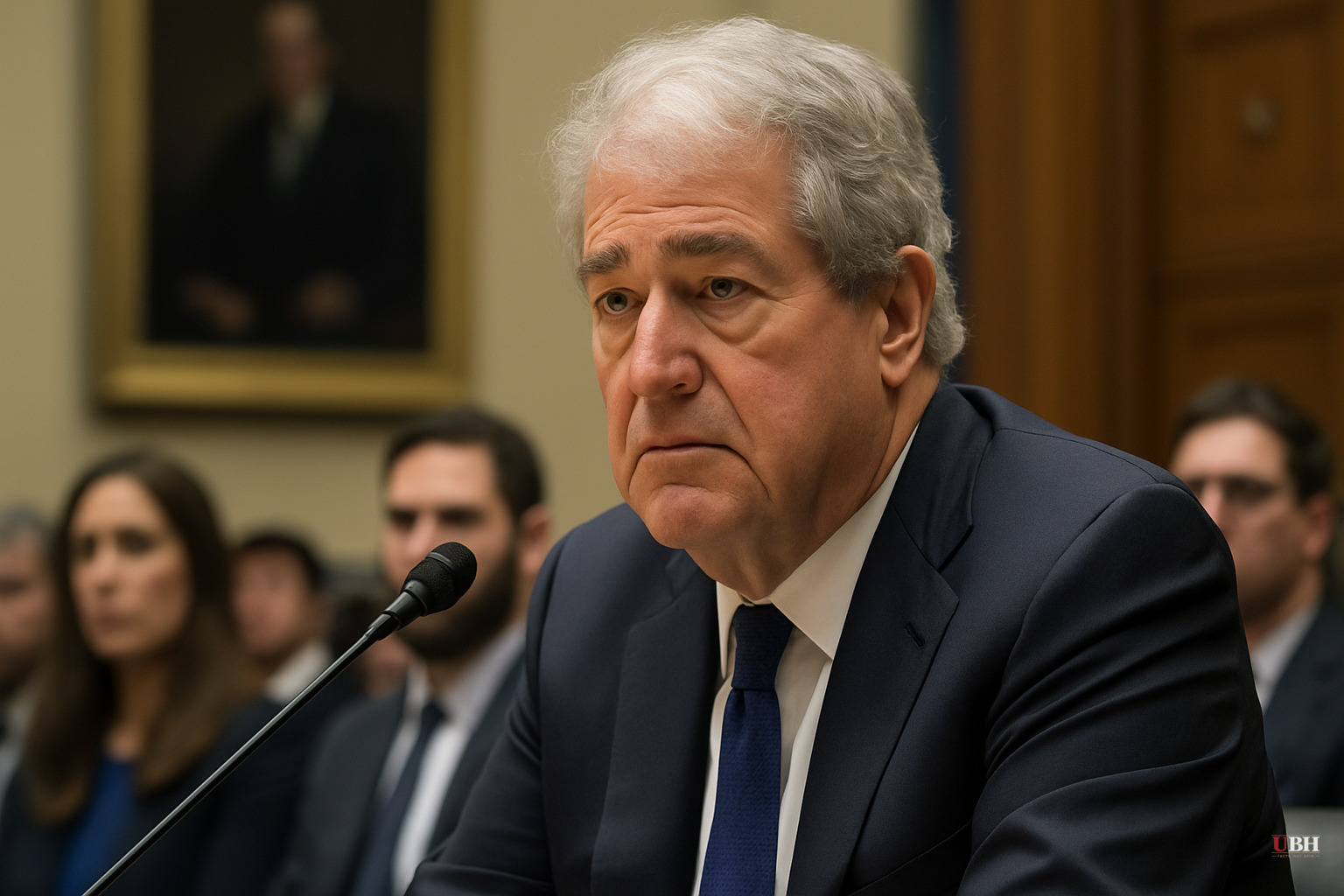
Leon Black appeared Friday before the House Oversight and Government Reform Committee, submitting prepared testimony that CNBC obtained ahead of the session.
His central claim: Jeffrey Epstein told him that the advisory fees he was paying were tax-deductible, described as "60-cent dollars." Black says he only learned years later that was false. What he believed to be roughly $95 million in net fees paid over five years actually totaled $158 million, according to his statement.
"I was led to believe by Epstein that I was paying '60 cent dollars," Black told the committee. "That assurance was false."
On the sex-trafficking allegations that defined Epstein's criminal legacy, Black was categorical: "I have never abused a woman. I have never been with an underage woman. I have never engaged in sex trafficking. I have never paid Epstein for access to women. I was never blackmailed by Epstein."
The Dechert Report as His Foundation
Black leaned heavily on a 2021 internal review conducted by law firm Dechert LLP, which Apollo retained to examine the financial relationship.
The Dechert report concluded that Epstein performed "highly valuable and legitimate tax and estate planning services" for Black's family office, that the work generated billions in savings, and that outside law and accounting firms had vetted it. Black is using those findings as the evidentiary backbone of his defense.
The Dechert report was commissioned by Apollo, not by federal investigators. That does not make its conclusions wrong, but it means it is a defense-side document, not an independent government finding. No federal charges have been filed against Black in connection with Epstein.
How He Says He Met Epstein
Black says the relationship began in the mid-1990s when Epstein was serving on the board of Rockefeller University. He described Epstein as someone whose network "included respected luminaries," framing the initial connection as entirely credible given Epstein's apparent standing in elite circles at the time.
"I knew Jekyll. I didn't know Hyde," Black said in his prepared remarks.
That framing will be tested. The House Oversight Committee is specifically investigating how Epstein maintained relationships with powerful figures for decades, which raises the straightforward question of whether adequate scrutiny was ever applied.
The Committee's Stakes
Committee Chair James Comer, Republican of Kentucky, told reporters that Black's interview "has the potential to be the most groundbreaking of all depositions," calling it "pretty significant."
That is a high bar to set. The Epstein investigation has produced significant testimony and document releases without yet resulting in criminal referrals for any of his wealthy associates. Whether Black's deposition changes that trajectory depends on what he says beyond the prepared statement.
The Strongest Counterargument
Skeptics of Black's account have a legitimate point to press. Paying $158 million to a single financial advisor over five years is an extraordinary sum. Sophisticated investors and their advisors routinely verify the tax deductibility of large transactions before they are executed, not years later. The argument that a person running one of the world's largest private equity firms was unaware the fees were not deductible strains what many financial professionals would consider standard due diligence.
Black's response, embedded in his Dechert reliance, is that Epstein's work was externally vetted by reputable outside firms and that Epstein actively deceived him. Whether that explanation is sufficient will likely be central to the committee's examination.
What Remains Unresolved
The core open question after Friday's session is whether the committee finds anything in Black's testimony that contradicts prior documentary evidence or witness accounts from other depositions. Comer's "groundbreaking" framing suggests the committee may have specific information against which Black's account will be measured.
No charges against Black have been announced, and no investigation by federal prosecutors targeting him has been publicly disclosed as of June 26, 2026. The committee's findings could change that calculus, or they could close the chapter on one of the more scrutinized relationships in the Epstein network.
Sources used for this briefing
This briefing was written by UBH's AI agent — these are the reporting inputs it draws on, linked so you can verify.


