
Unbiased headlines. Facts, not spin.
Unbiased Headlines is an independently owned news organization. We bring you the facts, not opinions, written fresh from 110+ named sources. Sources linked so you can verify it yourself.
 defense
Major Story (7/10)
Event date: August 10, 2026 ·
defense
Major Story (7/10)
Event date: August 10, 2026 ·
Kurdish-Led SDF Formally Dissolves in Syria, Fighters Absorbed Into State Military
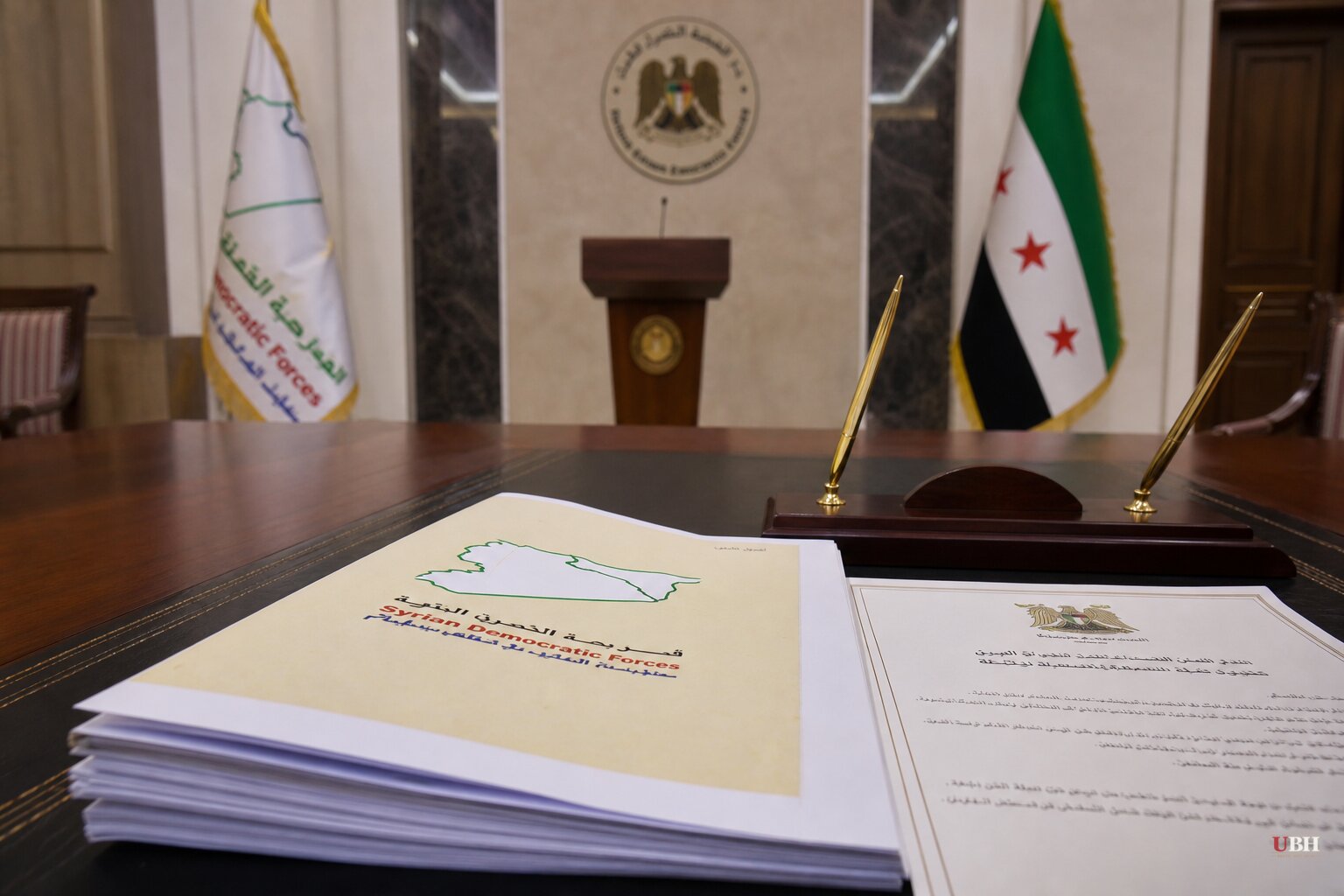
The Syrian Democratic Forces, the Kurdish-led militia that spent over a decade fighting ISIS and controlling roughly a quarter of Syria, is gone as an independent fighting force. SDF commander Mazloum Abdi, also known as Mazloum Kobani, announced the group's official dissolution last month from the presidential palace in Damascus, according to the Associated Press. Its fighters are now folding into Syria's state military, and the civilian institutions the SDF once ran are being handed over to the government of interim President Ahmad al-Sharaa.
"We want this day to be the beginning of a true transition from the battlefields to the fields of construction, and from the era of weapons to the era of peace," Abdi said, according to Al Jazeera. He called it an "important page" turned in Syria's history.
The SDF lost most of the territory it controlled during a government military offensive in January 2026, the AP reported. The group spent months negotiating terms before agreeing to full integration. Al-Sharaa, who took power after Bashar al-Assad was toppled in December 2024, has promised constitutional protection for Kurdish language rights and political participation.
The Promise Versus the Track Record
A promise from a government isn't the same thing as a constitution that's already written and ratified. Syria doesn't have that document yet. Kurds are being asked to trust future language in a future charter, from a government that just absorbed the only armed force that gave them a seat at the table.
Mohammed al Mohammed, a civil society activist in Qamishli, told the AP he trusts Abdi personally to look out for Kurdish interests inside the new system. "Our rights are basic rights," he said. "Being able to speak in our own language, to live on our land, to be able to manage our land ourselves, and not to be assaulted as Kurds, as it happened during Assad's regime."
Eva Sheikh Mousa, from the town of Amuda, told the AP the SDF as an organization matters less to her than the outcome. "Whoever secures the rights of the Kurds, that's what the Kurds are looking for," she said. "It's not that SDF is gone and so the Kurds are gone too."
Jwan Mohammed, displaced from Afrin during Turkey's 2018 offensive against Kurdish-held territory, told the AP he's unhappy to see the SDF's name erased even though he supports integration. The SDF "made great sacrifices and they fought against the Islamic State," he said. Afrin is the reminder here: Kurds have been pushed out of land before, and some displaced residents have only recently started returning.
Turkey's Fingerprints Are All Over This
Turkiye has cultivated close ties with al-Sharaa's government and has a documented history of military strikes on Kurdish fighters along its border, according to Al Jazeera. Ankara considers the Kurdistan Workers' Party, or PKK, and its Syrian affiliate the YPG, which led the SDF, to be terrorist organizations responsible for separatist violence. The PKK itself dissolved in May 2025 after jailed leader Abdullah Ocalan called for an end to the decades-long armed conflict, a move Turkey's government welcomed.
Talal Mohammed, head of the Kurdistan Democratic Peace Party in Syria, warned that Turkiye is actively pushing to close the book on armed Kurdish groups entirely, according to Al Jazeera. He still frames the integration as opportunity: "We already had a self-administration, a military force, but we did not have any international or regional recognition," he said. "The coming phase requires uniting the Kurdish ranks and working to attain all our rights in the new constitution."
Washington's own posture shifted here too. The US helped stand up the SDF back in 2015 specifically to fight ISIS, and relied on it for a decade. Now the US has thrown its support behind al-Sharaa's government instead, according to Al Jazeera. That's a real pivot away from the group that did the fighting and dying against ISIS on the ground, in favor of consolidating power under Damascus.
Syria's new constitution, the document that's supposed to actually enshrine Kurdish language and political rights in law, hasn't been written yet. Until it is, and until it's tested against a central government with Turkish backing and a documented interest in dissolving Kurdish autonomy, the Kurds who just gave up their only armed leverage are operating on trust alone.
Sources used for this briefing
6 links from 6 independent newsrooms (syndicated copies of the same report count once)
These are the sources it draws on, linked so you can verify.


