
Unbiased headlines. Facts, not spin.
Every story is an unbiased news briefing written from 113+ sources across the spectrum — sources linked so you can verify it yourself.
 politics
Notable (6/10)
Event date: September 24, 2026
politics
Notable (6/10)
Event date: September 24, 2026
Kurdish Families Return to Afrin and Serekaniye as Syria's Integration Deal Hits Friction Over Fuel Prices and Language Rules
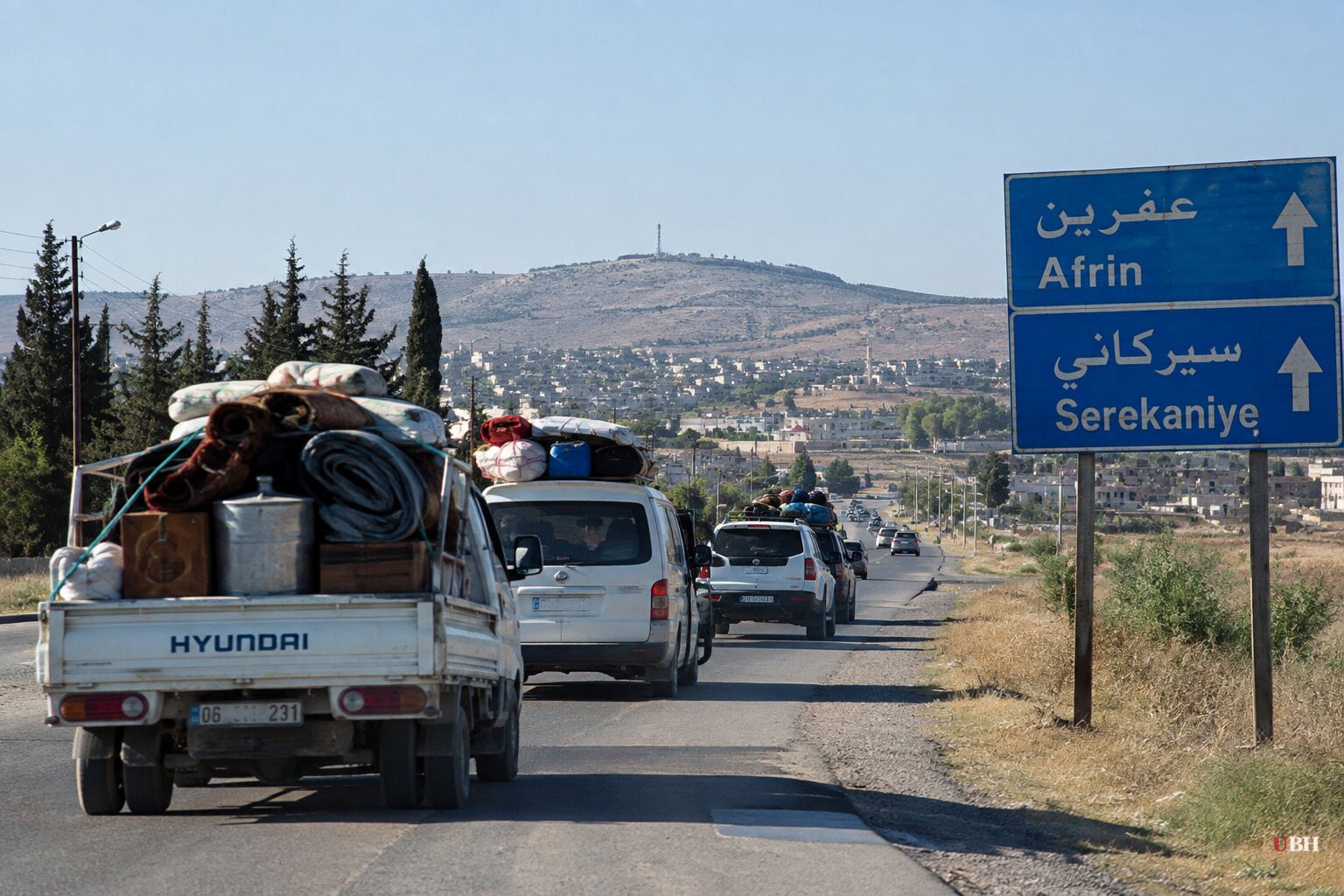
Dilshad Hamdo walked back into the house his father built 30 years ago and found nothing to sit on. The rooms had been stripped bare. Yet he still felt a strong sense of relief just standing in the empty space.
Hamdo fled Afrin in early 2018 during Turkey's "Operation Olive Branch," a military offensive against the Kurdish-led People's Protection Units (YPG), part of the Syrian Democratic Forces (SDF). Roughly 160,000 Kurds were driven out of the Afrin region during that campaign, according to the Jerusalem Post. His family drifted east, from Aleppo to Raqqa to a displacement camp in Qamishli, before hearing that registration had opened for people wanting to return home.
When Hamdo's father went ahead to check on the property, he found a displaced family from Homs living in it. There was no confrontation. According to Al Jazeera, the two families negotiated: the Homs family asked for several months to relocate, and the Hamdos eventually paid them $300 for travel money to leave. "After Syria was liberated, we wanted to return to our land," Hamdo said. "We do not see any distinction between the Arab and the Kurd, and all of us are one people."
The returns are happening because Bashar al-Assad's government collapsed in December 2024, and the transitional administration in Damascus, now led by President Ahmed al-Sharaa, has announced it will facilitate the return of Syrians displaced by years of war, including Kurds pushed out by Turkish operations. Internal security forces helped hundreds of Kurdish families move from Hasakah back to Afrin in April and May, Al Jazeera reported. Khayro Dawood, director of the Afrin region, told Al Jazeera the government sent delegations into displacement camps in the northeast and is trying to "completely stop the Syrian bleeding."
A similar return is underway further east. The Jerusalem Post, citing Kurdish outlet Rudaw, reported that a second convoy of roughly 700 displaced Kurdish families is returning to Serekaniye, also known as Sari Kani or Ras al-Ain, in Hasaka province. Turkey's 2019 offensive there, Operation Peace Spring, was the third and largest of Ankara's incursions into Kurdish-held northern Syria, following operations near Manbij in 2016 and Afrin in 2018. Nour al-Din Ahmed, the governor of Hasaka, told Rudaw that a special committee is overseeing the returns to villages and the city center.
The Jerusalem Post frames these returns primarily through the lens of Turkey's relationship with the new Syrian government and NATO politics, noting Ankara's improved ties with Damascus and pointing out that some Israeli officials have expressed sympathy for the Kurds' position. Al Jazeera and Rudaw reporting on the ground focuses on family reunions and property disputes rather than geopolitics.
The Integration Deal Is Straining
The returns are unfolding alongside a broader, and rockier, process: folding the SDF into the Syrian national army under a reconciliation agreement signed in March 2025 between Kurdish authorities and Damascus. According to Kurdish news outlet KurdPress, that integration only gained real momentum after clashes in January 2026, and the SDF is now in the process of being formally dissolved.
That process has produced real grievances, and Kurdish residents raising them have a legitimate case. KurdPress reported that Damascus raised gasoline prices by about 30 percent and diesel by 40 percent, citing global fuel costs following the US-Iran war and repairs at the Banias refinery. Because fuel was subsidized under SDF administration before the handover of oil fields to the central government, the hike landed hard in the northeast. Protesters blocked the M4 highway near Tel Tamr, stranding hundreds of oil trucks carrying crude from the Qamishlo and Rmailan fields, according to KurdPress.
Kurdish language education has become another flashpoint. Damascus's education ministry recognized Kurdish as an official language of instruction for the first time in Syrian history, a real change from the Assad era, when teaching Kurdish in schools was banned outright. But the new policy limits Kurdish instruction to three sessions a week, far less than what existed under the autonomous Kurdish administration during the war, and students in Qamishlo and Hasakah have been protesting the limit, KurdPress reported.
Security incidents have compounded the tension. A former SDF fighter who joined the Syrian army under the integration agreement was kidnapped and killed by a group of Arabs in Hasakah earlier this month, according to KurdPress, raising questions about protection for Kurdish soldiers entering government ranks. Separately, a riot and fire at Kobani prison killed nine inmates. Mazloum Abdi, the former SDF commander who now serves as an advisor to President al-Sharaa, traveled to Kobani for the funerals.
None of these incidents have produced a public government response addressing the fuel prices or the language limits specifically, and no investigation into the Hasakah killing has been publicly announced. Whether Damascus adjusts the fuel subsidy policy or expands Kurdish-language instruction will be an early test of whether the reconciliation agreement holds beyond the symbolism of families like the Hamdos moving back into their homes.
Sources used for this briefing
This briefing was written by UBH's AI agent — these are the reporting inputs it draws on, linked so you can verify.


