
Unbiased headlines. Facts, not spin.
Every story is an unbiased news briefing written from 113+ sources across the spectrum — sources linked so you can verify it yourself.
 politics
Major Story (7/10)
September 26, 2026 at 01:36 PM
politics
Major Story (7/10)
September 26, 2026 at 01:36 PM
Democrats Narrow GOP's Voter Registration Lead in Alaska as Supreme Court Backs Trump's Voter Database, 38 Days Out
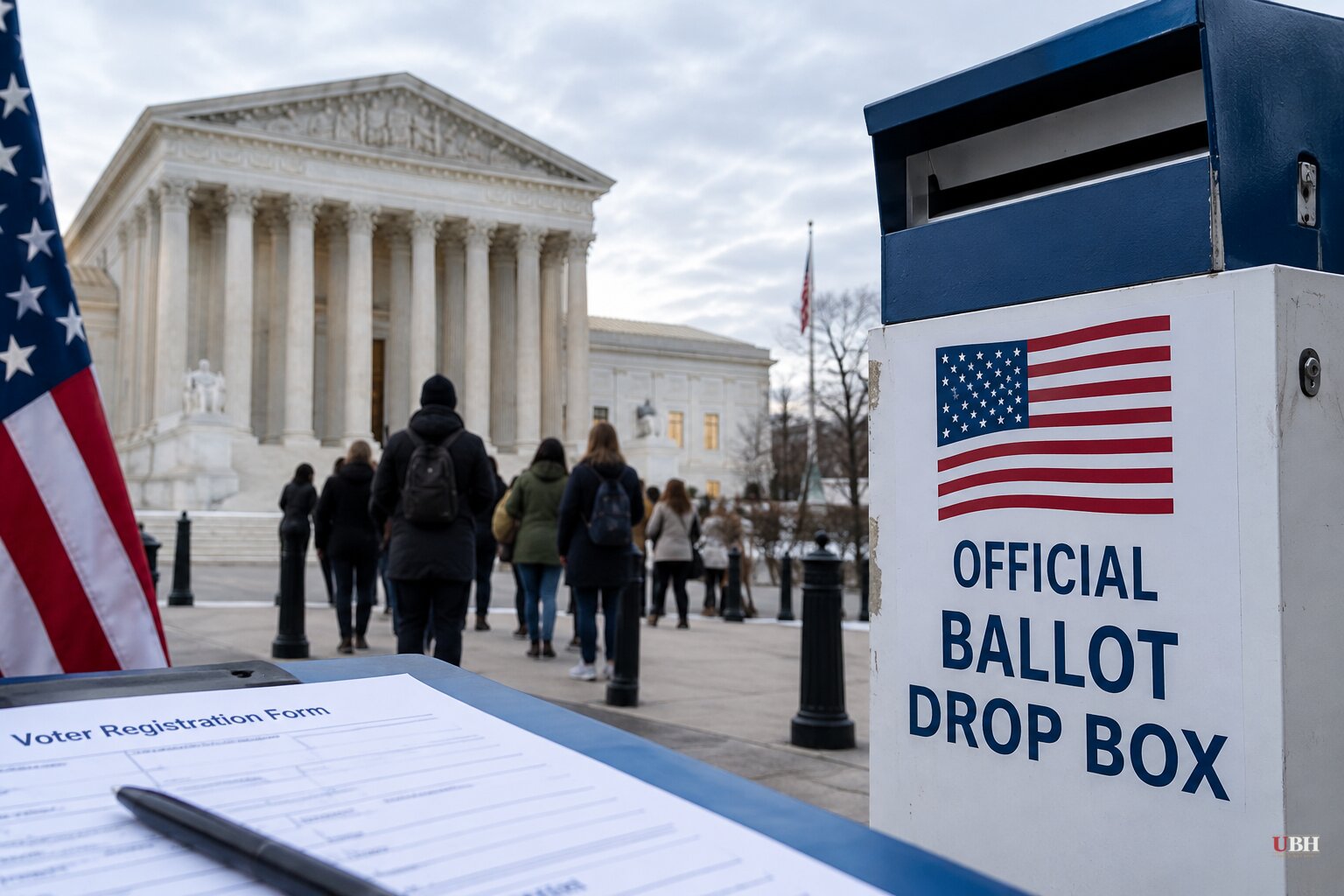
Thirty-eight days before the November 3 midterms, two fights over who gets to vote and how those votes get counted are unfolding at once: a slow shift in party registration in red states, and a Supreme Court ruling on a federal database meant to flag noncitizens on the rolls.
The Registration Numbers
In Alaska, where Republican Senator Dan Sullivan faces a challenge from former Representative Mary Peltola, the GOP's voter registration advantage has narrowed from 73,829 in December 2025 to 72,290 as of September 2026, according to the Alaska Division of Elections. Republicans still hold a clear registration edge, but the gap is shrinking in a state Donald Trump carried by roughly 13 points in 2024, according to Newsweek.
Newsweek reports similar narrowing trends in other traditionally red states with competitive Senate races this cycle, including Iowa and Texas. Democrats currently lead in some polling in those states, along with Ohio and Alaska, all states Trump won by double digits in 2024.
Not every battleground state tracks party registration at all. Georgia, Michigan, Minnesota, Ohio, and Texas don't register voters by party, which means registration data can't tell the full story of where those specific races stand, per Newsweek's reporting.
Stephen Farnsworth, a political science professor at the University of Mary Washington, told Newsweek that midterm elections typically punish the president's party, and that Trump's currently low approval rating is compounding the usual pain. Farnsworth pointed to voter anxiety over AI's effect on jobs as one issue where he says Trump is "out of step with voters."
Registration shifts can result from population migration, purges of inactive voters, or people leaving a party in frustration, and they are not reliably predictive of how a state actually votes, especially in a wave year, Newsweek's own reporting acknowledges.
The Supreme Court's SAVE Ruling
Separately, the Supreme Court on Friday lifted lower-court restrictions on the Trump administration's revamped Systematic Alien Verification for Entitlements program, known as SAVE, clearing the way for states to use it, if they choose, to check voter rolls for noncitizens ahead of November, according to the Associated Press.
The court's three liberal-leaning justices publicly dissented from the order, the AP reported. Participation in SAVE remains voluntary for states, which limits how much the ruling can reshape the midterms on its own.
David Becker, an election law expert who runs the Center for Election Innovation and Research, told the AP that existing federal law already blocks most states from systematically purging voters within 90 days of an election, and that the Department of Homeland Security itself has acknowledged the SAVE data isn't perfect.
That's the crux of the dispute. Supporters of expanded eligibility verification argue states have a legitimate interest in confirming that only citizens are on the rolls, and SAVE is a tool to do that. Critics, including some election administrators, counter that the database has a documented history of wrongly flagging eligible voters as noncitizens, and that using imperfect federal data to question people's voting status carries real risk of disenfranchising citizens who did nothing wrong. Both concerns are legitimate on their own terms, and the ruling doesn't resolve which one wins out in practice, since it's up to individual states whether to use the program at all.
Maine Secretary of State Shenna Bellows, a Democrat, told the AP her state won't participate, and the ruling changes nothing about how Maine runs its elections.
On the Ground
While the legal and registration fights play out at the state and federal level, campus groups are pushing their own turnout efforts. At Arizona State University, student government leaders and campus partners including the Citizens Clean Elections Commission and the Arizona Students' Association have run voter registration tabling events across ASU's campuses, according to The Arizona State Press.
Montserrat Arredondo Duran, executive director of ASU's Pastor Center for Politics and Public Service, said on-campus voting centers are now official polling places on the Tempe, Downtown Phoenix, Polytechnic and West campuses, run through the Maricopa County Recorder's office. The center also offers TurboVote for online registration.
The registration data shows movement, not a verdict. The SAVE ruling gives states an option, not a mandate. Whether the narrowing registration gaps in places like Alaska translate into actual votes on Election Day depends partly on which states opt into the federal database.
Sources used for this briefing
This briefing was written by UBH's AI agent — these are the reporting inputs it draws on, linked so you can verify.


