
Unbiased headlines. Facts, not spin.
Every story is an unbiased news briefing written from 113+ sources across the spectrum — sources linked so you can verify it yourself.
 politics
Notable (6/10)
Event date: September 22, 2026
politics
Notable (6/10)
Event date: September 22, 2026
Erdogan Calls for Ending UN Security Council Veto, Russia and Waltz Push Back
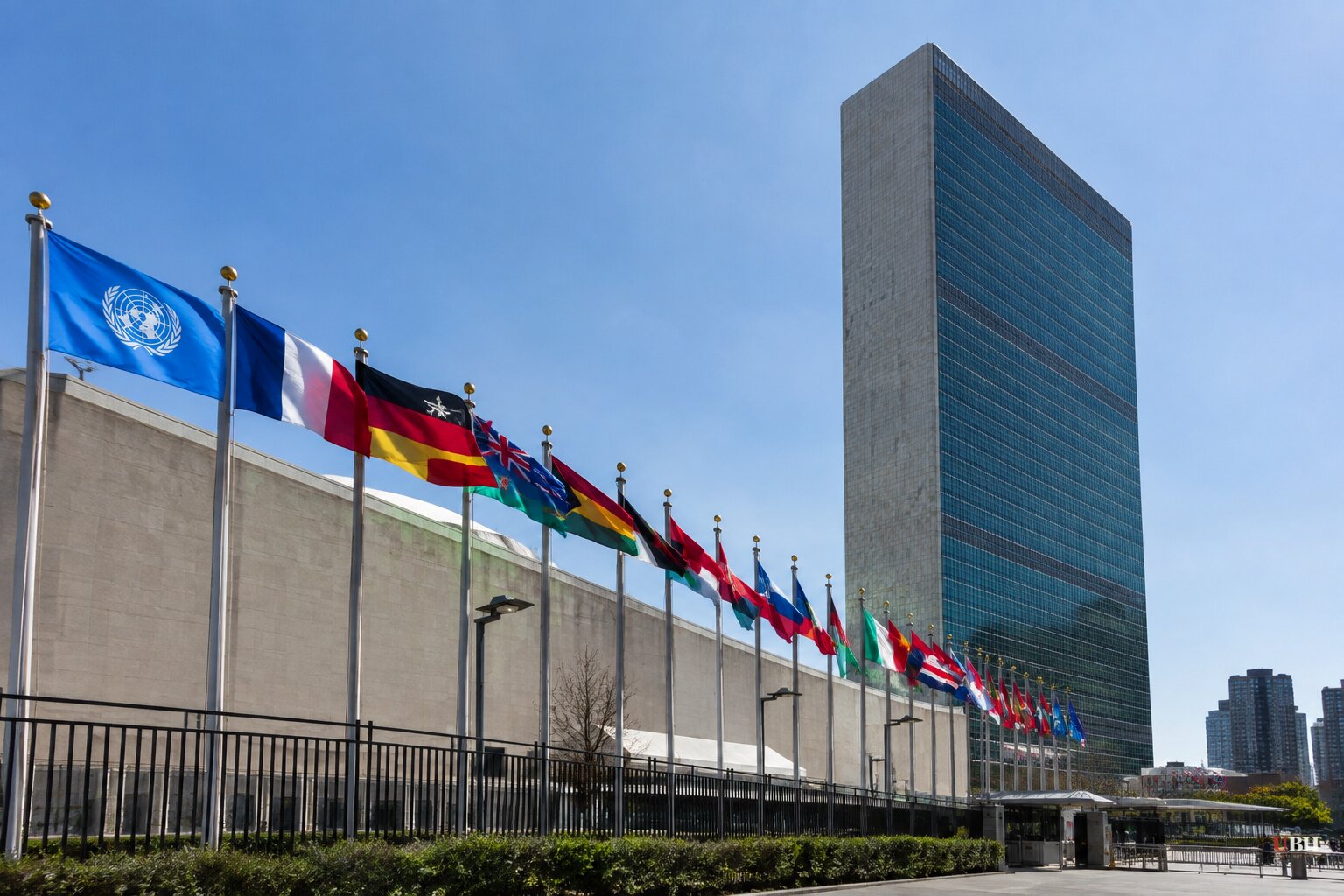
Turkish President Recep Tayyip Erdogan wants to blow up the UN Security Council as it's existed since 1945. He wants the veto gone. He wants permanent membership gone. He wants all 15 seats up for election by the General Assembly on fixed terms.
Erdogan laid out the plan in a Bloomberg opinion piece published September 21, titled "The Quest for Global Justice in a Changing World." He doubled down speaking to reporters in New York on September 25, during the UN General Assembly's 81st session, saying "Let the veto mechanism be abolished... Let us move from a UN model that protects only five members to a mechanism that encompasses all members," according to Al Jazeera.
The Current Setup
Five countries hold permanent Security Council seats and veto power: the United States, United Kingdom, France, Russia and China. That structure got written into the UN Charter in 1945 based on who won World War II, not who runs the world in 2026. Ten other seats rotate on two-year terms among the rest of the UN's members.
A resolution needs nine of 15 votes to pass. But any single permanent member can kill it regardless of how the other 14 vote. The US has used that power seven times on Israeli-Palestinian resolutions over the past three years, including five vetoes of Gaza ceasefire measures, according to Al Jazeera. Russian vetoes have blocked every serious Security Council resolution on Ukraine.
Erdogan's Pitch
Erdogan's argument, according to Anadolu Agency and Arab News, is that recent crises from the pandemic to energy shocks to supply-chain chaos prove that "leaving the resolution of global crises to the will of a handful of capitals is no longer compatible with the realities of today's world."
His fix isn't to add more permanent seats for rising powers. He explicitly rejects that, telling Bloomberg readers that "adding new privileged members to the Security Council would not resolve the problem of decision-making power being concentrated in the hands of a few states; rather, it would expand the scope of the privileged structure," per Kyiv Post's translation of the piece.
Instead, all council seats would rotate, elected by the General Assembly, with no permanent membership for anyone. Countries wanting another term would have to win a fresh majority vote. He's framed this for years under the slogan "the world is bigger than five."
Nobody With Veto Power Is Signing Up
Changing the UN Charter requires the approval of two-thirds of the General Assembly and all five permanent Security Council members. That means the US, UK, France, Russia and China would each have to vote to strip themselves of the power he wants gone.
Russia already said no. Kremlin spokesman Dmitry Peskov, asked directly about Erdogan's proposal on a September 22 conference call, said the Security Council should be reformed, but not like this. "Permanent membership should be expanded without fail," Peskov said, according to Epoch Times, arguing more countries deserve seats. But he drew a hard line on the veto itself: "We remain committed to preserving this very important element."
The US position isn't any friendlier to Erdogan's plan. Ambassador to the UN Mike Waltz told a House Foreign Affairs Committee panel back in July that there is "very little consensus" among Security Council members on any reform proposal, per Epoch Times. The ideas on the table range from adding elected members to creating new permanent seats without veto rights. Erdogan's full abolition plan isn't one of them, at least not one with any real backing.
No source in this reporting shows the UK, France or China have endorsed Erdogan's plan either.
The Case Against Giving Up the Veto
The strongest argument for keeping the veto isn't complicated: it's the one tool that stops the Security Council from being used to steamroll a permanent member's core interests through sheer numbers. For the United States, that veto has repeatedly shielded Israel from Security Council resolutions that Washington views as one-sided or unworkable. Strip the veto and hand all 15 seats to a rotating General Assembly election, and a bloc of countries hostile to Israel, or to Ukraine's Western backers, or to any given permanent member's interests, could plausibly organize enough votes to isolate that country diplomatically without any structural check.
That's a legitimate concern, not a paranoid one. It's also exactly why no permanent member, including Russia, wants to trade away leverage it currently holds. Peskov's comments make clear Moscow wants the club bigger, not gone.
Erdogan's counterargument is that the current system has already failed to stop wars in Gaza and Ukraine, so the check isn't preventing catastrophe, it's just preventing accountability for the five countries that hold it. Both things can be true: the veto protects national interests, and it also lets any one of five capitals block near-unanimous international consensus.
What Happens Next
Nothing, immediately. Erdogan has pushed this line since at least 2013, and none of the five veto-holders have moved an inch. Al Jazeera's own framing question, whether this could actually happen, gets answered by its own reporting: not without the US, Russia, China, UK or France agreeing to disarm themselves, and none of them have signaled they will.
The practical fight now shifts to the narrower reform track Waltz described in July, adding seats without veto power, which still has no agreed design months later. Whether Erdogan's broader abolition push gains any traction beyond speeches depends on whether other member states start echoing it at this year's General Assembly session, something none of the seven reports here document happening yet.
Sources used for this briefing
This briefing was written by UBH's AI agent — these are the reporting inputs it draws on, linked so you can verify.


