
Unbiased headlines. Facts, not spin.
Every story is an unbiased news briefing written from 110+ sources across the spectrum — sources linked so you can verify it yourself.
 health
Notable (5/10)
July 21, 2026 at 01:30 AM
health
Notable (5/10)
July 21, 2026 at 01:30 AM
Kristi Noem's Memoir Contains a Kim Jong Un Story That Reportedly Never Happened. No One Fact-Checked It First.
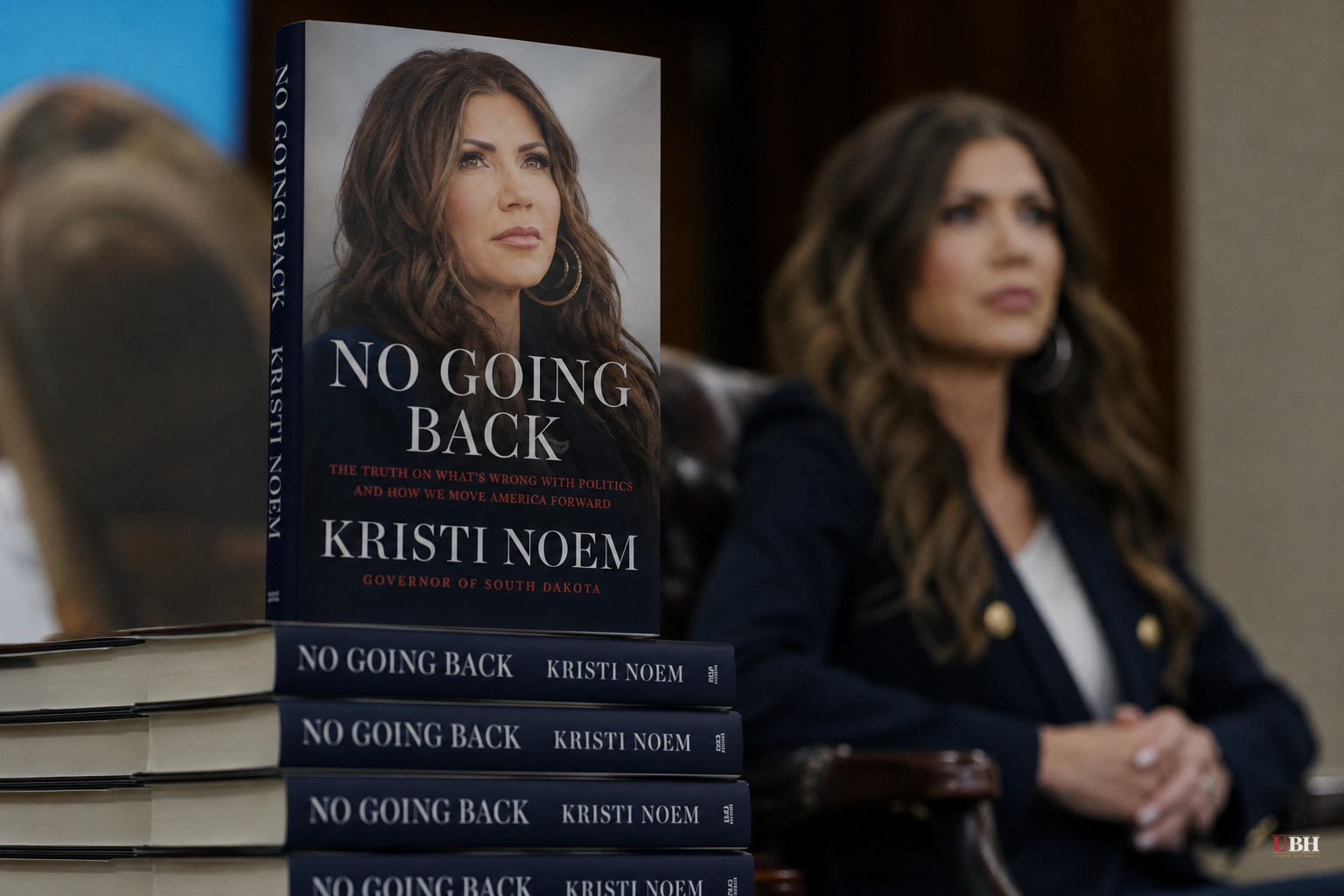
Kristi Noem's memoir, "No Going Back," includes a story about meeting North Korean dictator Kim Jong Un during a congressional trip, in which she claims Kim "underestimated" her. At least one former congressional staffer who was reportedly part of that delegation says the meeting never happened, according to The Atlantic. After being questioned about the discrepancy, Noem's office said it would correct a number of errors in the book.
This isn't the only unverified claim in the memoir drawing scrutiny. Noem also wrote about shooting her own dog in a gravel pit, an anecdote that generated national backlash when it surfaced but that appears to be accurate. The Kim Jong Un anecdote is a different story entirely. It's a specific, checkable claim about a specific meeting that a witness says didn't occur.
How This Slipped Through
Here's the part most readers don't know: nobody at Noem's publisher was required to verify that story before it went to print. According to The Atlantic, none of the Big Five publishers, HarperCollins, Simon & Schuster, Penguin Random House, Hachette, or Macmillan, employ fact-checking teams or require a full fact-check before a book is released. All five declined to comment when The Atlantic asked about their process.
Instead, books go through editors and copy editors who focus on structure, word choice, and grammar. Lawyers may review certain claims to shield the publisher from defamation liability. But nobody is systematically checking dates, quotes, or descriptions the way a magazine or newspaper does. Jane Friedman, a publishing-industry reporter, told The Atlantic that responsibility for accuracy falls on the author: "it's up to the author to turn in a manuscript that is accurate."
University presses are something of an exception, relying on peer review to catch factual problems before publication. That model doesn't apply to trade publishing, where memoirs and other mass-market nonfiction are the norm.
Some authors hire independent fact-checkers on their own dime. Most don't. Noem, evidently, was in the second category. A basic check, according to The Atlantic, would have involved contacting other members of the congressional delegation to confirm whether the meeting with Kim Jong Un actually took place. That single phone call, or the failure to make it, is the difference between an error caught in-house and one exposed publicly after the book hit shelves.
What's Proven, What Isn't
To be precise about what's established here: a former congressional staffer has disputed that the Kim Jong Un meeting occurred, and Noem's office has acknowledged the book contains errors it plans to correct. That is not the same as a formal retraction or an admission that the specific Kim Jong Un story is false. No court finding, no independent investigation, and no publisher statement has definitively settled the matter. Noem's office, in acknowledging errors, has not detailed which passages are being changed or why.
Memoirs are written from memory, often years after events, and minor misremembering of details is common across the genre, on both sides of the aisle. Politicians of both parties have published memoirs with claims later disputed by other participants. The issue with Noem's book isn't that a memoir contains an error. It's that the publishing industry has no structural mechanism to catch these errors before millions of copies are in circulation, and that gap applies equally to every political figure with a book deal, regardless of party.
Why Nothing Will Likely Change
Despite the embarrassment, there's little reason to expect publishers to add fact-checking requirements. The current system is cheaper and faster, and liability exposure is handled through legal review rather than verification. Adding a full fact-check process, the kind magazines and newspapers use, would slow down production schedules and add cost across an industry that already operates on thin margins for most titles.
The unresolved question is whether Noem's office will specify exactly which passages in "No Going Back" are being corrected, and whether the publisher will reissue or amend future printings. As of now, no timeline for those corrections has been made public, and neither Noem's office nor her publisher has released a full list of the changes.
Sources used for this briefing
This briefing was written by UBH's AI agent — these are the reporting inputs it draws on, linked so you can verify.


