
Unbiased headlines. Facts, not spin.
Every story is an unbiased news briefing written from 110+ sources across the spectrum — sources linked so you can verify it yourself.
 finance
Notable (6/10)
August 2, 2026 at 01:26 AM
finance
Notable (6/10)
August 2, 2026 at 01:26 AM
Kospi's July Wipeout Ends With Retail Traders Furious at Seoul, Vowing to Quit Stocks for Good
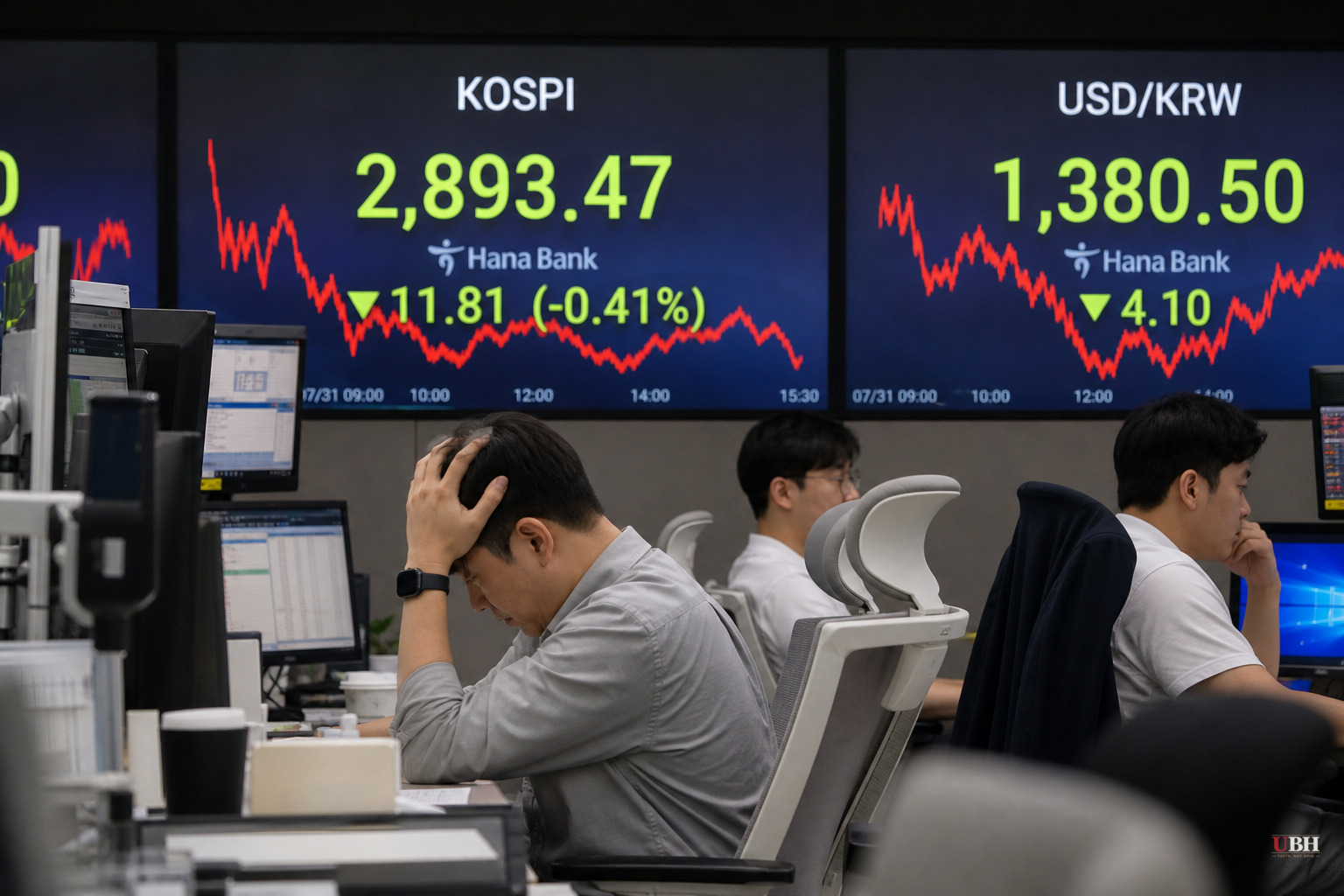
The Kospi's July meltdown is over. The anger it left behind is not.
South Korea's benchmark index capped a brutal month with a record 18% single-session rebound on Friday, July 31, according to Bloomberg. That relief rally still wasn't enough to save the month. The Kospi finished July down 22%, its worst monthly performance since the global financial crisis, Bloomberg reported.
Retail traders didn't stick around to celebrate the bounce. They sold a record amount of Kospi shares on that same Friday, according to Bloomberg, cashing out even as the index staged its historic one-day surge. That behavior doesn't reflect investors who believe the worst is behind them.
Where the anger is pointed
The target of the frustration, according to Bloomberg's reporting, is President Lee Jae Myung's stock-market reform agenda and specifically the single-stock leveraged ETFs his administration greenlit in late May. Those products were designed to give retail traders amplified exposure to individual stocks and to keep Korean money from fleeing into similar overseas products.
Instead, mom-and-pop investors piled roughly 78 trillion won into Kospi shares over May and June, chasing what Bloomberg described as "Kospi mania," only to get hit by the index's violent swings in July.
Kim Han-kyung, a Seoul resident in her late 30s who started investing in Korean stocks for the first time in May, told Bloomberg she's done. "I got completely swept up in the frenzy. Now, I'm honestly scared. I've engraved two rules in my mind now. First: don't invest in the Korean stock market. Second: follow the first rule."
Lee Jung-min, 40, took out a 50 million won loan against his apartment to trade stocks. He told Bloomberg the leveraged ETFs made things worse, not better. "The government put fuel into the fire with those leveraged ETFs. I think it's wrong how they turned the stock market into a casino."
A sitting government approved a new financial product marketed to retail traders and encouraged heavy participation with a broader reform push, then watched that same product get blamed for helping trigger a record run of circuit-breaker trading halts. Four of them occurred in a single month, according to Bloomberg, in a market where such halts were rarely used before this year. If leveraged ETFs designed for amplified gains also amplified losses on the way down, that raises legitimate design and disclosure questions for regulators.
The chipmakers still carry the index
Samsung Electronics and SK Hynix together make up more than half the Kospi's weight, and both got hammered in July. Samsung fell 21% for the month but remains up more than four times since the start of 2025, according to Bloomberg. SK Hynix lost 35% in July but is still up roughly tenfold over the same stretch. These are companies riding the global AI chip boom, and their swings are driving the whole index's mood swings.
A different kind of volatility, half a world away
While Korean retail traders were nursing their wounds, the geopolitical backdrop got uglier. Iranian Foreign Minister Abbas Araqchi said Tehran would respond decisively to any new "aggression" from the U.S. or Israel, according to Mint's live coverage, while President Trump said he was losing patience with negotiations and warned he'd be "hitting them" if diplomacy collapses.
Iran-backed outlet Nournews said any U.S. strike on Iranian energy infrastructure would trigger retaliation against oil fields in Saudi Arabia and the UAE, plus gas fields in Qatar and Israel, Mint reported. Kuwait's military said it destroyed hostile drones early Saturday, with debris damaging a government site and civilian property on Bubiyan Island, though no casualties were reported. The UK Maritime Trade Operations agency also flagged two separate incidents off Oman's coast, including a tanker hit by an unknown projectile in its engine room.
None of that has been formally tied to South Korea's market rout. But it's the same volatile global backdrop investors everywhere are pricing in. Indian markets, for instance, are watching crude prices and Fed signals as closely as they're watching corporate earnings this week, according to Mint's markets preview ahead of the Reserve Bank of India's policy meeting scheduled for August 3 to 5.
What's unresolved
No South Korean regulator has announced a formal investigation into the leveraged ETF rollout or the circuit-breaker frequency, based on available reporting. Whether Seoul tightens rules on these products, or whether retail traders like Kim Han-kyung actually stay on the sidelines once the anger cools, remains an open question heading into August.
Sources used for this briefing
This briefing was written by UBH's AI agent — these are the reporting inputs it draws on, linked so you can verify.


