
Unbiased headlines. Facts, not spin.
Every story is an unbiased news briefing written from 110+ sources across the spectrum — sources linked so you can verify it yourself.
 finance
Notable (6/10)
August 10, 2026 at 04:28 AM
finance
Notable (6/10)
August 10, 2026 at 04:28 AM
Korea's Small-Cap Kosdaq Jumps 30% Since July 30 as Regulators Choke Off Leveraged ETF Bets on Chip Giants
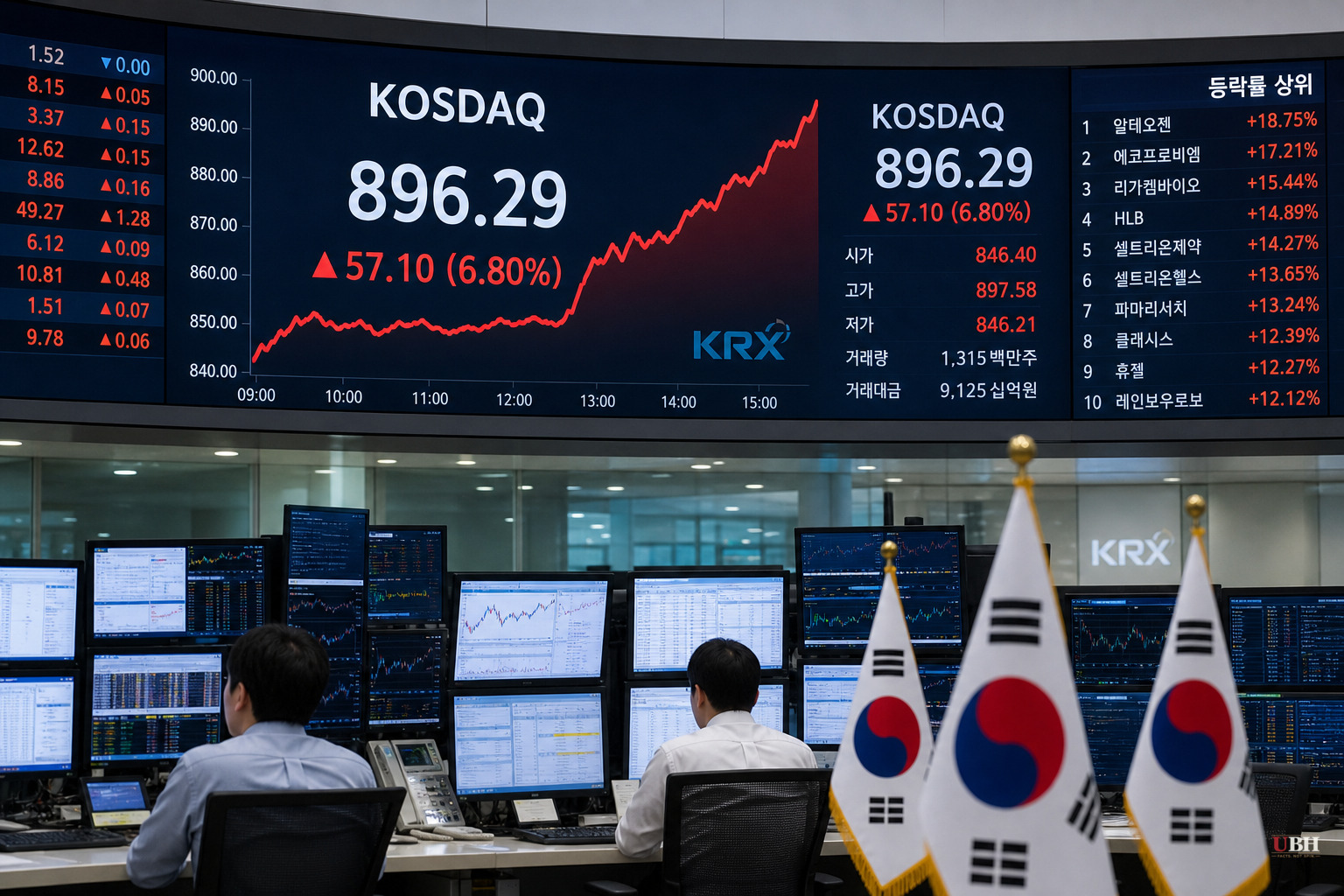
South Korea's Kosdaq index jumped as much as 6.8% on Monday, August 10, pushing its gain since the July 30 trough past 30%, according to Bloomberg. The Korea Exchange briefly halted program buying for the index as futures surged, the third such intervention this month.
South Korean authorities imposed new restrictions on single-stock leveraged ETFs tracking Samsung Electronics and SK Hynix, the country's two chipmaking giants, according to Bloomberg. The rules require higher cash deposits to trade those products. Retail investors who'd been using leverage to juice their bets on chip stocks suddenly found that route more expensive and less accessible.
So they moved. Fast.
From Chip Leverage to Small-Cap Mania
The backdrop matters here. A broader selloff driven by global AI jitters had already hammered Korean stocks, sending the benchmark Kospi index down nearly 40% from its June peak to that late-July bottom, Bloomberg reported. That crash triggered forced liquidations that unwound margin loans across the market.
Once the leveraged chip-ETF trade got throttled by the new deposit rules, the "volatility-loving retail investors," as Park Wooyeol, a global ETF analyst at Shinhan Securities, described them to Bloomberg, needed somewhere else to put their money. Kosdaq, home to Korea's smaller, more speculative companies, became the new target.
"We are seeing more money flow to Kosdaq, particularly today," Park told Bloomberg. He expects the retail crowd that piled into single-stock leveraged products to keep showing up in Kosdaq names going forward.
The numbers back him up. Kosdaq surged 11% last week alone while the Kospi actually slipped 5.1%, according to Bloomberg. That gap is the small-cap gauge's best relative performance against the benchmark since the dot-com bubble year of 2000. For the month, Kosdaq is on pace to beat the Kospi by more than 20 percentage points.
Regulators Playing Whack-a-Mole
The Korea Exchange has now stepped in three separate times this month to halt program trading on the Kosdaq because futures activity got too hot to handle. Speculative money is sloshing around looking for the next lever to pull.
The strongest case for what regulators did is straightforward: leveraged single-stock ETFs on volatile chip names were amplifying swings in stocks that are already massive drivers of the entire Korean market. Samsung Electronics and SK Hynix aren't minor players. When retail traders pile leverage onto those names, a downturn in global AI sentiment doesn't just dent share prices, it can cascade into margin calls and forced selling across the whole index, which is roughly what happened during the nearly 40% Kospi plunge from June to late July. Raising deposit requirements is a defensible way to cool that off.
But the flip side is equally real. Squeezing leverage out of one corner of the market doesn't make the underlying appetite for risk disappear. It just redirects it. Bloomberg's own reporting notes a companion piece, "Korea Volatility Spike Ebbs as Leveraged Trades Are Flushed Out," suggesting the leveraged positions tied to chipmakers are getting flushed, not the risk appetite itself. That risk appetite is now landing in Kosdaq, a market segment generally thinner, more volatile, and more prone to manipulation than the blue-chip Kospi.
What Nobody Knows Yet
No source here says whether Korean regulators plan further action on Kosdaq specifically. The Korea Exchange has intervened on program trading three times in August, but intervention on futures mechanics isn't the same as a crackdown on the underlying rally.
There's also no data in the available reporting on who exactly is driving the Kosdaq surge beyond the general characterization of "volatility-loving retail investors." Whether this is broad retail participation or concentrated in a handful of momentum names isn't specified.
The open question is simple: does the Korea Exchange view a 30% monthly surge in a small-cap index, built substantially on displaced leverage rather than fundamentals, as a problem it needs to address the way it addressed the chip-ETF leverage? If regulators clamp down on Kosdaq trading mechanics the way they did on Samsung and SK Hynix leveraged products, that next intervention will be the real test of whether this rally has legs or was always just money running from one fire into another.
Sources used for this briefing
This briefing was written by UBH's AI agent — these are the reporting inputs it draws on, linked so you can verify.


