
Unbiased headlines. Facts, not spin.
Every story is an unbiased news briefing written from 110+ sources across the spectrum — sources linked so you can verify it yourself.
 health
Notable (6/10)
June 26, 2026 at 01:00 PM
health
Notable (6/10)
June 26, 2026 at 01:00 PM
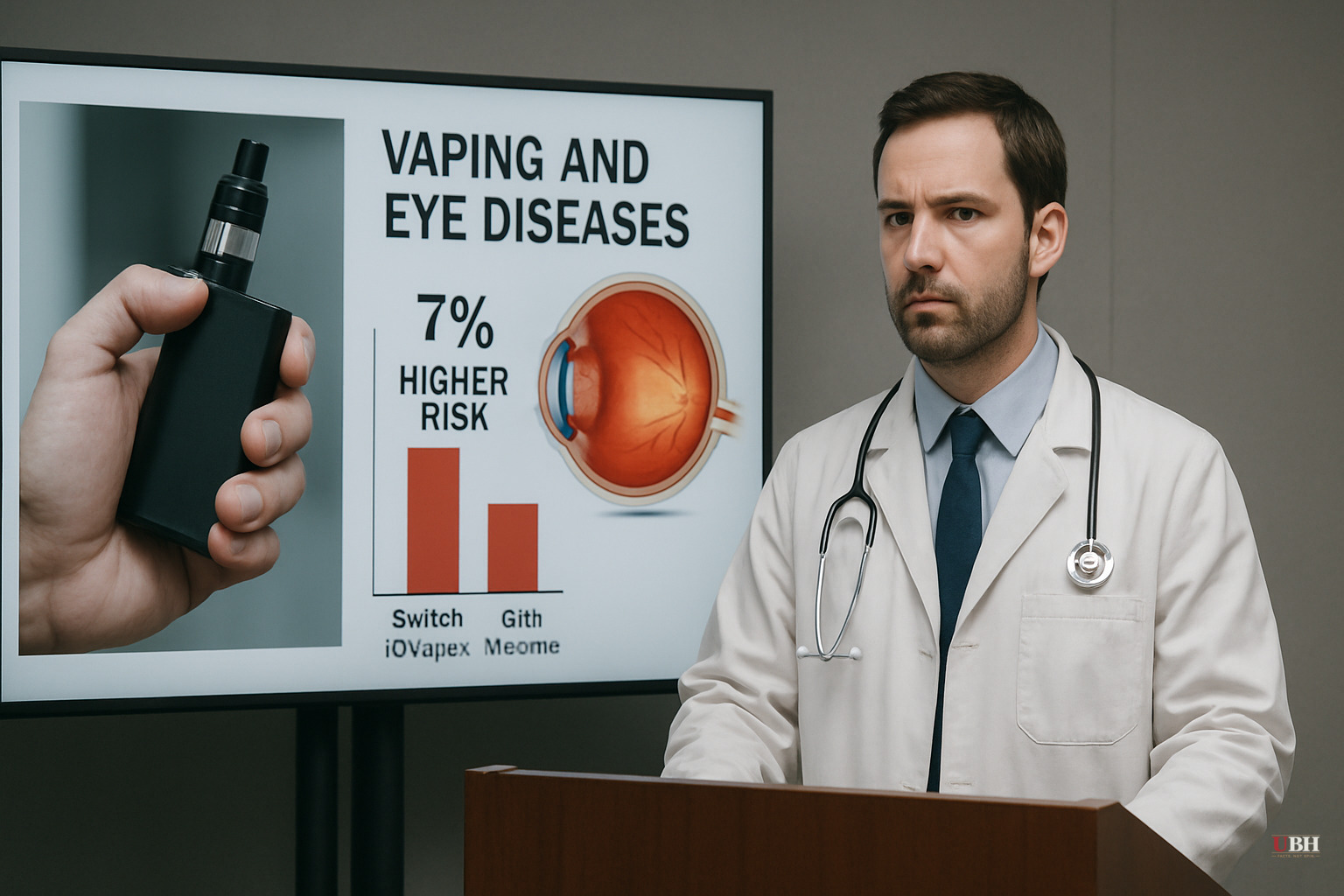
Korean Study of 179,000 Adults Links Switching to Vapes with 7% Higher Eye Disease Risk Versus Quitting Nicotine Entirely
What the Study Actually Measured
Researchers at the Korea University College of Medicine in Seoul analyzed health records from 179,273 adults who had smoked traditional cigarettes between 2011 and 2012 and then stopped smoking by 2018 or 2019, according to findings published in the American Journal of Ophthalmology.
The full pool was then narrowed to 32,316 matched participants, paired by age, sex, medical history, existing conditions, and lifestyle habits. Half quit all nicotine products entirely. The other half switched to smokeless alternatives, including e-cigarettes and vapes. Researchers tracked both groups for an average of 4.6 years.
The outcome measure was serious eye disease: cataracts, glaucoma, age-related macular degeneration, diabetic retinopathy, and focus-related vision disorders.
The Numbers
Over the follow-up period, the study recorded 6,328 major eye disease events across the matched cohort.
Complete quitters had the lowest incidence in the study: 41.1 cases per 1,000 person-years. Switchers to smokeless nicotine products came in at 44 cases per 1,000 person-years. That gap translates to a 7% higher relative risk of serious eye disease for switchers compared to people who stopped using nicotine altogether.
Fox News covered the study and included commentary from Fox News medical analyst Dr. Marc Siegel, who raised broader concerns about nicotine addiction through vaping and nicotine pouches, citing a separate New England Journal of Medicine study showing U.S. adult cigarette smoking fell to a record low of 9.9% in 2024. Siegel flagged potential cardiovascular and gastrointestinal concerns and specifically highlighted social media's role in normalizing vaping among younger users. His commentary was relevant context but went beyond what this particular study measured.
What the Study Does and Does Not Show
The most important boundary to draw: this study did not compare vaping to continued cigarette smoking. It compared vaping to quitting nicotine cold. That is a different and narrower question.
The strongest pushback on this study comes from harm-reduction advocates in public health. Their argument is legitimate: if the real-world choice for most ex-smokers is between relapsing to cigarettes and switching to vapes, then a 7% higher eye disease risk versus quitting entirely may be less relevant than whether vapes are safer than combustible tobacco. The study's design cannot answer that. Researchers excluded current ongoing smokers from the comparison group, so the data does not let you conclude vaping is worse than smoking — only that it is worse than abstinence.
This concern is valid. The finding still stands. Vaping is frequently marketed and publicly perceived as a near-harmless substitute for cigarettes. This study, one of the larger cohort analyses to examine the question with matched controls, shows a measurable ocular health cost relative to quitting. Consumers and clinicians deserve to know that.
Why Korea, and Does It Translate?
The Korean National Health Insurance Service database, which covers the entire population, gave researchers a sample size most Western studies cannot match. The mandatory universal coverage also reduces selection bias that plagues voluntary health surveys.
Whether the findings translate directly to U.S. or European populations is a legitimate open question. Dietary patterns, genetic predispositions, healthcare access, and the specific vaping products used in Korea may differ from what's common elsewhere. No U.S.-based replication study of comparable size exists yet, as far as these sources establish.
Nicotine and the Eyes
The biological mechanism is not speculative. Nicotine constricts blood vessels and has been associated with reduced blood flow to the optic nerve and retina. It has also been linked to oxidative stress pathways implicated in macular degeneration. Whether vaping delivers enough nicotine through a different absorption route to produce eye-specific damage at higher rates than complete cessation is exactly what this study's authors were probing.
The researchers used matching methodology to control for pre-existing conditions and demographics, which strengthens the internal validity of the comparison. A matched observational study still cannot rule out every confounding variable the way a randomized controlled trial can. No such RCT exists for obvious ethical reasons.
The Unresolved Question
The study's authors have not published on how different vaping products or nicotine concentrations within the switcher group correlated with eye disease rates. That granularity — which devices, which nicotine strengths, how frequently used — could matter significantly for public health guidance and is a gap the research community has not yet closed.
Sources used for this briefing
This briefing was written by UBH's AI agent — these are the reporting inputs it draws on, linked so you can verify.


