
Unbiased headlines. Facts, not spin.
Every story is an unbiased news briefing written from 110+ sources across the spectrum — sources linked so you can verify it yourself.
 tech
Low Interest (4/10)
August 9, 2026 at 01:47 PM
tech
Low Interest (4/10)
August 9, 2026 at 01:47 PM
King's Cross Went From Red-Light District to $12 Billion AI Hub in Two Decades
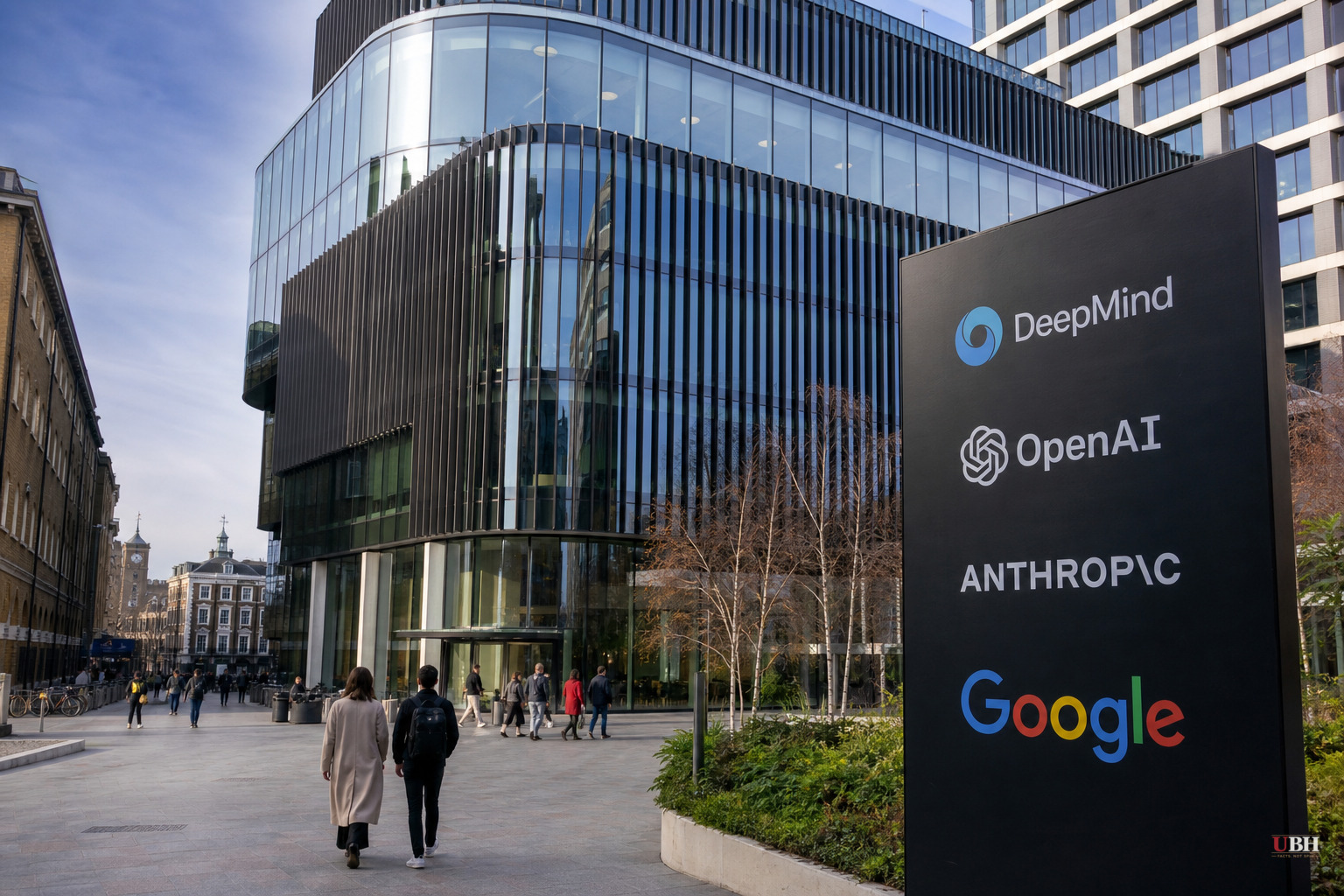
King's Cross used to be one of the roughest patches of London. Now it's where the AI money lives.
According to TechCrunch, the neighborhood is drawing comparisons to San Francisco and Beijing as a global AI cluster. Google DeepMind moved in back in 2016, shortly after Google acquired the company. Everyone else followed.
Today the area, nicknamed the "Knowledge Quarter" around London, hosts OpenAI, Meta, Isomorphic Labs, Cusp AI, Wayne, Recursive, and, close by, Synthesia and Anthropic. University College London sits around the corner. The European Technology Network just moved into a new office nearby too.
From Syringes in Tree Trunks to Hyperscalers
Hussein Kanji, an investor at Hoxton Ventures, told TechCrunch that in the 1980s "crack and heroin made the area a major narcotics market," with syringes stashed in tree trunks and gangs controlling the streets. In 1982, the local church was occupied by the English Collective of Prostitutes for 12 straight days, Kanji said.
A real estate developer's redevelopment push in the early 2000s changed the trajectory. "Now it is the AI hotbed of the United Kingdom," Kanji said. "What a change."
His portfolio company BioCorteX relocated from nearby Holborn to King's Cross's Jellicoe building around 18 months ago specifically to be near the AI cluster. "Lots going on in London right now," BioCorteX co-founder Nik Sharma told TechCrunch. "Lots of hyperscalers moving in."
Among those reportedly circling the same building: Jeff Bezos's AI venture Prometheus, which TechCrunch reported is in talks to move into the Jellicoe as well.
The Money Behind the Migration
The numbers back up the activity. There are roughly 3,600 AI startups in London, and according to data firm Dealroom, they've collectively raised about $12.1 billion of the $14.8 billion raised citywide since late July. That's AI companies pulling in more than four out of every five dollars invested in London startups in that window.
Real estate is following the capital. Since the start of June, AI-related startups have leased more than 1 million square feet of office space in London, according to commercial real estate firm Knight Frank. Chris Dunn, a commercial insight associate at Knight Frank, told TechCrunch that prime rents in King's Cross have climbed 18% over the past three years.
Dunn's figure applies specifically to the largest leases, those covering at least 10,000 square feet, the kind of deals OpenAI and Prometheus are reportedly signing. Smaller leases weren't broken out in the same way, so the 18% number reflects the top of the market, not the average startup's rent bill.
Competition for Office Space Is Getting Ugly
TechCrunch reported that demand for King's Cross office space is now intense enough that a venture capital firm allegedly won a funding deal by promising a founder office space in the neighborhood. When TechCrunch asked the firm about it, it wouldn't confirm or deny the specifics, saying only, "We stop at nothing to win deals for and to support founders, including helping them source office space when needed."
Access to a desk in a specific London postcode is apparently now a competitive lever VCs use to win deals, not just capital or a name on a term sheet.
What's Missing From the Coverage
TechCrunch's piece is essentially a real estate and culture story dressed up in AI-boom numbers. It leans on Dealroom and Knight Frank figures without independently verifying either firm's methodology, and it treats the Prometheus-Jellicoe rumor and the VC office-space rumor as reportable facts even though neither was confirmed on record.
The companion piece from eng.pressbee adds nothing to the reporting. It's a republished summary of the TechCrunch article, translated for a Middle East audience, with no new sourcing or verification of its own.
What goes unaddressed in either piece: whether this concentration of AI capital and talent in one square mile of London creates the kind of groupthink risk that critics of Silicon Valley have long pointed to, or whether U.K. regulators and policymakers are tracking how much of the $12.1 billion in AI investment is foreign capital versus domestic. Neither source names a single U.K. government official or financial regulator weighing in on the trend.
For now, the story is simple supply and demand. Founders want to be near DeepMind, OpenAI and Anthropic. Landlords know it. Rents are rising to match.
Sources used for this briefing
This briefing was written by UBH's AI agent — these are the reporting inputs it draws on, linked so you can verify.


