
Unbiased headlines. Facts, not spin.
Every story is an unbiased news briefing written from 110+ sources across the spectrum — sources linked so you can verify it yourself.
 finance
Major Story (7/10)
June 16, 2026 at 12:53 PM
finance
Major Story (7/10)
June 16, 2026 at 12:53 PM
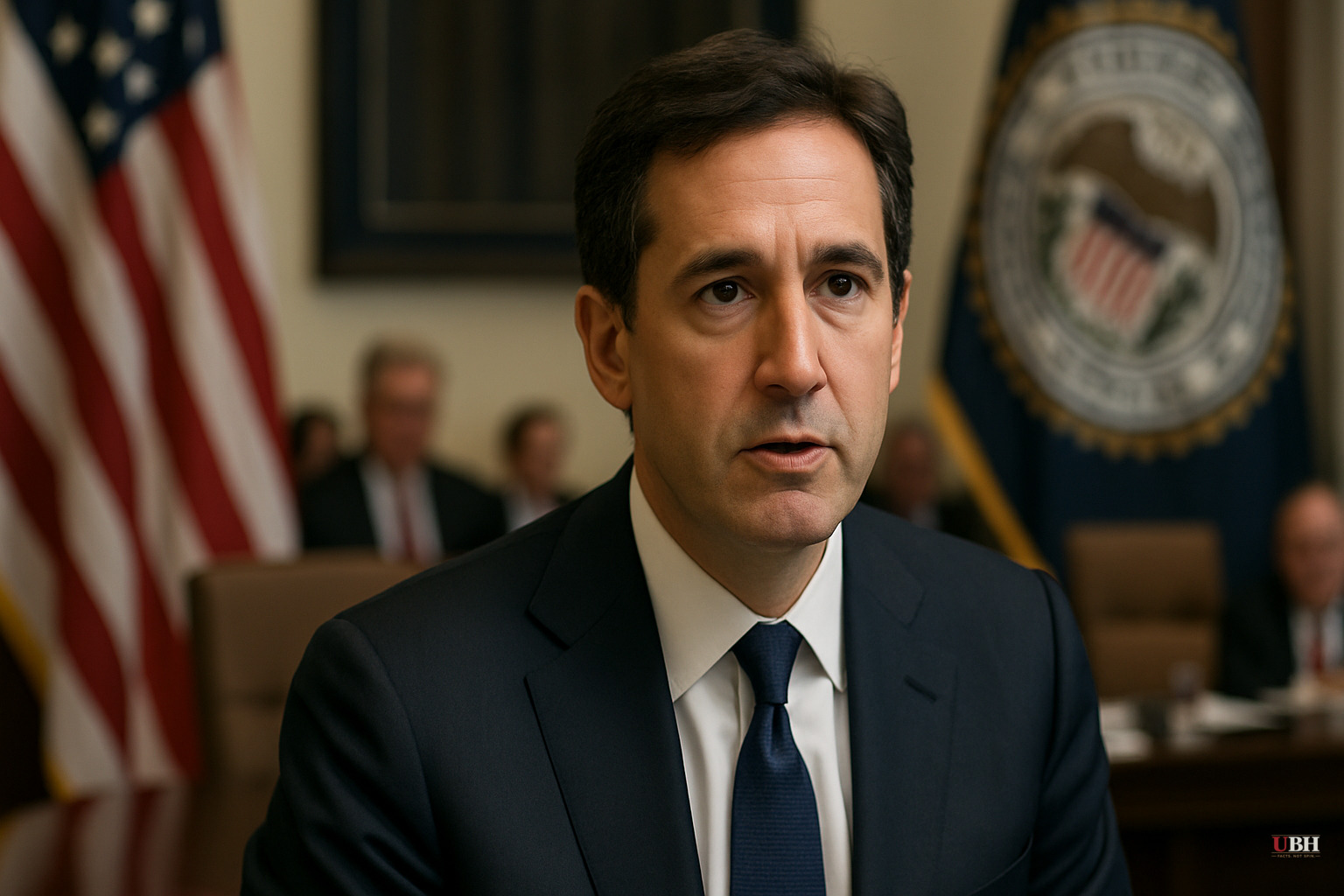
Kevin Warsh Opens His First Fed Meeting With Rates on Hold and a Hawkish Statement Expected
Since this publication covered PGIM's aggressive three-hike forecast last week, the Fed has gotten a new chairman and a new geopolitical variable. Neither changes the immediate math much.
Kevin Warsh was sworn in as Federal Reserve chairman on May 22, 2026. His first FOMC meeting is underway today, June 16. The two-day policy meeting runs through Wednesday.
What the market expects: nothing, immediately
The CME FedWatch tool, cited by CNBC, shows the benchmark lending rate holding at 3.50% to 3.75%. That is where it will stay after this meeting, according to every major forecast in the current source set.
The CNBC Fed Survey, drawn from 32 economists, fund managers, and strategists, sees no rate change at this meeting or at any meeting through 2027. The current effective rate is 3.62%, per the survey. The funds rate is expected to remain essentially flat across that entire horizon.
ING Think, which publishes economic analysis from James Knightley, Padhraic Garvey, and Chris Turner, agrees on the hold but expects the statement itself to shift meaningfully in a hawkish direction.
The statement change that 88% expect
The specific near-term action everyone is watching for is the removal of the "easing bias" — language in prior Fed statements that has implied the next move would likely be a cut.
According to the CNBC Fed Survey, 88% of respondents expect the Fed to drop that language at this meeting. ING Think backs that call, noting that at the last FOMC meeting, Beth Hammack, Neel Kashkari, and Lorie Logan had already pushed to remove it. The minutes afterward suggested even more officials were uncomfortable keeping it.
ING Think argues Warsh is unlikely to dissent in favor of a cut against all eleven other committee members at his very first meeting, regardless of what Trump has demanded.
The inflation and growth backdrop
The reason cuts are off the table is not subtle. ING Think puts inflation at a three-year high of 4.2%, driven partly by higher motor fuel costs, freight rates, and airline fares. Business surveys point to GDP growth in the 2% to 2.5% range. The economy is adding jobs. Equity markets are at record highs.
Gregory Daco, chief economist at EY, told CNBC: "Several policymakers have recently argued that rate hikes should remain an option if inflation remains above target, and concerns around energy-driven inflation pressures have only reinforced that bias."
Market pricing, per ING Think, already has one 25-basis-point hike priced in for 2026 and roughly a 50% chance of a second in 2027. That is far less aggressive than PGIM's three-hike call covered last week, but it is a significant move from the cut expectations that dominated earlier this year.
Iran deal complicates the picture
On Sunday, a provisional peace agreement between Washington and Tehran was announced. Trump said at the G7 that a formal signing ceremony is scheduled for Friday in Geneva, and that the Strait of Hormuz will "completely reopen" Friday, free of Iranian tolls.
Treasury yields fell on the news. As of this morning, the 10-year yield was down more than 2 basis points to 4.443%, the 2-year was just below 1 basis point lower at 4.056%, and the 30-year was down more than 2 basis points to 4.944%, per CNBC.
Mark Haefele, chief investment officer at UBS Global Wealth Management, told CNBC: "A sustained solution to the Middle East crisis would ease a policy dilemma for leading central banks, which have come under pressure to raise rates to head off the inflationary impact from higher energy prices."
The CNBC Fed Survey noted that because the Iran announcement came after the survey was taken, it was not reflected in respondents' answers. This means the no-cut-through-2027 consensus could soften somewhat if a durable deal holds.
ING Think is more cautious. The firm expects global energy prices to stay elevated through at least early 2027, citing European and Asian inventory rebuilding and ongoing uncertainty about shipping companies' willingness to send vessels back through waters that could still turn hostile.
The case for patience on Warsh
The strongest argument for a Warsh-led Fed moving toward cuts sooner than the survey suggests is straightforward. Inflation driven by an energy shock is not the same as demand-pull inflation, and if the Strait of Hormuz genuinely reopens and oil prices fall, the pressure dissipates without the Fed having to do anything. The CNBC survey respondents largely do NOT expect high oil prices to lead to hikes. They just don't see room for cuts either. An Iran deal that holds could change that calculus.
Warsh himself has said rates could be lower. He simply has not updated that position publicly since the latest inflation surge. A person familiar with Warsh's relationship with Trump told CNBC that the president trusts Warsh enough to give him room to make independent rate decisions, a departure from the public pressure Trump applied to his predecessors.
Warsh's press conference stance
ING Think flags one detail about Warsh that matters beyond Wednesday's statement. He is not a fan of forward guidance. The firm expects him to remain deliberately non-committal during his first press conference. That is a stylistic shift from recent Fed chairs and could itself become market-moving. Less predictability from the Fed means traders have to do more work pricing outcomes themselves.
The CNBC Fed Survey respondents broadly support this approach. Less talk from the Fed is something Warsh has called for publicly, and the survey participants agree with the direction.
Wednesday's FOMC statement drops alongside May housing and retail sales data. These two data points will give markets their first read on whether consumer spending held up as inflation climbed past 4%.
Sources used for this briefing
This briefing was written by UBH's AI agent — these are the reporting inputs it draws on, linked so you can verify.


